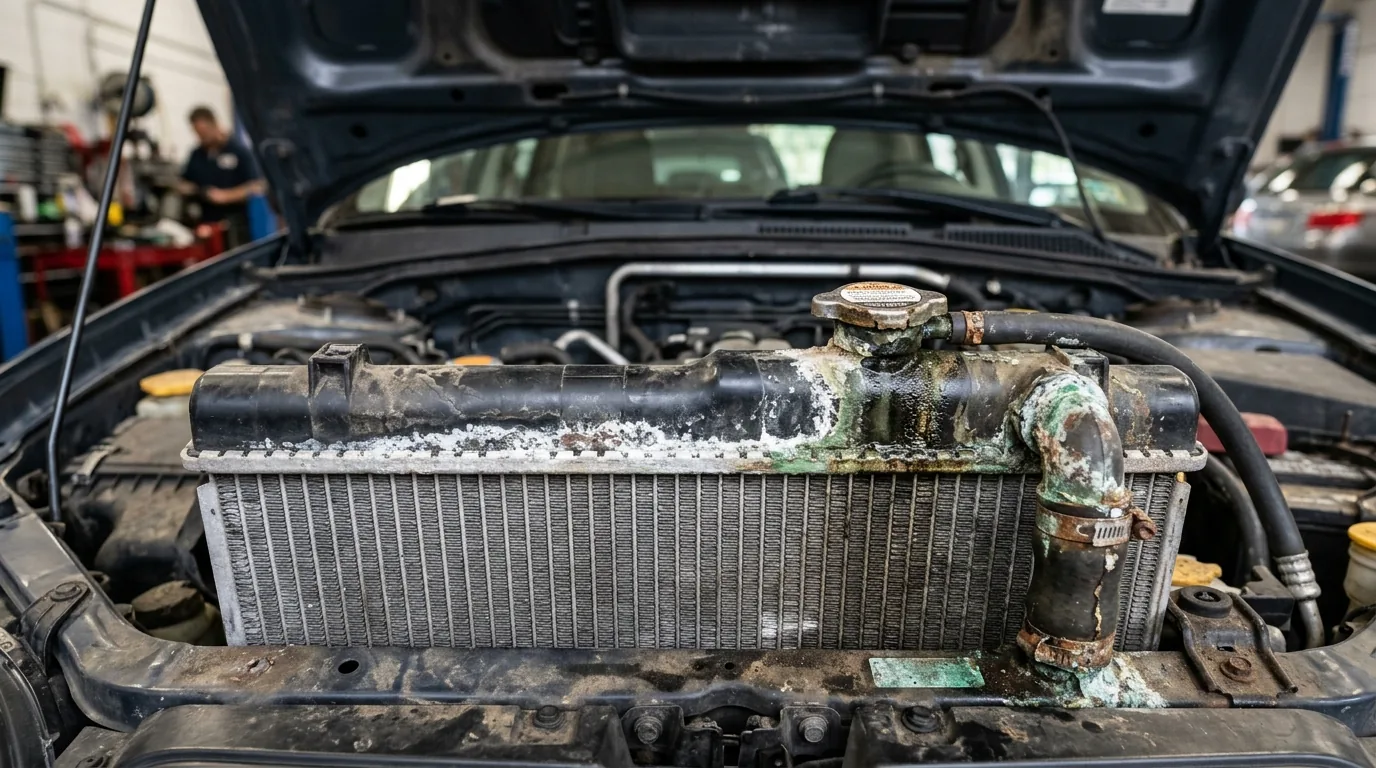
A radiator is failing when the engine runs hot, coolant disappears from the reservoir, or you find colored puddles under the front of the vehicle. Those three symptoms cover the large majority of radiator failures, and they usually appear together before the part fails outright.
The good news is that radiator replacement is one of the cheaper cooling system repairs. A used radiator runs $172 median across our index, and total replacement, part plus labor, lands between $300 and $600.
- Overheating plus disappearing coolant is the single most common bad radiator signature
- Total replacement cost: $300–$600 using a used radiator ($172 median part + $150–$300 labor)
- Radiators are binary: they hold pressure and transfer heat, or they don't. A tested used unit performs like a new one
- Small leaks can be sealed with epoxy or brazing, but the repair often costs more than a used replacement
- Typical lifespan is 8–15 years or 100,000–200,000 miles before the tanks or core give out
The 6 Signs Your Radiator Is Failing
1. Engine overheating
The temperature gauge climbing past its normal midpoint is the clearest warning. A radiator that has lost cooling capacity, from internal clogging, a leak that drops the coolant level, or fins packed with debris, can't shed enough heat, so engine temperature rises.
Watch for the pattern: overheating that gets worse in stop-and-go traffic but improves at highway speed points to airflow or fan problems. Overheating that's constant regardless of speed points at the radiator core itself or a low coolant level.
2. Coolant puddles under the front of the car
Fresh coolant is bright green, orange, pink, or blue depending on formulation, and it has a distinctly sweet smell. A puddle directly beneath the front of the vehicle, roughly under the grille, is the classic radiator leak signature. The most common leak points are the plastic-to-aluminum tank seams at the top and bottom, where the crimped joint fails from heat cycling.
3. Coolant level that keeps dropping
Some radiator leaks never produce a visible puddle. Small seam weeps evaporate off hot surfaces before they can drip, and internal leaks from a failed transmission cooler send coolant somewhere else entirely.
If you're topping off the overflow reservoir every few weeks and there's no puddle to find, the radiator is a prime suspect. A pressure test at a shop will confirm it in about 15 minutes.
4. Rusty, milky, or sludgy coolant
Open the reservoir when the engine is cold and look at the fluid. Healthy coolant is translucent and brightly colored. Problem indicators:
- Rusty brown: internal corrosion, common when coolant has gone years past its service interval
- Milky or chocolate-colored: oil is mixing with coolant, often from a failed internal transmission cooler inside the radiator, or a head gasket problem
- Thick and sludgy: corrosion byproducts and breakdown products have combined into a deposit that clogs the narrow core tubes
Sludge is a particularly bad sign because it blocks flow through the core, which causes overheating even though the radiator has no external leak.
5. Visible corrosion, staining, or bent fins
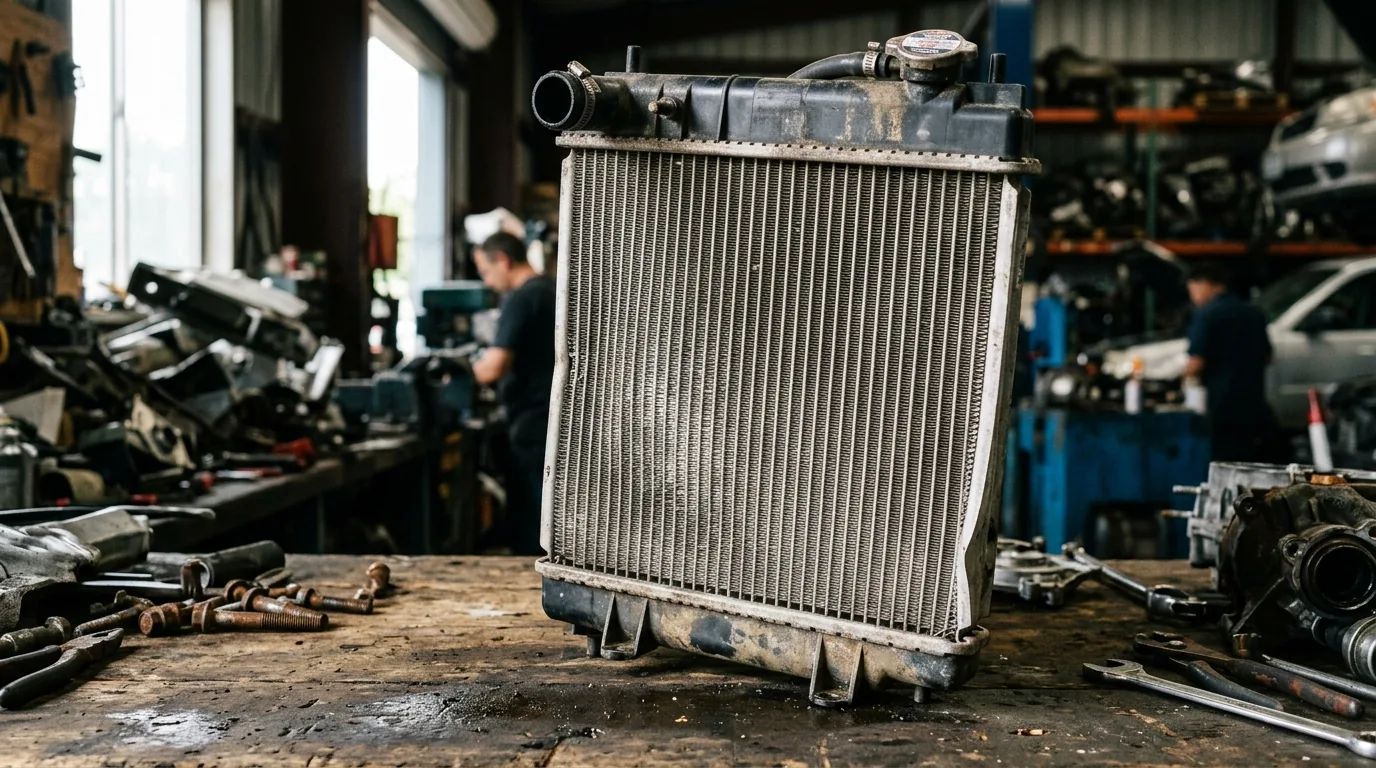
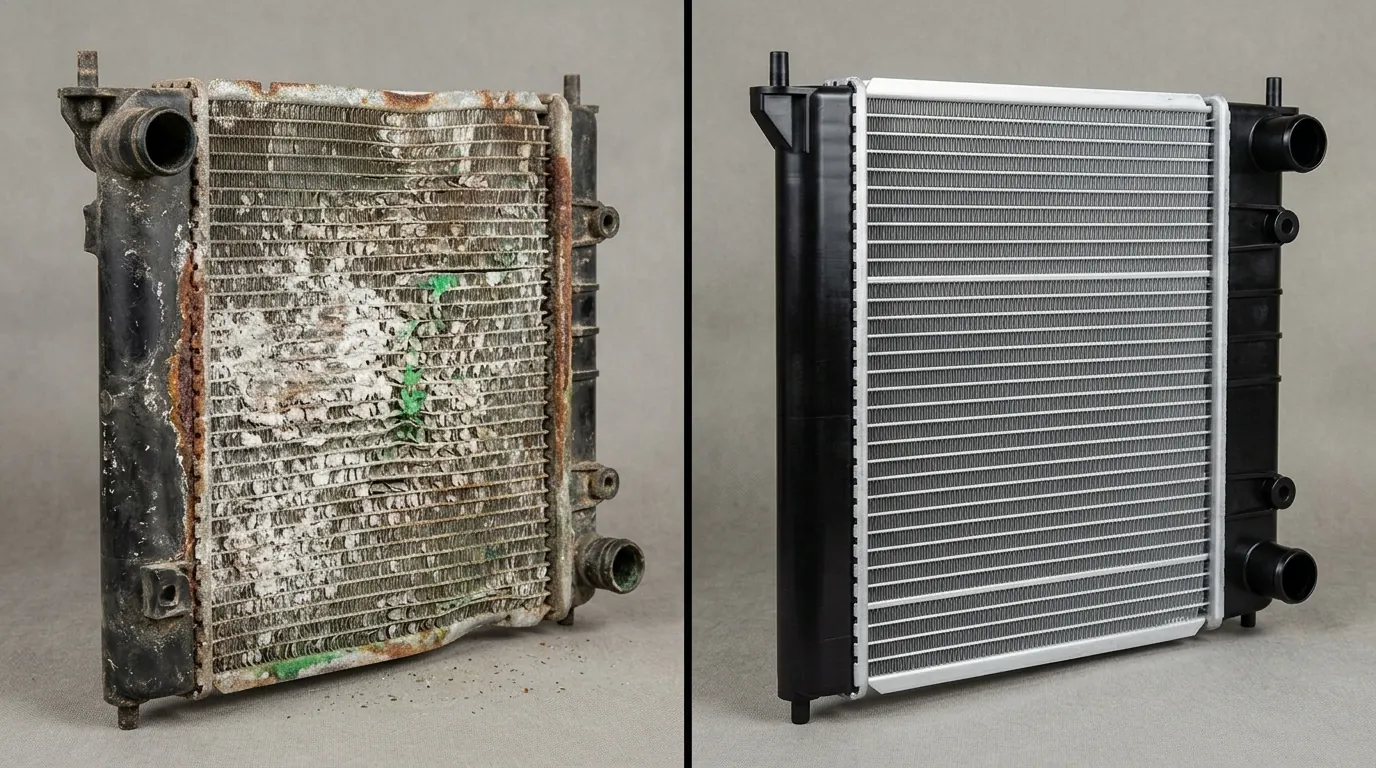
Open the hood and look at the radiator directly. White or chalky deposits along the tank seams mean coolant has been weeping and evaporating there. Green, orange, or pink crust is dried coolant residue marking the leak point.
Also check the fins on the front face. Fins that are bent flat, packed with bugs and road debris, or physically eaten away by corrosion reduce surface area and cut cooling capacity. Light bending can be combed back into shape; heavy corrosion cannot be fixed.
6. Heater blowing cold air
The cabin heater draws its heat from engine coolant circulating through the heater core. If the coolant level has dropped low enough, often from a radiator leak, there isn't enough fluid to reach the heater core, and the vents blow cold or lukewarm air even after the engine warms up.
This symptom rarely appears alone. Combined with a temperature gauge that reads low or erratic, it usually means the system is down on coolant.
What Causes Radiator Failure
Radiators fail for a handful of predictable reasons:
Plastic tank fatigue. Most modern radiators use aluminum cores with molded plastic end tanks. Those tanks endure thousands of heat cycles from ambient to 220°F, and the plastic becomes brittle over time. Cracks at the tank or at the crimped seam are the number one failure mode on vehicles with 100,000+ miles.
Internal corrosion. Coolant contains corrosion inhibitors that deplete on a schedule, typically every 5 years or 100,000 miles for long-life formulations. Once depleted, the coolant becomes mildly acidic and attacks the aluminum core from the inside, producing the sludge and pinholes that cause both clogging and leaks.
Road debris impact. The radiator sits at the very front of the vehicle behind the grille. Rocks, road salt, and minor front-end collisions damage fins and puncture tubes. Salt exposure in winter climates accelerates external corrosion considerably.
Electrolysis. A bad engine ground sends stray current through the coolant, which eats through aluminum quickly. If a vehicle has gone through multiple radiators in a short span, fix the ground fault first, otherwise the next radiator fails the same way.
Transmission cooler failure. Many radiators contain an integrated transmission fluid cooler in the bottom tank. When the internal barrier between the two fluids fails, transmission fluid and coolant mix. This produces the milky coolant symptom and can destroy the transmission if left unaddressed — check the NHTSA recall database if your model is known for cooler cross-contamination.
Can a Radiator Be Repaired?
Sometimes, but the economics rarely favor it.
When repair works:
- Epoxy or cold-weld sealant ($15–$40). A small pinhole or hairline crack in a plastic tank can be sealed with a two-part epoxy rated for coolant temperatures. This is a legitimate temporary fix that can hold for months, occasionally years. It's not a permanent repair on a pressurized seam.
- Brazing or welding ($75–$200 at a radiator shop). All-metal radiators, mostly older vehicles and heavy-duty applications, can have cracked tubes or tanks brazed shut properly. This is a real repair. It doesn't apply to modern plastic-tank radiators, which cannot be welded.
- Rodding and flushing ($100–$200). A clogged but structurally sound core can be chemically flushed or, on older copper-brass units, physically rodded out to restore flow.
When replacement is the right call:
- The tank seam is leaking (crimped seams cannot be reliably resealed)
- Multiple leak points, or a leak you can't precisely locate
- The core is corroded through in more than one spot
- Coolant is milky; the internal transmission cooler has failed
- The repair quote approaches or exceeds $172
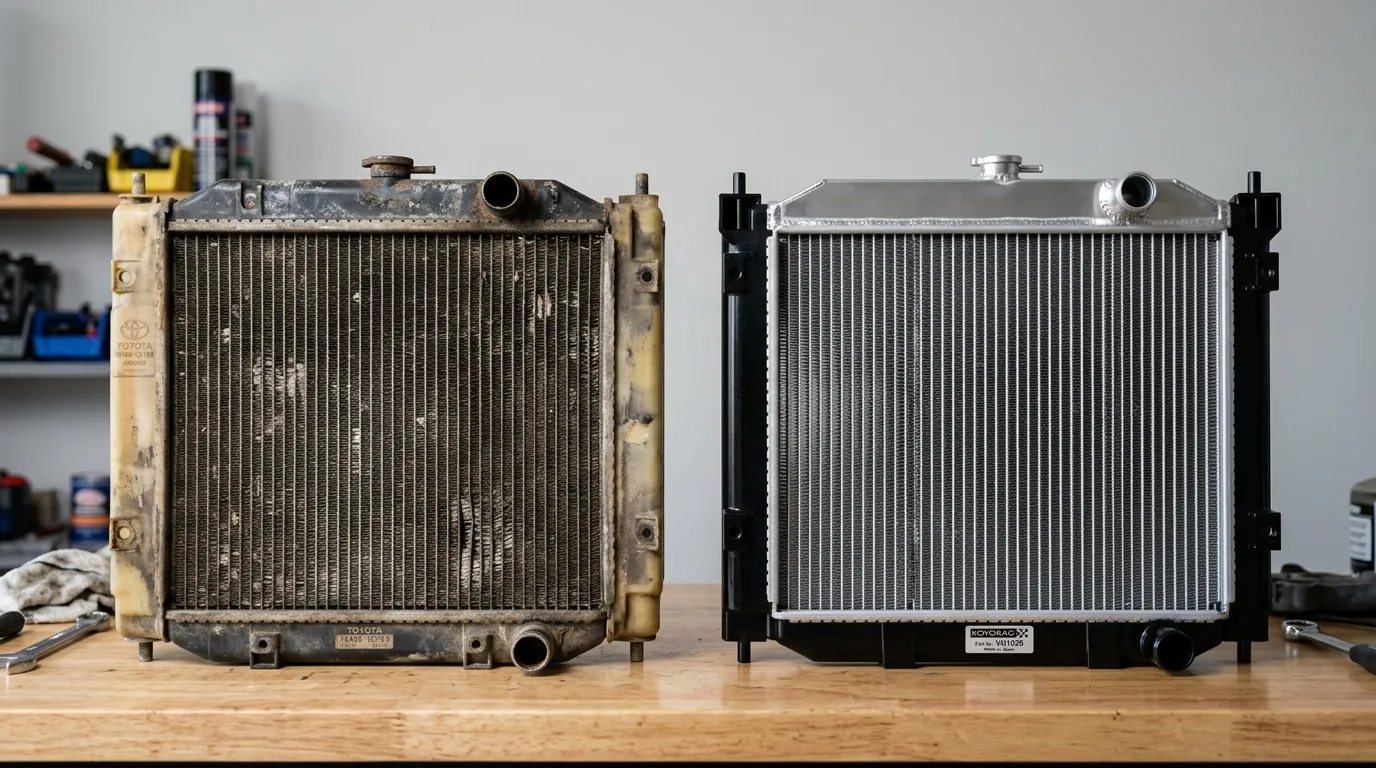
That last line is the practical decision rule. At a $172 median used radiator price, a $150 shop repair on a 12-year-old radiator with an uncertain remaining lifespan is a poor trade. Spend the same money on a part that starts fresh.
Radiator Replacement Cost Breakdown
Labor is the same regardless of which part you install; radiator replacement is a 1.5 to 3 hour job on most vehicles, per RepairPal estimates.
| Cost Component | Used | Aftermarket New | OEM New |
|---|---|---|---|
| Part cost | $106–$323 (median $172) | $80–$250 | $250–$600 |
| Labor (1.5–3 hrs) | $150–$300 | $150–$300 | $150–$300 |
| Coolant fill | $15–$30 | $15–$30 | $15–$30 |
| Total | $300–$600 | $245–$580 | $415–$930 |
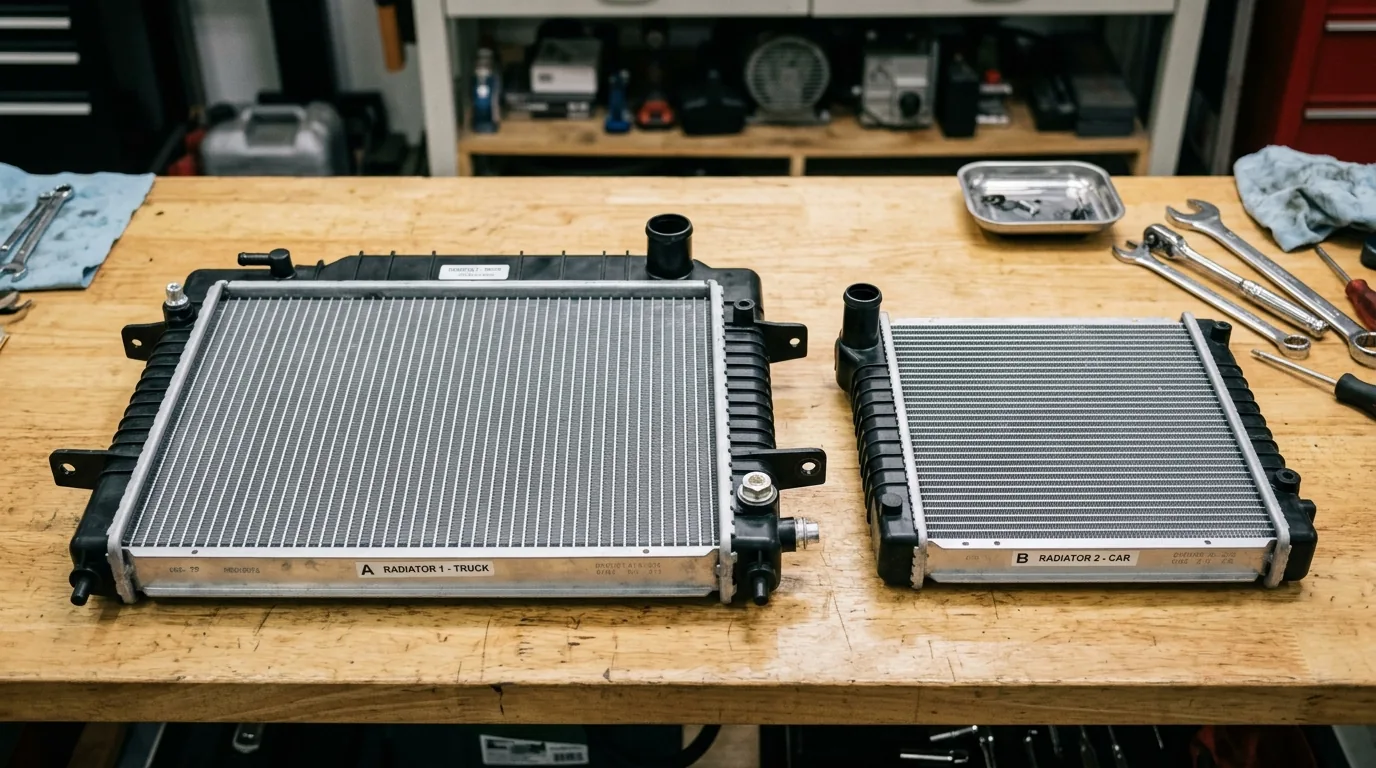
The $106 to $323 model median range reflects vehicle type more than anything else. Compact sedans sit at the low end. Full-size trucks, diesels, and vehicles with integrated transmission coolers or heavy-duty cooling packages sit at the top.
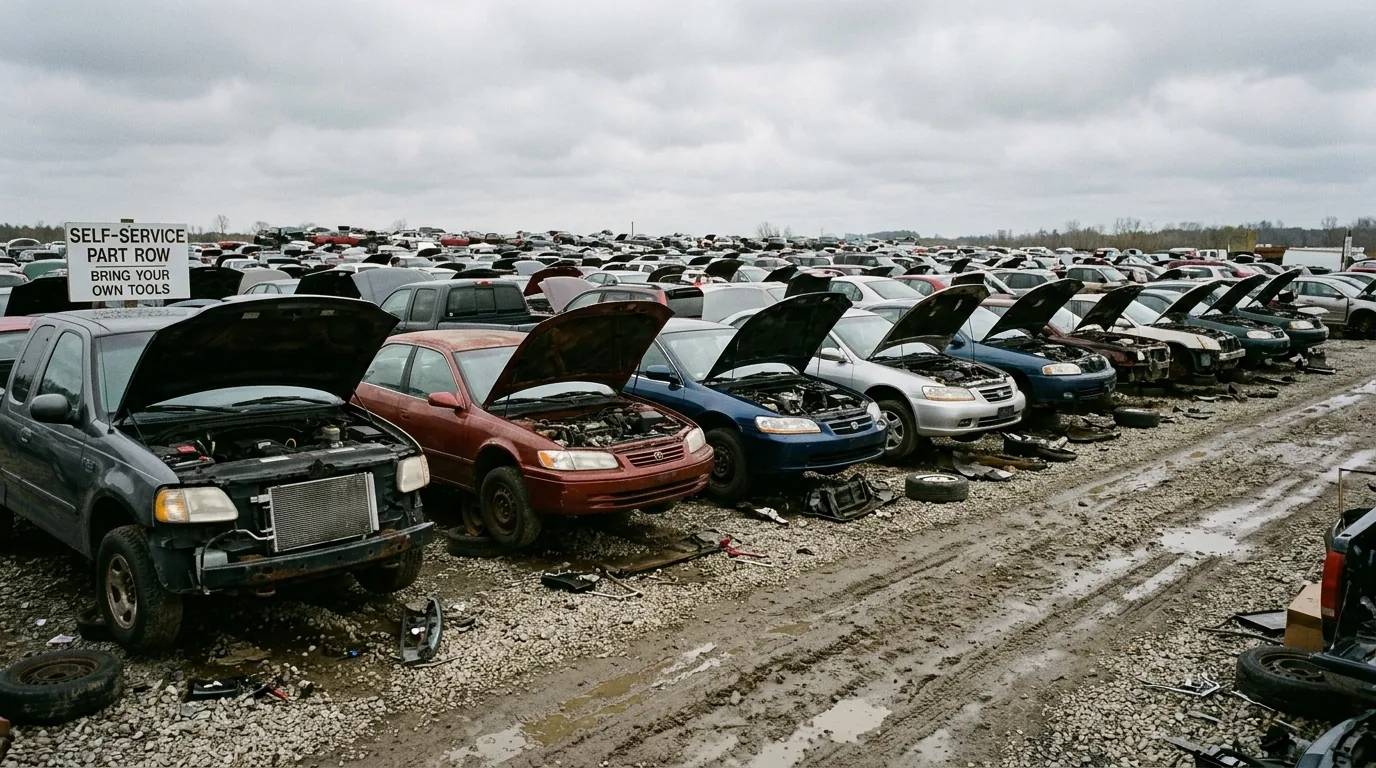
For pricing on your specific year, make, and model, use our radiator price lookup. For sourcing tactics and what to inspect before you buy, see our junkyard radiator pricing guide.
*Part pricing source: PartPriceGuide.com analysis of 41,113 salvage yard listings, August 2026.*
Why used radiators are a safe buy
Radiators are a binary component. There's no clutch material to wear, no bearing to develop play, no gradual efficiency curve. A radiator either holds pressure and moves heat, or it leaks and doesn't. A used unit that passes a pressure test is functionally equivalent to a new one.
That property makes radiators one of the strongest used-part categories. When you buy a used transmission you're gambling on internal wear you can't see. When you buy a used radiator you're buying a verifiable pass/fail result. Ask the yard to pressure test it, or test it yourself before installation, a 15 PSI hold for 15 minutes is the standard check. Our complete used radiator cost guide covers grading and warranty terms in depth.
How Long Does a Radiator Last?
A typical radiator lasts 8 to 15 years, or roughly 100,000 to 200,000 miles. Failures below 8 years are usually caused by impact damage, an electrical ground fault, or neglected coolant.
What extends radiator life:
- Change coolant on schedule. Every 5 years or 100,000 miles for long-life (OAT/HOAT) coolant, every 2-3 years for conventional green. Cooling system component manufacturers like Gates recommend replacing hoses at the same interval. Depleted inhibitors are the leading cause of premature internal corrosion.
- Use the correct coolant type. Mixing incompatible formulations produces gelling that clogs the core.
- Rinse the fins. A gentle low-pressure rinse from the engine side outward clears bugs and debris. Avoid a pressure washer; it flattens the fins.
- Fix small leaks promptly. A weep that lets the system run low causes overheating cycles that stress every seam in the radiator.
Vehicles in road-salt regions and those that tow regularly land at the lower end of that range. Garage-kept vehicles in mild climates with disciplined coolant service routinely reach the upper end.