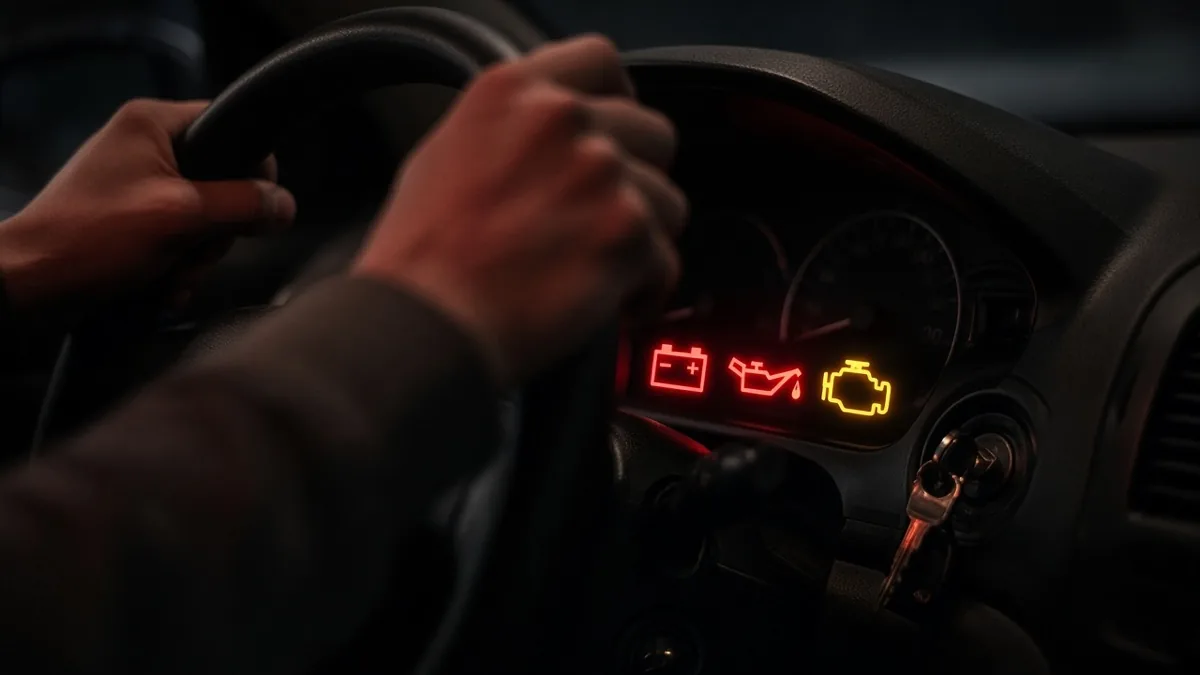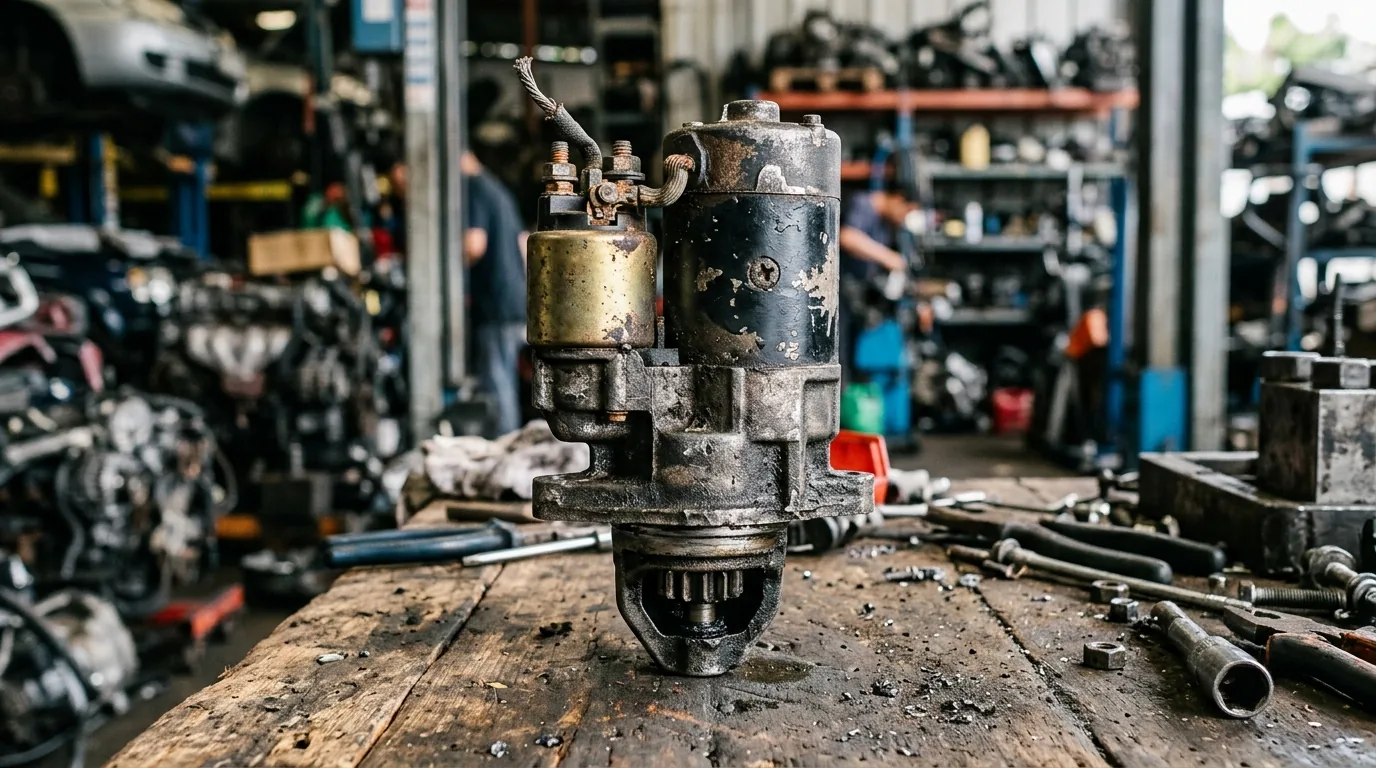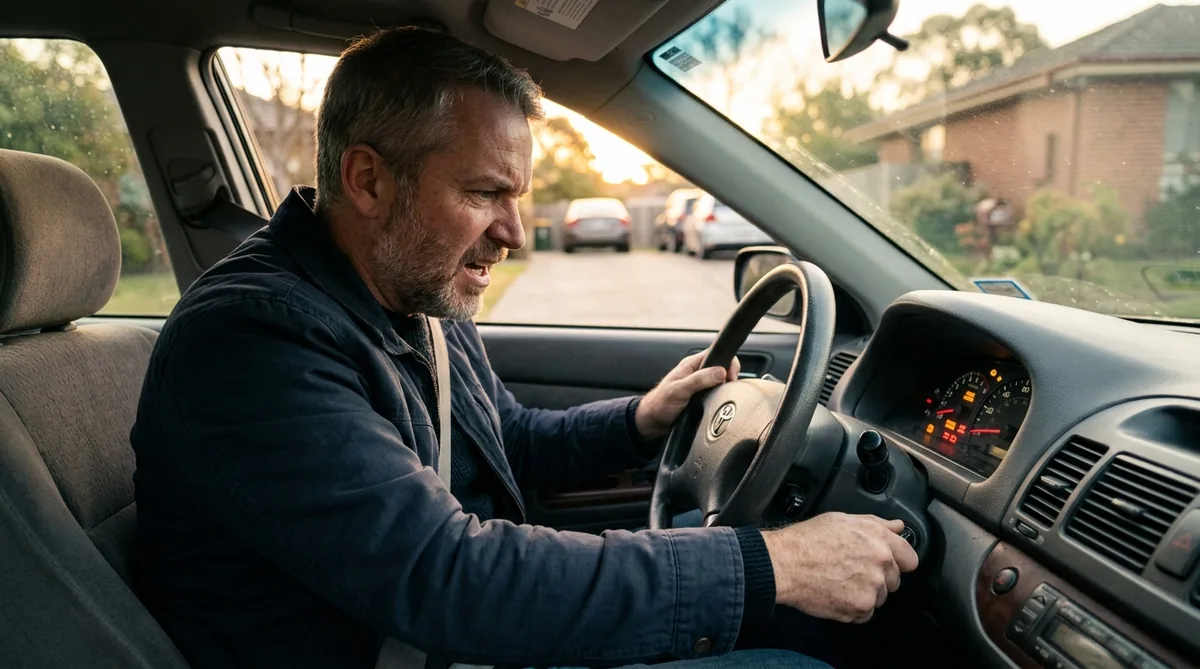
A bad starter produces five distinct warning signs: a single loud click when you turn the key, rapid clicking, a grinding or whirring noise, complete silence with dashboard lights still on, or intermittent starting where the engine fires on some attempts but not others. If you hear a single click and the headlights stay bright, the starter is almost certainly the problem, not the battery.
These symptoms overlap with battery and alternator failures, which makes misdiagnosis common. About 30% of starters replaced at independent shops turn out not to be the actual problem, according to technician forums. This guide walks through each symptom, shows you how to distinguish a bad starter from a dead battery or failing alternator, and covers a simple roadside test that can confirm a starter failure in under a minute.
- Single loud click with bright headlights is the most reliable sign of a bad starter motor
- Rapid clicking usually means a weak battery, not a starter problem, though it can indicate a failing solenoid
- The tap test (tapping the starter body while someone turns the key) confirms stuck brushes and can get one more start out of a dying unit
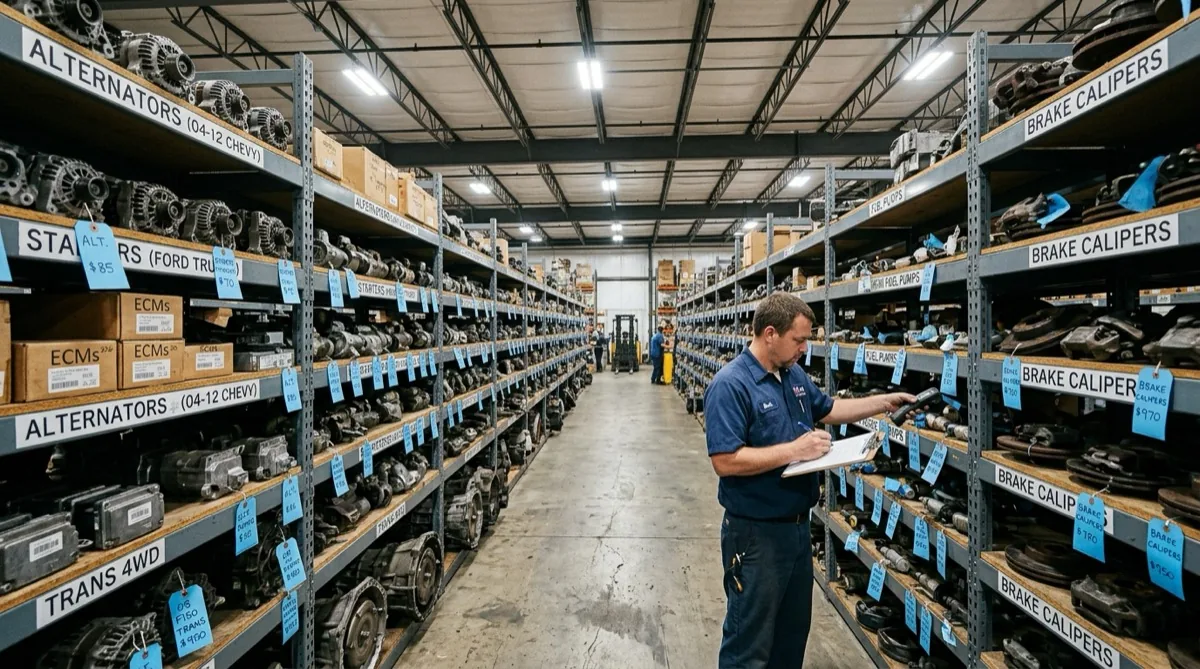
- Used starters cost $91 median across 23,667 salvage yard listings, with total replacement running $250–$600 installed
- Rebuilds cost $50–$100 for parts alone but take specialized tools; full replacement is faster and more common
Top Symptoms of a Bad Starter
Starter failures announce themselves through sound, or the lack of it. Each pattern points to a different failure mode inside the starter assembly, and matching the sound to the cause helps you confirm the diagnosis before spending money.
Single Loud Click
The most common bad starter symptom. You turn the key, hear one solid "clunk" from the engine bay, and nothing else happens. The dashboard lights stay on and the headlights remain bright.
What's happening: the starter solenoid activates and pushes the starter gear toward the flywheel, but the motor itself cannot spin. The solenoid has enough power to engage (that's the click), but the motor windings or brushes have failed. The single click distinguishes this from a dead battery, which typically produces rapid clicking or no sound at all.
Rapid Clicking
A machine-gun burst of clicks when you turn the key. This symptom is tricky because it usually points to a weak battery, not a bad starter. The solenoid tries to engage, draws too much current from a depleted battery, voltage drops, the solenoid disengages, voltage recovers, and the cycle repeats dozens of times per second.
Test it: charge or jump the battery and try again. If the rapid clicking goes away and the engine starts, the battery was the problem. If it persists with a fully charged battery, the starter solenoid contacts are burned and cannot carry enough current to spin the motor.
Grinding or Whirring Noise
The starter spins but makes a harsh grinding sound, or you hear the motor whirring without the engine turning over. Two possible causes:
- Grinding: The starter gear (pinion) is not meshing cleanly with the flywheel ring gear. Worn teeth on either component cause metal-on-metal contact. Continued grinding damages the flywheel, which turns a $91 starter replacement into a $500+ flywheel repair.
- Whirring: The starter motor spins freely but the overrunning clutch inside the starter has failed. The motor runs but cannot transfer torque to the flywheel. The engine doesn't move at all.
Both require starter replacement. If you hear grinding, stop attempting to start the engine to protect the flywheel.
No Response at All
You turn the key and nothing happens. No click, no sound, no cranking. The dashboard lights work normally.
This is the hardest symptom to diagnose because it has the most possible causes. A dead starter is one, but so is a failed ignition switch, a blown starter relay or fuse, a faulty neutral safety switch (automatic transmissions), or a corroded ground cable. Work through the diagnostic decision tree below before assuming the starter is at fault.
Intermittent Starting
The engine starts fine three out of four times, then refuses to start on the fifth attempt. You wait a few minutes, try again, and it fires right up. This pattern repeats over days or weeks, gradually getting worse.
Intermittent failure points to worn carbon brushes inside the starter motor. The brushes still make contact in most positions, but as they wear down, certain rotor positions create a dead spot where the brushes cannot reach the commutator. Temperature matters too: starter motors that fail when hot but work when cold have brushes that expand with heat and lose contact.
Intermittent starting is the one symptom that gives you advance warning. Most other failures happen suddenly. If your starter works most of the time but occasionally refuses, replace it before it fails completely and strands you.
Starter vs Battery vs Alternator
The starter, battery, and alternator form a circuit, and a failure in any of the three can prevent the engine from starting. Replacing the wrong one wastes $100 to $400 and leaves you with the same no-start problem. This diagnostic sequence narrows the cause in under five minutes with no special tools.
The Headlight Test
Turn the headlights on (engine off) and observe their brightness. Then have someone turn the key to the start position while you watch the headlights.
| Headlight Behavior | What It Means | Most Likely Cause |
|---|---|---|
| Headlights go dim or die completely | Battery cannot supply starter current | Dead or weak battery |
| Headlights stay bright, single click | Battery is fine, starter cannot spin | Bad starter motor |
| Headlights stay bright, no click at all | Current is not reaching the starter | Starter relay, fuse, ignition switch, or wiring |
| Headlights are dim even before attempting to start | Battery is partially discharged | Weak battery or failing alternator |
Voltage Test With a Multimeter
For a definitive answer, measure battery voltage at the terminals with a $15 multimeter.
Engine off, no accessories on:
- 12.6 volts or higher: fully charged battery
- 12.4–12.5 volts: 75% charged, should still start
- Below 12.4 volts: charge the battery first, then retest
While cranking (have someone turn the key):
- Above 10.5 volts while cranking: battery is delivering adequate current, the starter is the problem
- Below 9.6 volts while cranking: battery cannot supply enough current, charge or replace it
Engine running (after a successful start):
- 13.5–14.5 volts: alternator is charging properly
- Below 13.0 volts: alternator is undercharging and will eventually kill the battery
- Above 15.0 volts: voltage regulator is failing, overcharging the battery
If the battery tests good at 12.6 volts at rest and stays above 10.5 volts during cranking but the engine still won't turn over, the starter is confirmed as the failed component.
For more on distinguishing these three components, see our car won't start causes guide.
Other Parts That Mimic a Bad Starter
Before ordering a replacement starter, rule out these cheaper possibilities:
- Corroded battery terminals. Clean them with a wire brush and retighten. Corrosion adds resistance that prevents full current from reaching the starter.
- Starter relay or fuse. A failed relay or blown fuse cuts power to the starter completely. Swapping the relay with an identical one from the fuse box (the horn relay is often the same part number) is a free diagnostic.
- Neutral safety switch. On automatic transmissions, this switch prevents starting unless the transmission is in Park or Neutral. A failing switch may not register the correct gear position. Try shifting to Neutral and starting, if it works in Neutral but not Park, the switch is the problem.
- Ground cable. A loose or corroded engine ground strap adds resistance to the starter circuit. Check both ends of the negative battery cable and the engine-to-frame ground.
The Tap Test
The tap test is a roadside diagnostic trick that has been used by mechanics for decades. It works, it is free, and a positive result confirms that the starter is failing.
How to Do It
- Locate the starter motor. On most vehicles it bolts to the lower half of the engine where the engine meets the transmission (the bellhousing). It is a cylinder about the size of a soup can with wires attached to it.
- Have someone sit in the driver's seat with the key in the ignition.
- Using a regular hammer or a heavy wrench, tap the body of the starter firmly. Not a light tap: a solid whack, but not hard enough to crack the housing.
- Immediately have the person in the driver's seat turn the key.
- If the engine starts, the starter has stuck carbon brushes and needs replacement.
Why It Works
Inside the starter motor, carbon brushes press against a spinning commutator to deliver electricity to the motor windings. As brushes wear down, they can stick in their guides or lose spring tension. A physical impact jars the brushes free and restores contact with the commutator, allowing the motor to spin one more time.
The tap test is not a repair. It is a confirmation that the brushes are worn and the starter is on its way out. Some starters respond to the tap test for weeks before failing completely. Others give you one more start and then die for good. Either way, a successful tap test means the starter needs replacement, not that it has been fixed.
When the Tap Test Won't Work
The tap test only works on stuck brush failures. It will not help if:
- The starter solenoid has failed internally (no click at all)
- The overrunning clutch is broken (whirring, no engine rotation)
- The starter gear teeth are stripped (grinding noise)
- The motor windings are burned open (burned smell, no movement)
If tapping doesn't produce a start, the failure mode is beyond stuck brushes and you need to move on to replacement.
When to Replace vs Rebuild
A worn starter can be rebuilt or replaced outright. Both get you a working starter, but they differ in cost, time, and reliability.
Rebuilding
A starter rebuild involves disassembling the unit, replacing the carbon brushes, solenoid contacts, and bearings, then reassembling and bench-testing the motor. Rebuild kits cost $50–$100 for parts and are available for most common starters.
The downside is time and skill. Rebuilding requires removing the starter from the vehicle, disassembling a press-fit housing, soldering brush leads, and reassembling everything to specification. Most independent shops charge the same labor rate for a rebuild as a replacement, which eliminates the cost advantage. Rebuilding makes financial sense primarily if you do the work yourself and have a bench vise and soldering iron.
Replacing With a Used Starter
A used starter from a salvage yard costs $91 median across our index of 23,667 listings, with model-specific medians ranging from $60 to $147. Used starters are available same-day at most yards and come already assembled and ready to bolt in.
The risk with used is that you are installing a part with unknown remaining life. Most salvage yards offer a 30 to 90 day warranty, and starters are simple enough electromechanically that a unit from a low-mileage donor vehicle can last years. For a deeper look at used starter pricing, see our used starter cost analysis.
Replacing With Remanufactured or New
Remanufactured starters run $80–$200 and come with a warranty (often lifetime). New OEM starters cost $130–$350. Both are professionally rebuilt or freshly manufactured and represent the lowest-risk option. For most vehicle owners, a remanufactured starter with a warranty is the best balance of cost and reliability.
The Decision
| Factor | Rebuild | Used | Remanufactured | New OEM |
|---|---|---|---|---|
| Part cost | $50–$100 | $60–$147 | $80–$200 | $130–$350 |
| Warranty | None | 30–90 days | 1 year to lifetime | 1 year to lifetime |
| Install time | Same as replacement | 30 min–4 hrs | 30 min–4 hrs | 30 min–4 hrs |
| Best for | DIY mechanics with tools | Budget-conscious, same-day need | Most vehicle owners | New vehicle owners, high-mileage plans |
For a full breakdown of how used parts compare to new across all categories, see our used auto parts price guide.
What Replacement Costs
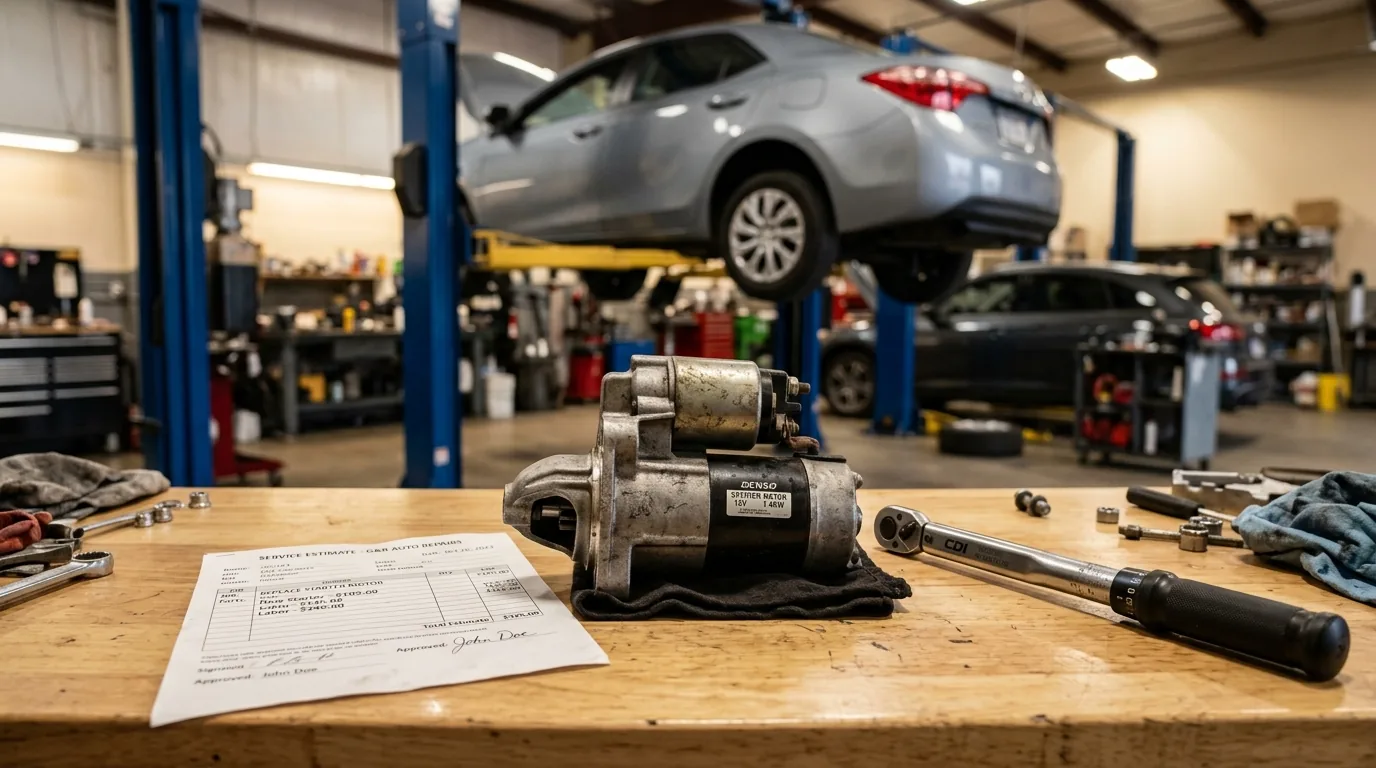
Starter replacement runs $250 to $600 total with a used part, including labor. The starter itself is the smaller half of that bill. Labor ranges from $150 on vehicles where the starter is easily accessible to $500 or more on engines where the intake manifold must be removed first.
The cost variation between vehicles is larger than the cost variation between part sources. A used starter on a rear-wheel-drive truck ($91 part + $150 labor = $241) costs less than a new OEM starter on the same truck ($250 part + $150 labor = $400), but both are far cheaper than any starter on a transverse V6 where the manifold has to come off ($150–$350 part + $400–$500 labor = $550–$850).
For the full cost breakdown by vehicle model, labor splits, and DIY savings, see our complete starter replacement cost guide.