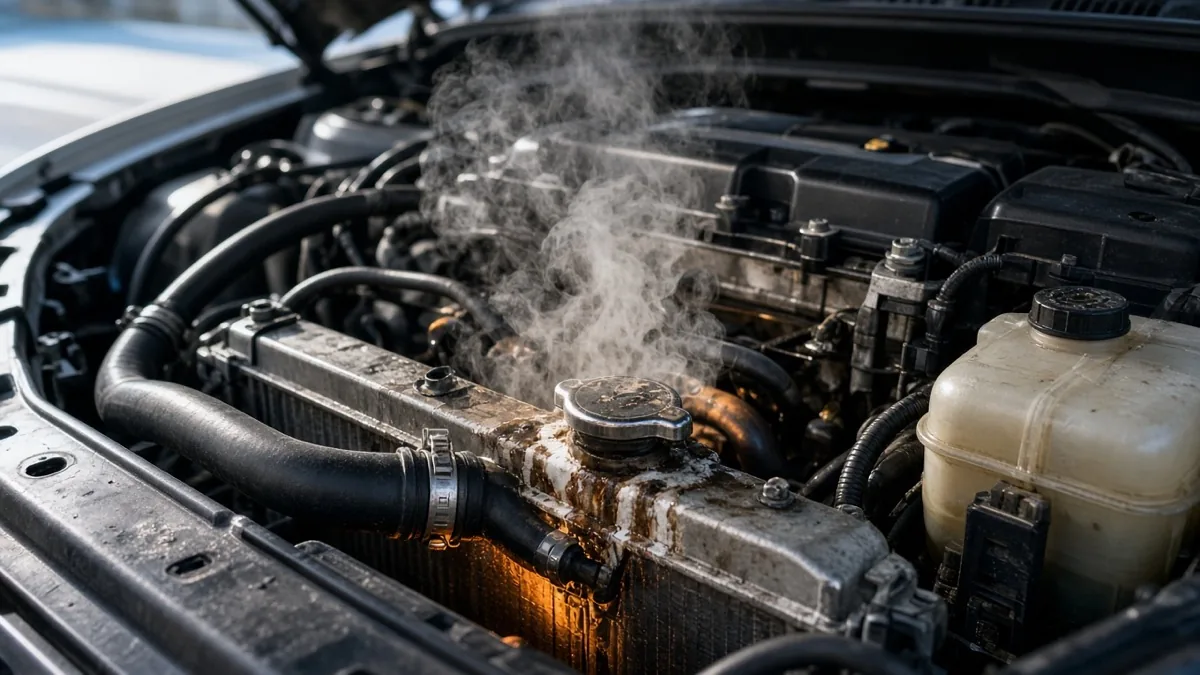
Car overheating repairs cost $150 to $1,200 for cooling system component fixes, with the exact price depending on which part failed. A stuck thermostat is the cheapest repair at $150 to $300. A failed radiator or water pump lands in the $378 to $778 range using a used part. The real cost of overheating, though, is what happens if you keep driving: a $300 cooling system fix can escalate to a $1,500 to $5,000+ engine repair once the head gasket blows or the cylinder head warps.
For a detailed breakdown, see our junkyard parts pricing overview guide.
The six causes below account for the large majority of overheating cases. Each one has a different price range, a different diagnostic signature, and a different urgency level. This guide ranks them by how often they occur, breaks down the cost of each repair, and covers what to do (and what not to do) when your temperature gauge climbs into the red.
- Most overheating repairs cost $150 to $1,200 for the cooling system component that failed
- Coolant leaks are the #1 cause, followed by stuck thermostats and failed water pumps
- A used radiator costs $178 median (68,713 listings); total replacement with labor runs $378 to $778
- A used water pump costs $100 median (12,727 listings); total replacement runs $385 to $700
- Driving while overheating is the expensive mistake: it turns a cooling system repair into a $1,500 to $3,000 head gasket job, or a $3,420 to $5,470 engine replacement
- Pull over immediately when the temperature gauge enters the red, let the engine cool for 30 minutes, and check the coolant level before attempting to drive again
Common Causes Ranked by Frequency and Cost
Not all overheating causes are equally likely or equally expensive. The table below ranks the six most common failures by how frequently they show up in repair shops, paired with the total repair cost including parts and labor.
| Cause | Total Repair Cost | Part Cost (Used) | Labor Hours | Frequency |
|---|---|---|---|---|
| Coolant leak (hose, clamp, or connection) | $100 - $300 | $15 - $50 | 0.5 - 1.5 | Very common |
| Thermostat failure | $150 - $300 | $15 - $40 | 1 - 1.5 | Very common |
| Radiator failure | $378 - $778 | $178 median | 2 - 4 | Common |
| Water pump failure | $385 - $700 | $100 median | 3 - 4 | Common |
| Cooling fan motor failure | $380 - $780 | $150 - $350 | 1 - 2 | Moderate |
| Head gasket failure | $1,500 - $3,000 | $30 - $100 | 10 - 18 | Less common |
The first four causes make up the vast majority of overheating cases. Head gasket failure is less a cause and more a consequence: it usually results from driving too long with one of the other five problems.
Cause-by-Cause Cost Breakdown
Coolant hose leak: $100 to $300
Rubber coolant hoses deteriorate from heat cycling over time. They crack, swell at the connection points, or split where they bend. A failed hose clamp can also let coolant spray onto hot engine surfaces, producing steam that looks dramatic but is actually one of the cheapest fixes on this list.
Upper and lower radiator hoses are the most common failure points. Heater hoses, bypass hoses, and small-diameter connections between the engine block and various cooling components can also leak. The part itself costs $15 to $50 for most vehicles, and the labor is quick because hoses are accessible without removing other components.
For related diagnostics, see our radiator leak symptoms and diagnosis guide.
Thermostat failure: $150 to $300
The thermostat is a valve that opens when the engine reaches operating temperature, allowing coolant to flow from the engine block through the radiator. When a thermostat fails in the closed position, coolant circulates only within the engine block and never reaches the radiator to cool down. The engine overheats rapidly, often within a few minutes of driving.
A thermostat costs $15 to $40 for the part and takes 1 to 1.5 hours to replace. Some vehicles bury the thermostat housing beneath other components, pushing labor toward the higher end. This is one of the best-case overheating scenarios because the repair is fast, cheap, and the engine rarely sustains damage if you pull over promptly.
Radiator failure: $378 to $778
A failed radiator can leak externally (cracked plastic tanks, corroded core tubes), clog internally (sludge blocking narrow passages), or both. The most common failure mode on modern vehicles is the plastic-to-aluminum tank seam splitting from years of heat cycling.
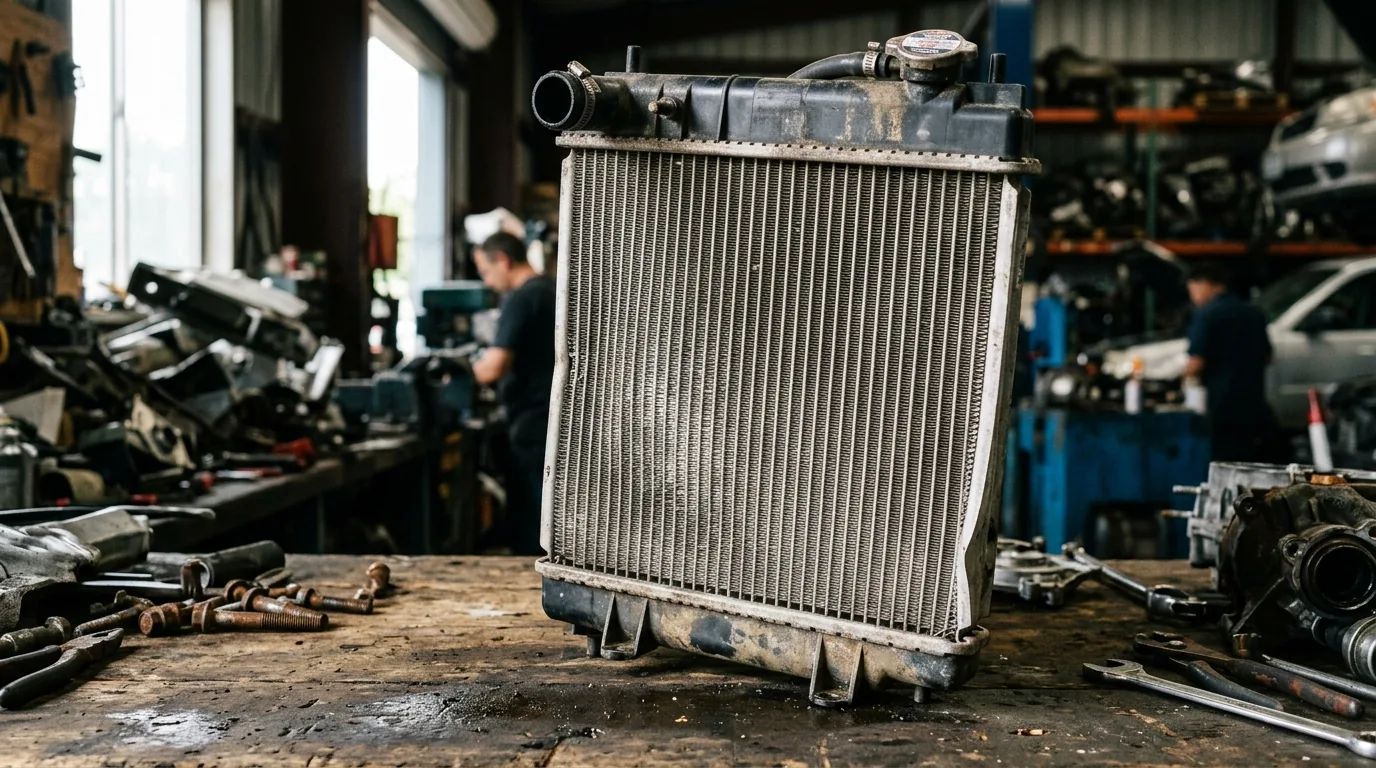
A used radiator costs $178 median across 68,713 listings in our index. Total replacement, including 2 to 4 hours of labor and a coolant refill, runs $378 to $778.
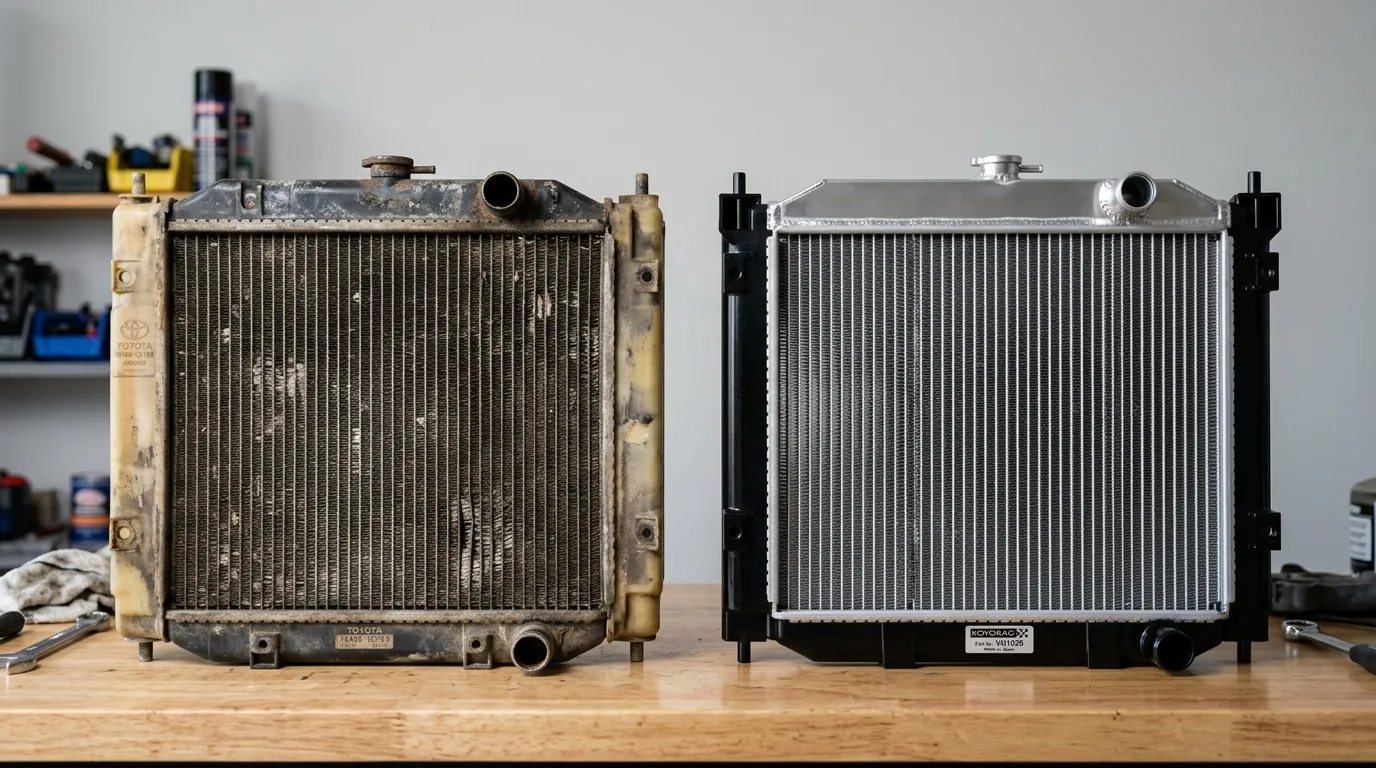
See also: used vs new radiator comparison.
Radiators are straightforward to replace because they sit at the front of the engine bay with relatively easy access. The job involves draining the cooling system, disconnecting the transmission cooler lines (on automatic vehicles), unbolting the radiator, and dropping it out. A used radiator is a strong choice here because a radiator has no wear-sensitive internals. It either holds pressure and transfers heat, or it doesn't.
For a detailed breakdown, see our used radiator pricing data guide.
Water pump failure: $385 to $700
The water pump circulates coolant through the engine, radiator, and heater core. When the pump's bearing fails or its impeller corrodes, coolant flow drops and the engine overheats. External signs include coolant dripping from the weep hole at the bottom of the pump housing or a grinding noise from the front of the engine.
A used water pump costs $100 median across 12,727 listings. The part is cheap, but labor runs 3 to 4 hours because the water pump sits behind the timing cover on many engines. On vehicles with a timing belt, shops often recommend replacing the belt at the same time since the pump is exposed during removal, saving a second round of labor down the road.
Cooling fan motor failure: $380 to $780
The electric cooling fan pulls air through the radiator when the vehicle is moving slowly or stopped. If the fan motor burns out or the relay fails, the radiator has no airflow at low speeds. The symptom is overheating that only happens in stop-and-go traffic or at idle but resolves at highway speed where ram air takes over.
Fan motor assemblies run $150 to $350 for the part, with 1 to 2 hours of labor. Some vehicles have dual-fan setups where only one motor fails, and some use a separate fan control module that can fail independently of the motor itself. Diagnosis is simple: if the fan doesn't spin when the engine is hot, the motor or its control circuit has failed.
Head gasket failure: $1,500 to $3,000
Head gasket failure is the repair everyone fears, and for good reason. The head gasket seals the junction between the engine block and cylinder head. When it fails, coolant leaks into the combustion chambers, exhaust gases pressurize the cooling system, or both. The engine overheats because the cooling system can no longer maintain proper pressure and circulation.
The head gasket itself costs $30 to $100. The bill comes from labor: 10 to 18 hours to remove the cylinder head, machine the mating surfaces if they're warped, and reassemble. On V6 and V8 engines where both heads may need service, the cost can push past $3,000.
Head gasket failure often starts with one of the other causes on this list. An ignored thermostat, radiator leak, or water pump failure lets the engine overheat long enough to warp the head and compromise the gasket. That's why pulling over at the first sign of overheating is the single most important thing you can do to limit the repair bill.
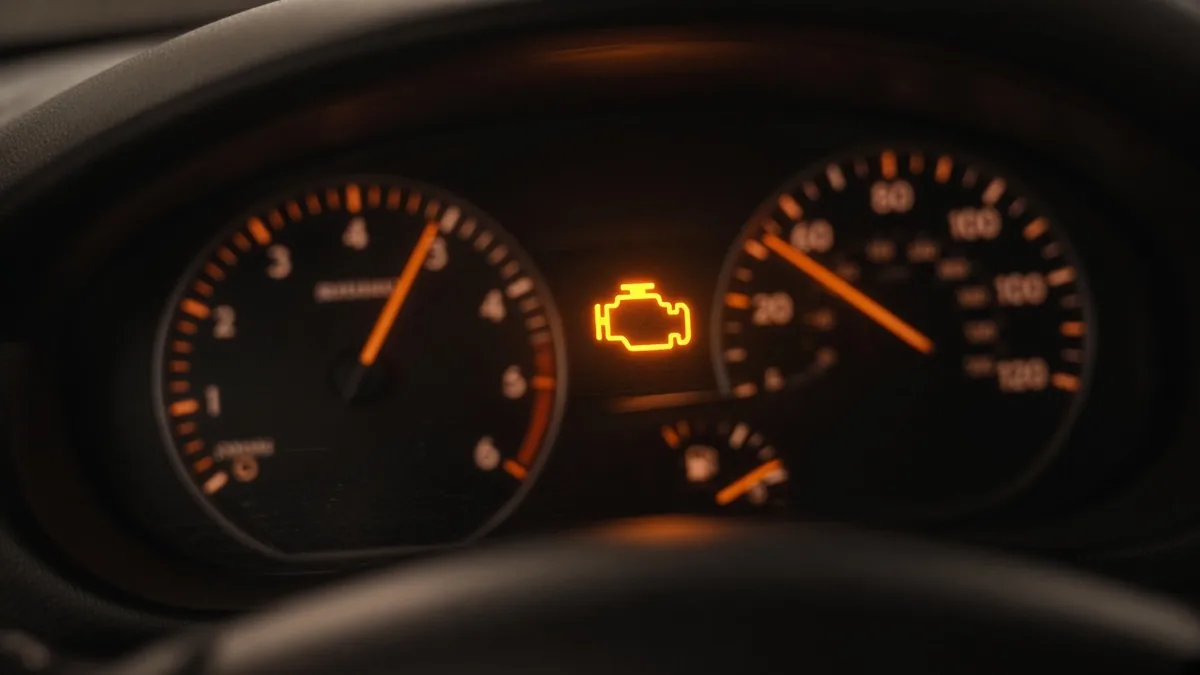
For a detailed breakdown, see our check engine light diagnosis and costs guide.
What to Do When Your Car Overheats
The steps you take in the first few minutes of overheating determine whether you're looking at a $300 repair or a $3,000 one.
Pull over and turn off the engine. As soon as the temperature gauge enters the red zone, the overheating warning light comes on, or you see steam from under the hood, find a safe spot and stop. Every additional minute of driving with an overheating engine increases the risk of head gasket and cylinder head damage.
Do not open the radiator cap. The cooling system is pressurized, typically to 13 to 16 PSI, when hot. Removing the cap releases that pressure instantly, sending boiling coolant into the air. Wait at least 30 minutes for the engine to cool before touching the cap. Even then, use a rag and turn it slowly to release any residual pressure.
Turn on the heater. If you cannot pull over immediately (highway, no shoulder), turning the cabin heater to maximum and the blower to high draws some heat away from the engine through the heater core. This is a temporary measure, not a fix. Pull over as soon as possible.
Check the coolant level. After the engine has cooled, check the coolant overflow reservoir. If it's empty, you have a leak somewhere. Top it off with water (in an emergency) or the correct coolant type and drive directly to a shop. Do not continue normal driving.
Look for visible leaks. Puddles under the engine, wet hoses, steam from specific areas, or a sweet smell all indicate where the leak is. This information saves the shop diagnostic time and you diagnostic fees.
Get a tow if the engine won't cool down. If the temperature gauge climbs back into the red within a few minutes of restarting, call a tow truck. The $75 to $150 tow cost is trivial compared to the engine damage from pushing it.
How to Tell Which Cooling Component Failed
Each failing component produces a distinct symptom pattern. Matching the symptom to the cause can save diagnostic time at the shop and help you understand the repair estimate.
Overheats quickly from a cold start, gauge climbs steadily. The thermostat is stuck closed. Coolant is not reaching the radiator at all, so the engine heats up with no cooling. Confirm by feeling the upper radiator hose after 10 minutes of running: if it's cold, the thermostat isn't opening.
Overheats only in stop-and-go traffic, fine on the highway. The electric cooling fan isn't working. At highway speed, air flows through the radiator naturally. At low speed or idle, the fan must run to push air. Check whether the fan spins when the engine is hot and idling.
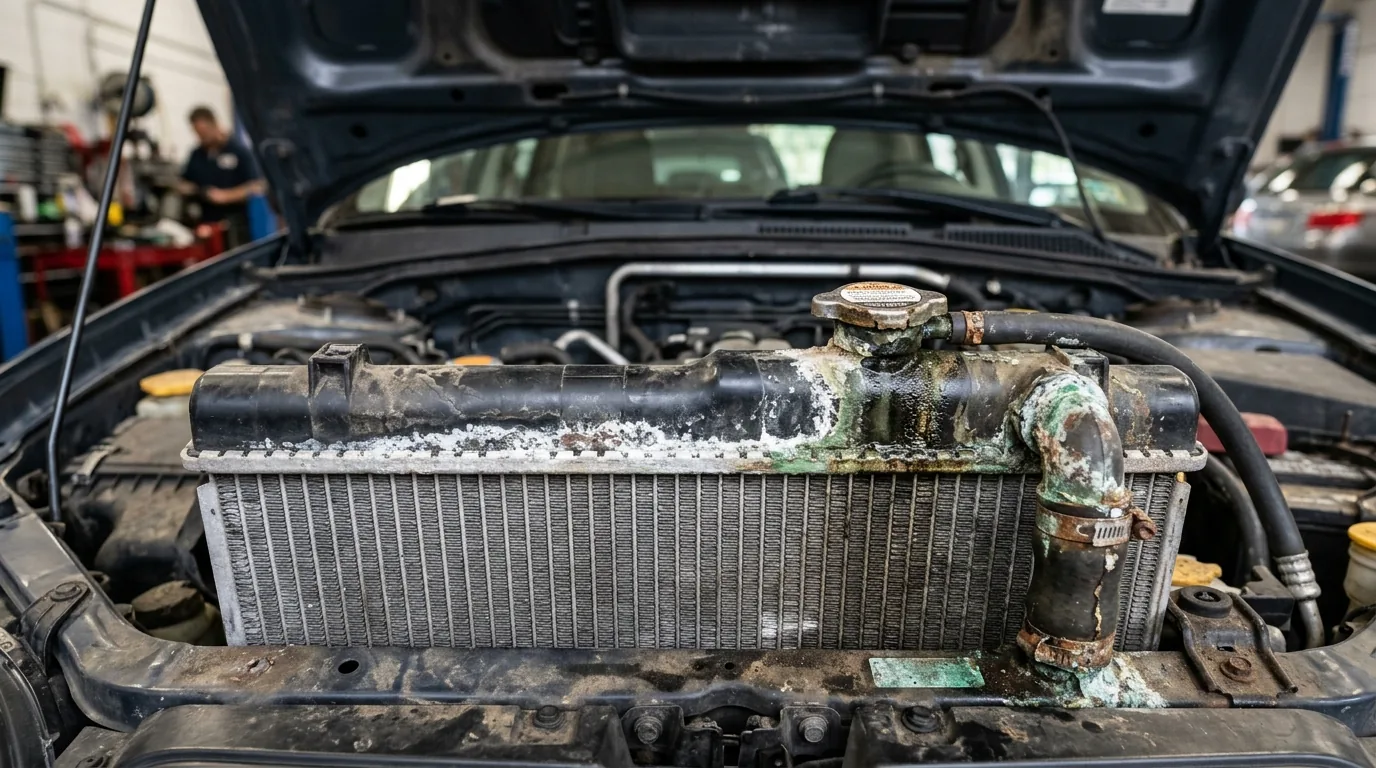
Overheats gradually, coolant level drops over days or weeks. An external leak from a hose, radiator, or water pump. The system loses coolant slowly until there isn't enough to absorb heat. Look for puddles, wet spots, or white/green residue on hoses and connections.
Overheats with no visible leak, coolant disappears. A head gasket leak or cracked component is letting coolant escape internally, either burning it in the combustion chambers or mixing it with engine oil. Check for white exhaust smoke and a milky residue on the oil filler cap.
Overheats with a grinding noise from the front of the engine. The water pump bearing is failing. The pump may still move some coolant, but flow is reduced. The noise gets louder with RPM. You may also see coolant dripping from the pump's weep hole.
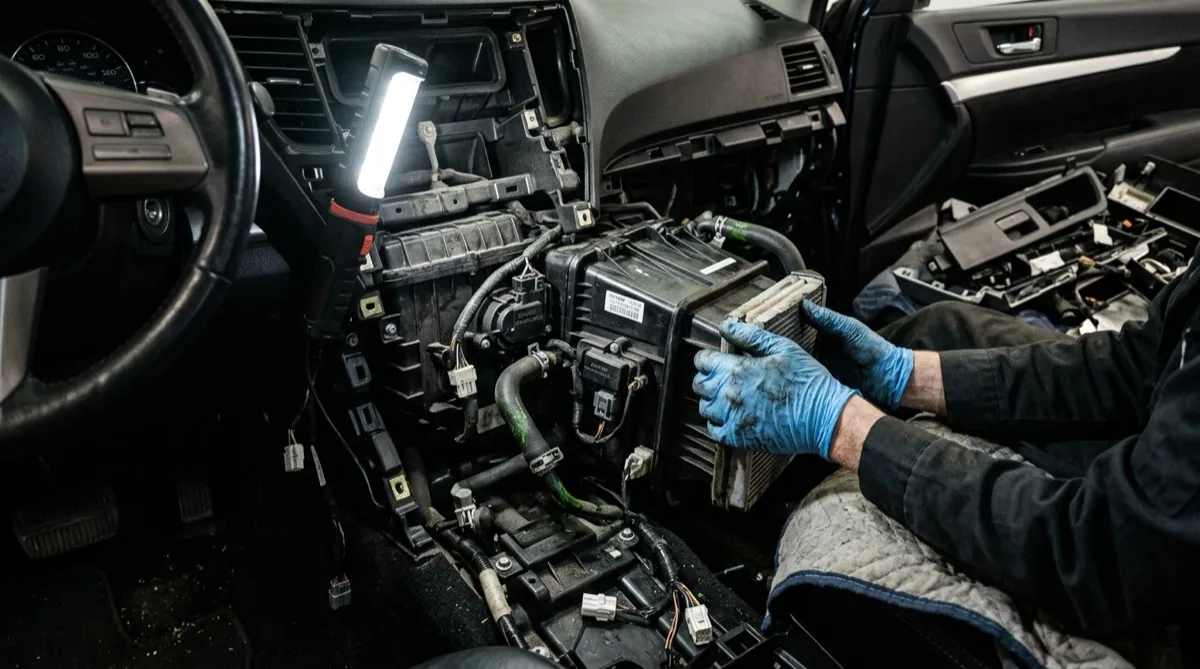
For a detailed breakdown, see our heater core replacement costs and symptoms guide.
When Overheating Kills the Engine
Overheating causes three levels of engine damage, each more expensive than the last.
Level 1: Head gasket failure ($1,500 to $3,000)
The head gasket is the first component to fail because it sits at the highest-stress junction in the engine. When the engine overheats, the aluminum cylinder head expands faster than the cast-iron block (or faster than the other aluminum surfaces on all-aluminum engines), and the gasket can no longer maintain a seal.
Signs: white smoke from the exhaust, coolant in the oil (milky residue on the dipstick), oil in the coolant (brown sludge in the reservoir), and persistent overheating after the original cooling system problem is fixed.
Level 2: Warped cylinder head ($2,000 to $3,500)
If the overheating is severe or prolonged, the cylinder head itself warps. A warped head cannot seal to the block even with a new gasket installed. The head must be removed and sent to a machine shop for resurfacing, or replaced entirely. This adds $500 to $1,000 on top of the head gasket repair.
Level 3: Cracked block or seized engine ($3,420 to $5,470+)
Extreme overheating, the kind that happens when the temperature gauge is pegged and the driver keeps going, can crack the engine block or cause the pistons to seize in the cylinders. At this point, the engine is beyond repair and must be replaced.
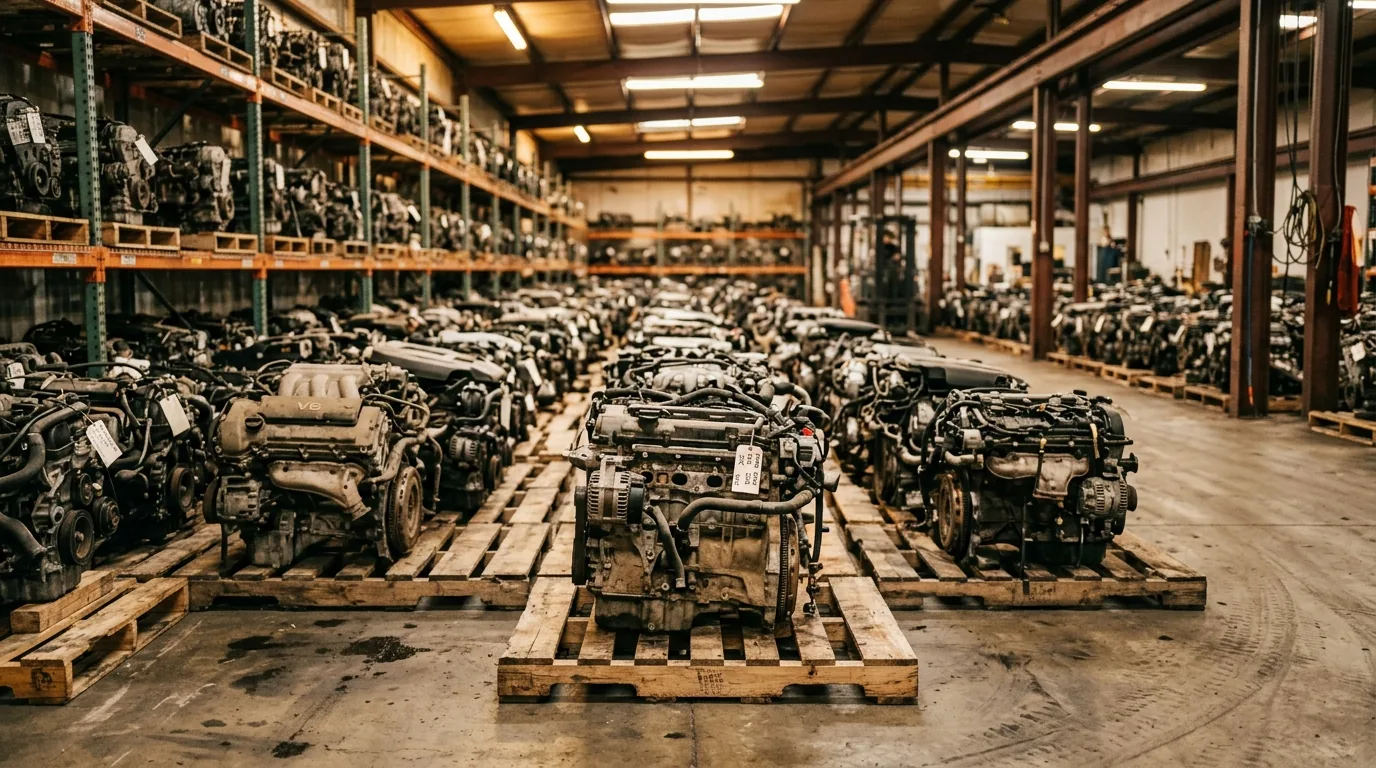
A used engine costs $2,470 median based on our index data. With 5 to 10+ hours of labor at $95 to $150 per hour, total engine replacement runs $3,420 to $5,470 or more depending on the vehicle. For many older vehicles, this cost exceeds the car's value, making the overheating event a total loss.
That cost escalation is why the "pull over immediately" advice matters so much. The difference between a $300 thermostat replacement and a $5,000 engine swap is often just a few minutes of continued driving.
For a detailed breakdown, see our suspension repair costs for reference guide.