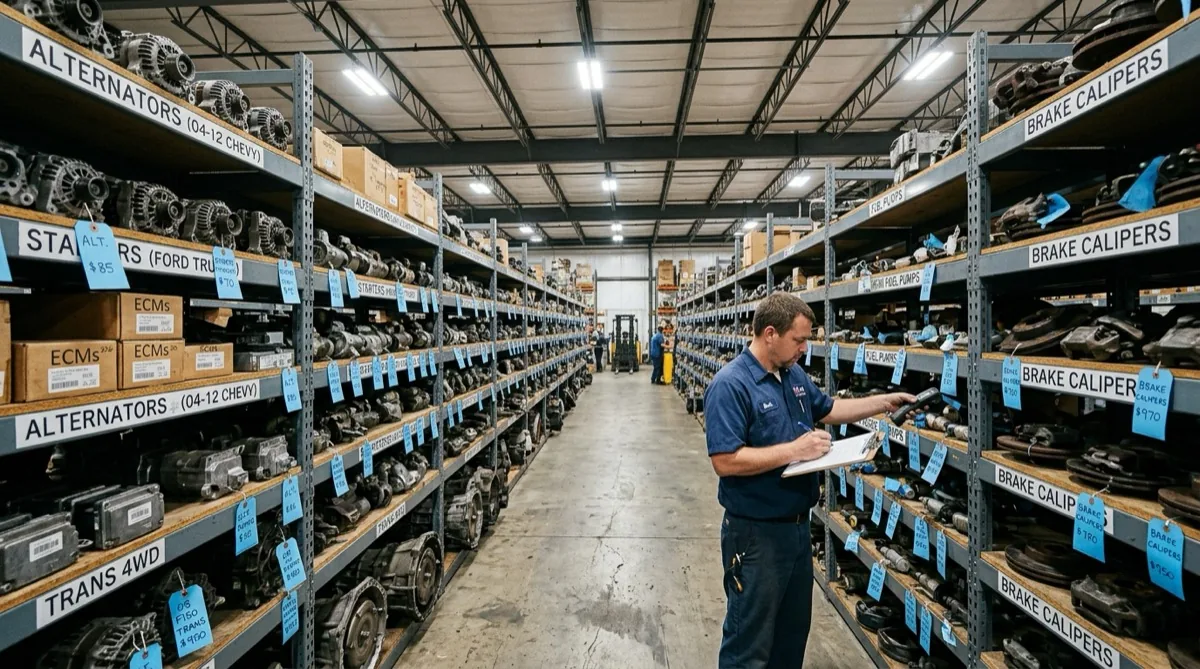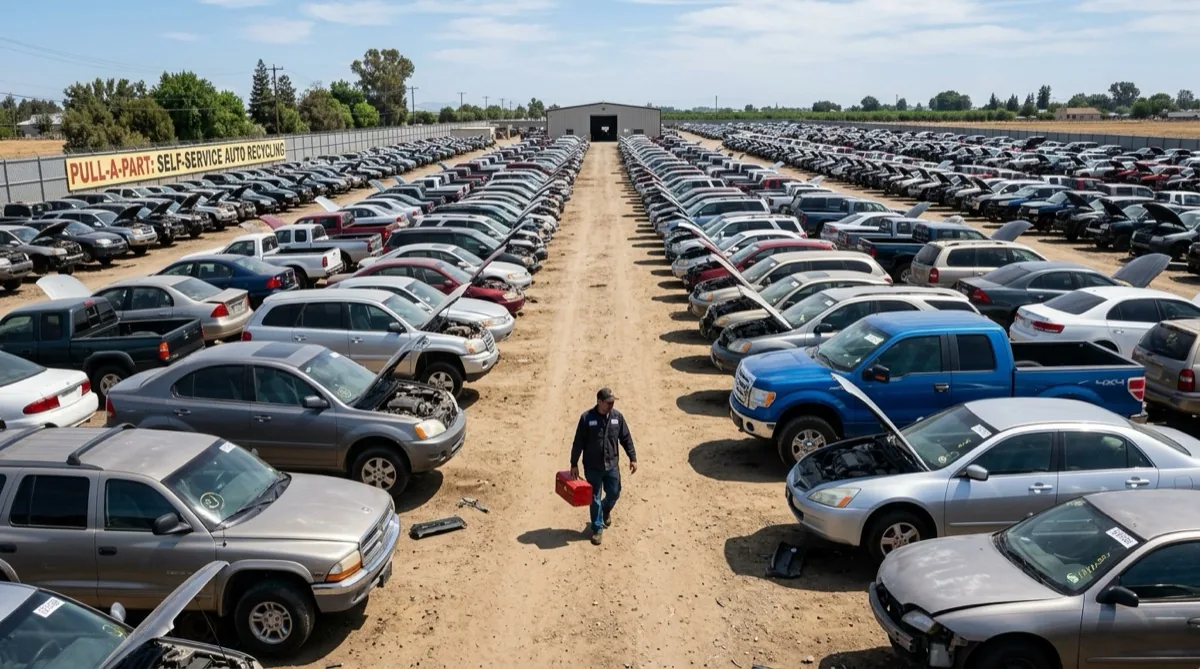
Intake manifold replacement costs $275 to $1,232 total with a used part, including labor and gaskets. A used intake manifold runs a median of $141 across salvage yard listings, with a range of $65 to $402 depending on the vehicle and material type.
For a broader look at salvage yard pricing across all categories, see our used auto parts pricing overview.
The wide cost range reflects the difference between a simple upper plenum swap on a four-cylinder engine (two hours of labor) and a lower manifold replacement on a V6 or V8 that requires removing the fuel rail, throttle body, and dozens of vacuum lines (five hours or more). Gaskets are always replaced with the manifold and add $20 to $80 to every job.
- Intake manifold replacement costs $275 to $1,232 with a used part ($141 median), including $190 to $750 in labor and $20 to $80 for gaskets
- New aftermarket manifolds run $100 to $400, bringing total replacement cost to $310 to $1,230. OEM parts push the total to $410 to $1,630
- Plastic manifolds crack and warp from heat, especially on GM 3.1L/3.4L V6 and Ford 4.6L V8 engines, typically failing between 80,000 and 120,000 miles
- The most telling symptom is a coolant leak with no visible external source, caused by internal cracks in the manifold or failed gaskets
- Lower manifold gasket failure is the most common and expensive repair, requiring 3 to 5 hours of labor because the lower manifold seals coolant passages directly against the cylinder heads
What It Costs
The total replacement cost depends on the part source, the engine layout, and whether you are replacing the upper manifold, lower manifold, or both. Labor accounts for the majority of the bill on most vehicles because the manifold connects to so many other components.
| Cost Component | Used | Aftermarket New | OEM New |
|---|---|---|---|
| Part cost | $65–$402 (median $141) | $100–$400 | $200–$800 |
| Gaskets | $20–$80 | $20–$80 | $20–$80 |
| Labor (2–5 hrs at $95–$150/hr) | $190–$750 | $190–$750 | $190–$750 |
| Total | $275–$1,232 | $310–$1,230 | $410–$1,630 |
The gasket cost is small but non-negotiable. Reusing old gaskets invites vacuum leaks and coolant seepage. A quality gasket set from Fel-Pro or Mahle runs $30 to $60 for most applications. Upper plenum gaskets are cheaper ($20 to $35) because they only seal vacuum, while lower manifold gaskets cost $40 to $80 because they also seal coolant passages.
For junkyard pricing context, see our guide to how much junkyards charge for parts.
*Part pricing source: PartPriceGuide.com analysis of salvage yard listings across 63 vehicle models, August 2026.*
Plastic vs Aluminum Intake Manifolds
Most vehicles built after 1995 use composite (plastic/nylon) intake manifolds. Automakers switched from aluminum to save weight and reduce manufacturing cost. A plastic manifold weighs 8 to 12 pounds less than its aluminum equivalent, which improves fuel economy slightly and lowers the engine's center of gravity. The molded plastic runners also have smoother internal surfaces, which reduces airflow turbulence.
The tradeoff is durability. Plastic manifolds degrade from prolonged heat exposure, and the failure pattern is predictable.
Plastic manifold failure modes:
- Cracking at the coolant crossover. Many V6 engines route coolant through or under the intake manifold. The plastic housing around the crossover passage becomes brittle from heat cycling and cracks, leaking coolant externally or, worse, internally into the intake port. GM 3.1L and 3.4L V6 engines are particularly notorious for this failure, often between 80,000 and 100,000 miles.
- Warping at the gasket surface. The flat mating surface where the manifold meets the cylinder heads warps from heat, breaking the gasket seal. This causes vacuum leaks that trigger lean condition codes (P0171, P0174) and rough running.
- Runner cracking. Individual intake runners can develop hairline cracks that cause vacuum leaks on specific cylinders, leading to single-cylinder misfires.
Ford 4.6L V8 manifolds have their own well-documented failure pattern. The plastic manifold on 1996 to 2004 F-150, Crown Victoria, and Mustang models develops cracks at the coolant crossover, sometimes catastrophically. Ford released an updated design with a reinforced crossover section, and aftermarket aluminum replacement manifolds from Dorman and others are popular upgrades for this engine.
Aluminum manifolds resist all of these heat-related failures. They do not crack from thermal cycling and maintain their gasket surface flatness for the life of the vehicle. The downsides are weight (10 to 15 pounds heavier), higher manufacturing cost, and a greater tendency to corrode internally on vehicles that use long-life coolant past its service interval.
| Feature | Plastic (Composite) | Aluminum |
|---|---|---|
| Weight | 6–10 lbs | 16–25 lbs |
| Heat resistance | Degrades over time | Excellent |
| Common failure | Cracking, warping | Gasket failure, corrosion |
| Typical lifespan | 80,000–150,000 miles | Vehicle lifetime |
| Used part cost | $65–$250 | $100–$402 |
| Aftermarket upgrade available | Varies | Yes (popular for Ford 4.6L, GM 3.8L) |
Check current pricing for your specific vehicle on our intake manifold price lookup.
Symptoms of a Bad Intake Manifold
Intake manifold problems produce symptoms that range from subtle to severe. The specific symptoms depend on whether the manifold itself has cracked or the gasket between the manifold and cylinder head has failed.
Coolant leak with no visible external source. This is the hallmark sign of a cracked plastic manifold or a failed lower manifold gasket. Coolant disappears from the reservoir, the engine overheats intermittently, but you see no puddle under the car. The coolant is leaking internally, either into the intake port (where it burns with a sweet-smelling white exhaust) or into the engine oil (which turns milky on the dipstick). Catching this early prevents serious engine damage.
Rough idle and engine misfires. A vacuum leak through a cracked manifold or failed gasket allows unmetered air into one or more cylinders. The engine control module cannot compensate because the extra air bypasses the mass airflow sensor. The result is a lean mixture on the affected cylinders, causing rough idle and misfires. You may see codes P0300 (random misfire), P0301 through P0308 (cylinder-specific misfire), or lean codes P0171 and P0174.
Hissing or whistling sound from the engine. A vacuum leak through a manifold crack or gasket gap produces an audible hiss, especially at idle when manifold vacuum is highest. The sound often changes or disappears when you rev the engine above 2,000 RPM because manifold vacuum drops at higher throttle openings.
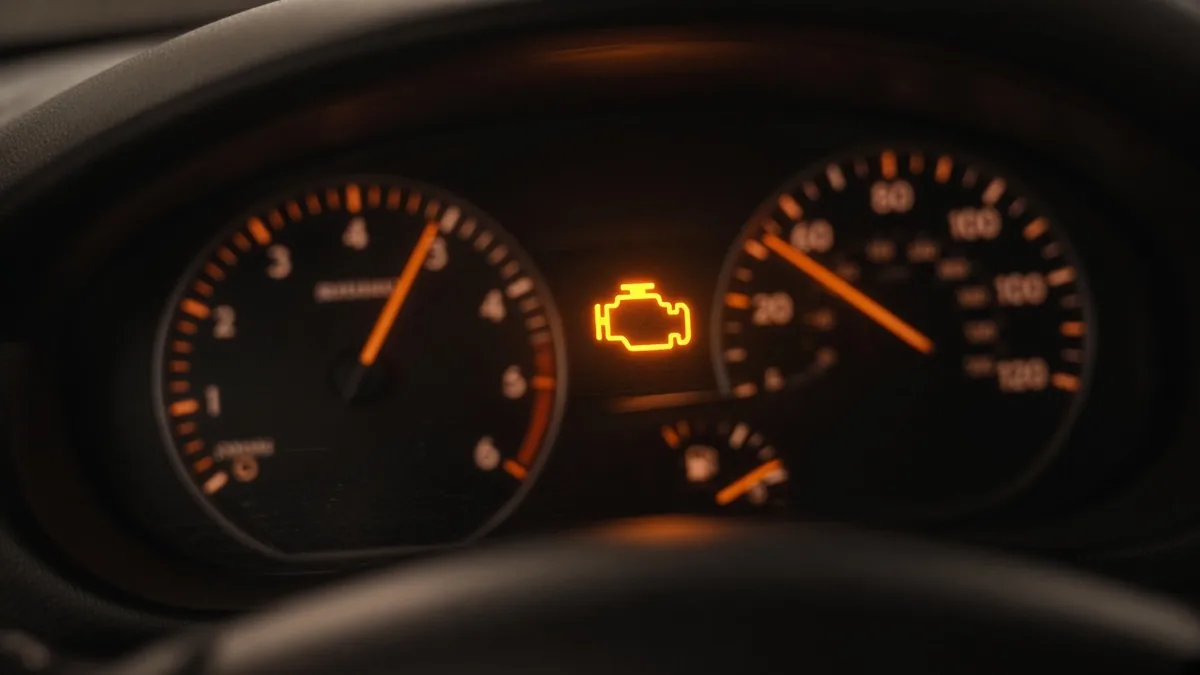
Check engine light with lean condition codes. Codes P0171 (System Too Lean, Bank 1) and P0174 (System Too Lean, Bank 2) are the most common diagnostic trouble codes associated with intake manifold leaks. When both banks show lean simultaneously, the leak is likely at a point that affects the entire engine, such as the manifold gasket or a large crack in the plenum.
Loss of engine power. A large vacuum leak reduces the engine's ability to draw air properly through the intended path, resulting in a noticeable loss of power under acceleration. A cracked manifold can also cause a lean misfire under load that feels like the engine is stumbling or hesitating.
If you are dealing with a check engine light, our check engine light diagnosis and cost guide covers the diagnostic process and common code groupings.
Upper vs Lower Manifold
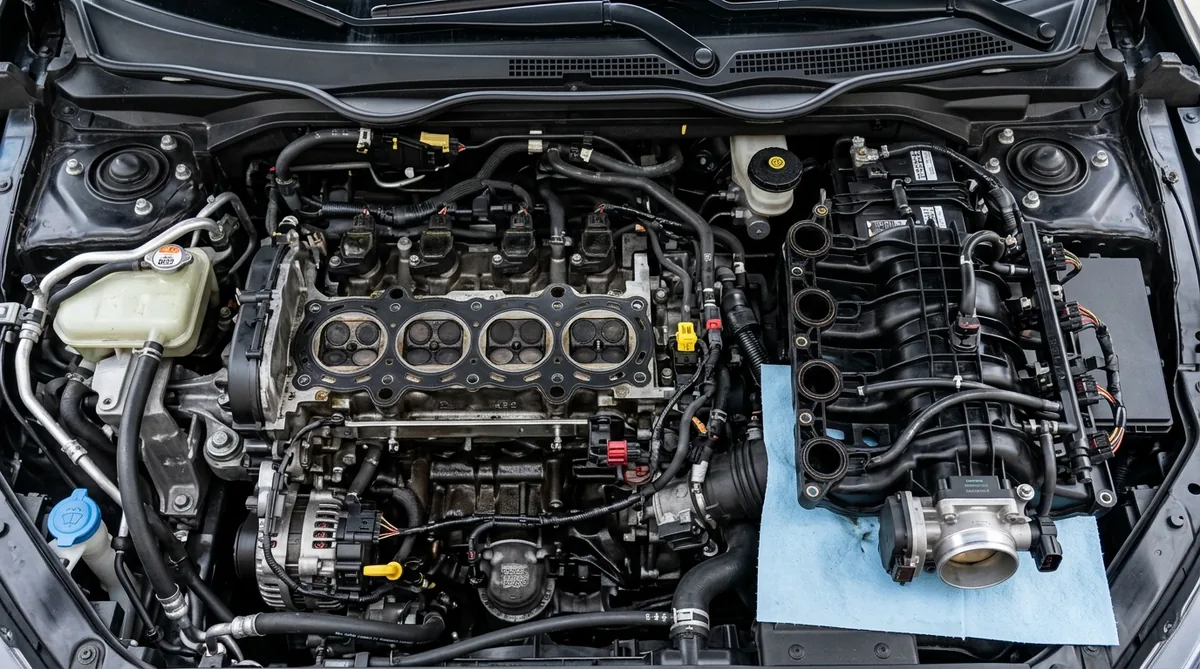
Some engines use a two-piece intake manifold design where an upper plenum distributes air to individual runners in a lower manifold. Understanding which piece has failed matters because the labor cost and repair complexity differ substantially.
Upper manifold (plenum). The upper manifold is the top piece that bolts to the lower manifold. It connects to the throttle body and distributes incoming air to the individual intake runners. On most engines, it is accessible from the top of the engine bay and can be removed without disturbing the fuel rail or coolant passages. Replacement labor runs $200 to $500 (roughly 2 to 3 hours), and the gasket between the upper and lower manifolds is an inexpensive vacuum-only seal ($15 to $30).
Lower manifold. The lower manifold bolts directly to the cylinder heads and contains the individual intake ports. On many V6 and V8 engines, the lower manifold also routes coolant between the cylinder heads through internal passages. This is where the most common and most expensive failures occur. Replacing the lower manifold requires removing the upper manifold first, then disconnecting the fuel rail, injectors, coolant hoses, and all sensor connectors attached to the lower manifold. Labor runs $400 to $750 (3 to 5 hours).
| Repair | Labor Hours | Labor Cost | Common Cause |
|---|---|---|---|
| Upper manifold replacement | 2–3 hrs | $200–$500 | Vacuum leak, runner flap failure |
| Lower manifold replacement | 3–5 hrs | $400–$750 | Coolant crossover crack, gasket failure |
| Lower manifold gasket only | 3–5 hrs | $400–$750 | Gasket deterioration, coolant leak |
| Both upper and lower | 4–6 hrs | $450–$900 | Combined failure or preventive replacement |
When replacing only the lower manifold gasket, many mechanics recommend replacing the upper-to-lower gasket at the same time. The additional gasket cost is minimal ($15 to $30), and reassembly is already in progress.
Single-piece manifolds on inline four-cylinder and some inline six-cylinder engines do not have this split design. The manifold is one casting that bolts directly to the cylinder head. These are simpler to replace (2 to 3 hours of labor), and gasket failure is less common because there are fewer coolant passages integrated into the manifold.
DIY Feasibility
Intake manifold replacement is a moderate to advanced DIY project. The mechanical process is straightforward (unbolt old manifold, clean surfaces, install new gasket, bolt on new manifold), but the difficulty lies in managing the surrounding components.
What makes it challenging:
- Dozens of vacuum lines and hose connections. A typical V6 intake manifold has 8 to 15 vacuum lines running to the brake booster, PCV system, EVAP canister, and various sensors. Each one must be labeled, disconnected, and reconnected in the correct position. A single misrouted vacuum line can cause rough idle, stalling, or check engine light codes.
- Sensor and wiring connectors. The manifold connects to the throttle position sensor, idle air control valve, manifold absolute pressure sensor, coolant temperature sensor, and sometimes knock sensors. Each connector must be carefully released without breaking the locking tabs.
- Coolant management. On engines with coolant crossover passages in the manifold, you must drain the cooling system partially before removal. Coolant will spill into the engine valley during removal if you do not prepare for it. Stuff clean rags into the intake ports to prevent coolant from entering the cylinders.
- Torque sequence. Intake manifold bolts must be tightened in a specific pattern (typically center-outward in a spiral) to a specific torque value (usually 8 to 15 ft-lbs for plastic manifolds, 15 to 25 ft-lbs for aluminum). Incorrect torquing warps the manifold or creates uneven gasket compression, causing vacuum leaks. A torque wrench is not optional for this job.
Budget 4 to 8 hours for a first-time attempt on a V6 or V8. Experienced DIYers can complete the job in 3 to 4 hours. Inline four-cylinder engines with simple top-mounted manifolds can be done in 2 to 3 hours.
Tools needed:
- Socket set (8mm to 15mm covers most applications)
- Torque wrench (inch-pounds and foot-pounds)
- Gasket scraper or razor blade for surface preparation
- RTV sealant (some applications require silicone at specific gasket corners)
- Coolant drain pan
- Zip-lock bags and masking tape for labeling vacuum lines and connectors
- Digital camera or phone (photograph everything before disassembly)
Where first-timers get stuck:
- Forgetting to label vacuum lines before removal, then spending hours figuring out where each one goes during reassembly
- Not cleaning the old gasket material completely off the mating surfaces, which prevents the new gasket from sealing
- Over-torquing plastic manifold bolts, which cracks the mounting bosses
- Leaving rags or debris in the intake ports, which get sucked into the engine on first start
The parts savings make DIY attractive. A used manifold at $141 plus a $50 gasket set and a weekend afternoon replaces a $600 to $1,200 shop bill. The skill level required is roughly equivalent to a valve cover gasket replacement, but with more connections to manage.
For sourcing parts, our guide to junkyard pricing covers what to expect at salvage yards.