Intake Manifold price snapshot
- Low
- $56
- Average
- $142
- High
- $750
Part price guide
Saurabh Kumar
Co-Founder & CTO, Part Price Guide
Built the pricing pipeline that collects and normalizes used OEM part listings from salvage yards and online marketplaces across the US.
Ambika Sharma
Co-Founder & COO, Part Price Guide
12 years of project management and technical operations experience. Reviews price guides for sample size, fitment accuracy, and data freshness.
Part overview
Across 175 vehicle models, the typical used intake manifold lists for $125, with model-level medians ranging from $56 to $750. Based on 115,411 priced salvage yard listings tracked by PartPriceGuide.
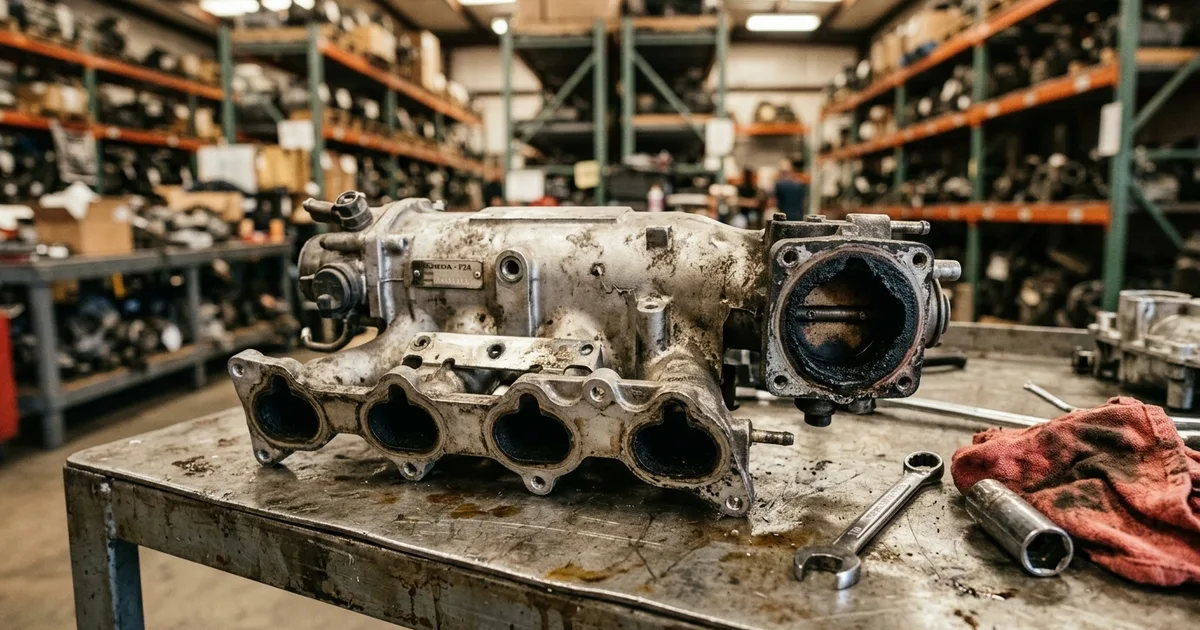
The intake manifold distributes filtered air evenly from the throttle body to each engine cylinder intake port.
Replaced when composite housings crack or warp, causing vacuum leaks, engine misfires, erratic idle speeds, or internal coolant leaks.
A used intake manifold costs $56 to $750, with a median asking price of $125. Based on price data across 175 vehicle-specific guides. Prices exclude shipping, core charges, and installation.
Condition comparison
| Grade | Price range | Relative range | Listings |
|---|---|---|---|
| Grade AClean / low wear | $51–$621 | 175 | |
| Grade BStandard used | $46–$650 | 170 | |
| Grade CVisible wear | $50–$400 | 136 | |
| Grade XUngraded | $55–$750 | 176 |
Median by grade
Median asking price by seller-reported condition grade · $56–$750 overall range
Vehicle-specific reference
175 of 184 guides currently priced
Price data updating
Price data updating
Price data updating
Price data updating
Price data updating
Price data updating
Price data updating
Price data updating
Price data updating
Compare by vehicle
Keep comparing
Common questions
Across 175 vehicle-specific guides with current pricing, used intake manifold guide medians run from $56 to $750, with a typical median of $125. Condition grade, mileage, and fitment move the price within that range.
Usually, yes. Buying a used intake manifold from a salvage yard or auto recycler typically costs a fraction of the new intake manifold replacement cost at a dealership. Compare the grade-level medians above against any replacement quote you've received, and remember our figures exclude shipping and installation labor.
Salvage yards, junkyards, pick-and-pull lots, and online used parts marketplaces all sell used intake manifolds. Our index tracks asking prices nationally, so you can benchmark a local quote against the market range before you buy.
Expect to pay toward the upper half of the $56–$750 range for a grade-A intake manifold with low mileage. Check the grade table above for the current grade-level medians, and confirm whether shipping and any core charge are included in the quote.
They can be — condition grade is the key. Grade A parts come off low-mileage vehicles with little to no damage, grade B is average, and grade C or ungraded parts are the gamble. Buy grade A or B from a yard that offers a return window or warranty, and confirm the mileage of the donor vehicle before paying. The grade-level medians above show what each tier should cost.
Yes. A inlet manifold is another name for a intake manifold. The prices on this page apply regardless of what it's called in your region or by your mechanic.
Inspect plastic intake manifolds for cracks along the molded seams, warped head mating surfaces, and damaged vacuum line ports. For metal manifolds, verify that the throttle body mounting threads are intact and check that internal runner flaps or tumble valves operate freely without binding.
A leaking intake manifold causes unmetered air to enter the engine, resulting in high or erratic idle speeds, engine misfires, poor acceleration, and lean air-fuel mixture fault codes. Plastic manifolds on certain engines may also leak coolant into spark plug wells or intake ports.
Yes, used plastic intake manifolds from low-mileage donor vehicles are safe and economical, provided you check for heat warping and oil degradation around port seals. Ensure all brass threaded inserts for coil packs and sensors are firmly embedded in the plastic casing.
Salvage yards generally sell intake manifolds as bare castings, though some may leave sensors, fuel rails, or runner control solenoids attached. Clarify with the seller exact component inclusions so you know whether to transfer your original sensors and injectors.
You must always install brand-new intake manifold gaskets and vacuum port O-rings during installation. Reusing crushed or hardened rubber gaskets will cause immediate vacuum leaks, rough engine idling, and check engine light warnings.
Used OEM intake manifolds maintain exact intake runner lengths and volume parameters, preserving engine horsepower, torque curves, and emissions compliance. Cheap aftermarket manifolds often suffer from poor casting quality, misaligned mounting bolt holes, and restricted airflow.