A master cylinder replacement costs $185 to $665 total with a used part and $195 to $675 with a new aftermarket unit. The master cylinder itself has a median price of $99 used across salvage yard data spanning 63 vehicle models. Labor runs $95 to $375 for one to two and a half hours of shop time, and every master cylinder job requires a complete brake system bleed that adds $50 to $100 if the shop bills it separately.
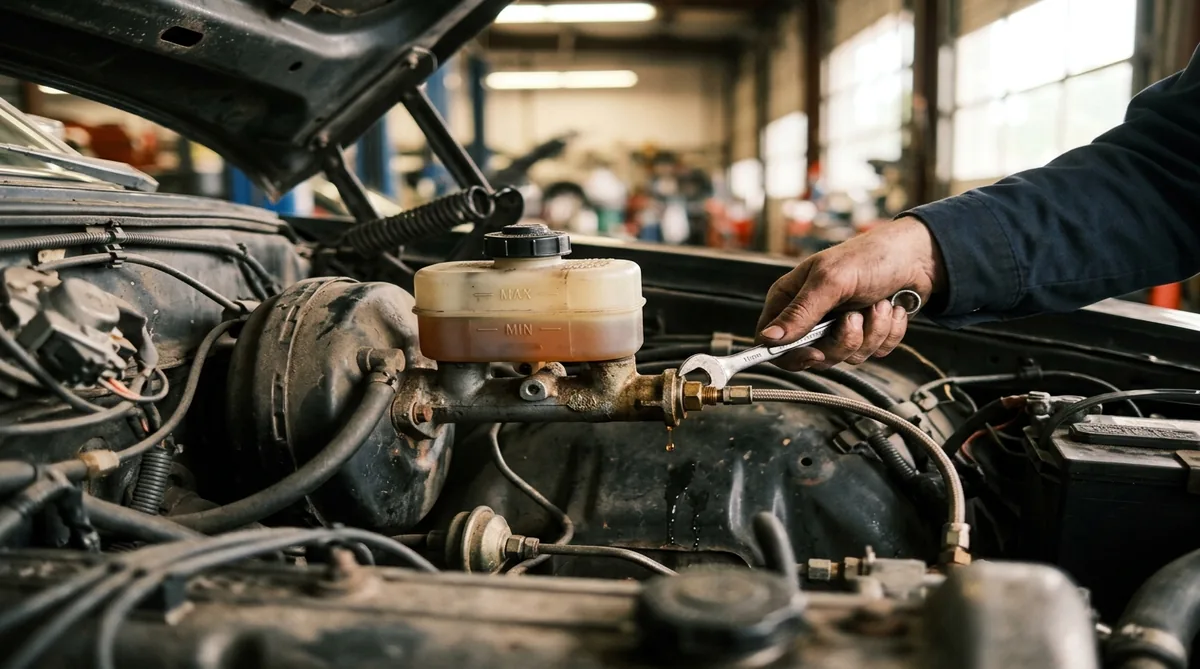
The master cylinder is the component that converts your foot pressure on the brake pedal into hydraulic pressure sent to all four brake calipers. When it fails, the brake pedal feels soft, sinks to the floor, or stops working entirely. Unlike brake pads or rotors that wear gradually, a master cylinder failure typically means a complete loss of normal braking feel, making prompt replacement essential. For broader parts pricing context, see our used auto parts price guide.
- Used master cylinder: $185–$665 total ($99 median part + $95–$375 labor + bleed)
- New aftermarket: $195–$675 total ($50–$200 part + $95–$375 labor + bleed)
- New OEM: $245–$875 total ($100–$400 part + $95–$375 labor + bleed)
- Bench bleeding is mandatory before installing any master cylinder, new or used
- Key symptom: a brake pedal that feels spongy or slowly sinks to the floor at a stop
- Dataset: salvage yard listings across 63 vehicle models, August 2026
What Master Cylinder Replacement Costs
Master cylinder replacement cost breaks down into three components: the part, the labor to install it, and the brake system bleed. Some shops include the bleed in the labor quote. Others list it as a separate line item at $50 to $100.
| Cost Component | Used | New Aftermarket | New OEM |
|---|---|---|---|
| Part cost | $40–$190 (median $99) | $50–$200 | $100–$400 |
| Labor (1–2.5 hrs at $95–$150/hr) | $95–$375 | $95–$375 | $95–$375 |
| Brake fluid bleed | $50–$100 | $50–$100 | $50–$100 |
| Total | $185–$665 | $195–$675 | $245–$875 |
The wide labor range reflects how access varies across vehicles. On many trucks and older cars, the master cylinder sits in an accessible location on the firewall and can be swapped in about an hour. On some modern vehicles with crowded engine bays, reaching the mounting bolts and brake line fittings takes considerably longer.
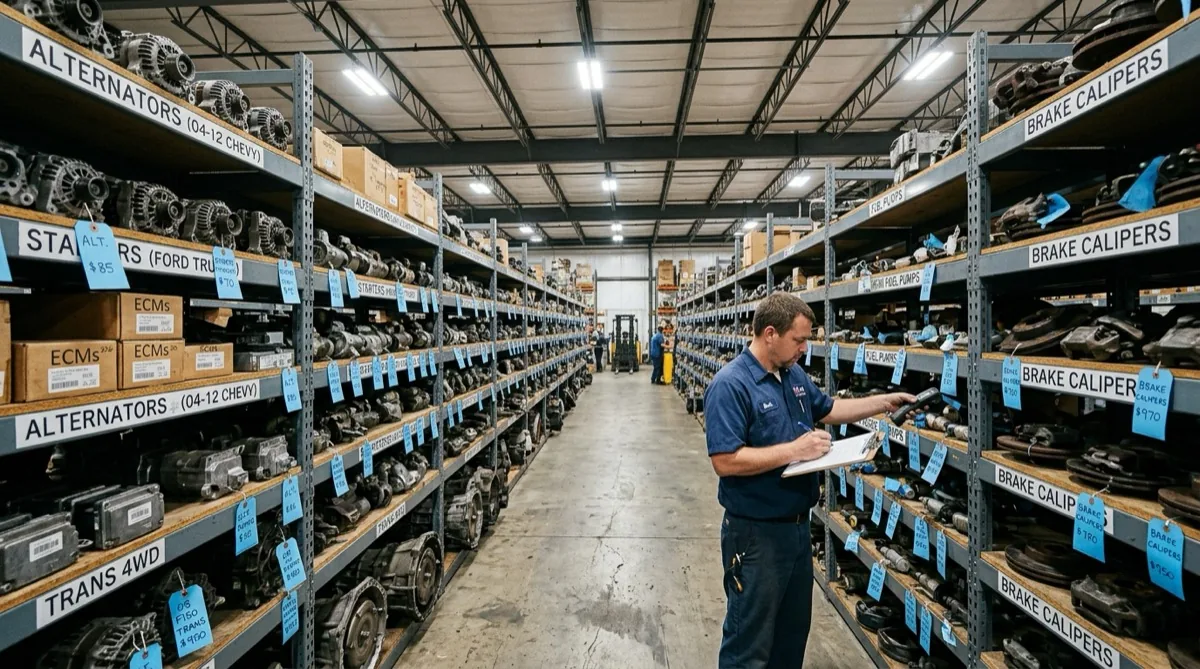
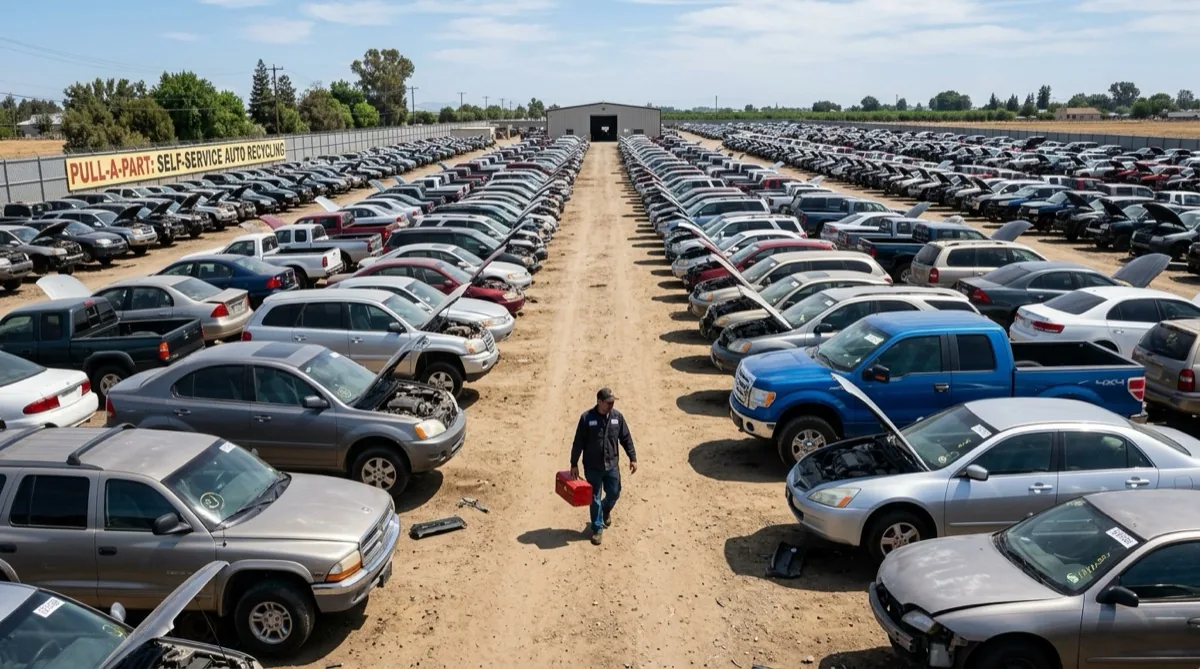
New aftermarket master cylinders are surprisingly affordable, sometimes cheaper than used units at the low end. The tradeoff is that budget aftermarket units occasionally have fit or quality inconsistencies, while a used OEM part is the same unit the vehicle originally came with. For salvage yard pricing patterns, see how much junkyards charge for parts.
Symptoms of a Failing Master Cylinder
Master cylinder failure shows up primarily in how the brake pedal feels. Because the master cylinder is the single point where mechanical force converts to hydraulic pressure, any internal failure changes pedal behavior immediately.
Spongy or soft brake pedal. The most common early symptom. Internal seals in the master cylinder wear and allow small amounts of fluid to bypass the pistons instead of being pushed into the brake lines. The pedal still works but feels soft and requires more travel before the brakes engage.
Brake pedal slowly sinks to the floor. Hold the brake pedal firmly at a red light and it gradually drops toward the floor over 10 to 30 seconds. This confirms internal bypass, where fluid leaks past worn seals inside the cylinder bore. The brakes still function when you first press the pedal, but they lose holding pressure over time.
Brake fluid loss without visible leaks. The brake fluid reservoir on top of the master cylinder drops below the minimum line, but there are no wet spots on brake hoses, calipers, or wheel cylinders. Internal seal failure allows fluid to leak past the pistons into the booster side of the master cylinder, where it is not visible externally.
Brake warning light on the dashboard. Most vehicles have a fluid level sensor in the master cylinder reservoir. When internal bypass or consumption drops the fluid level, the sensor triggers the brake warning light. This light can also mean worn brake pads (low fluid due to caliper piston extension), so check both possibilities.
Pedal goes to the floor with little resistance. A complete master cylinder failure results in a pedal that drops to the floor with no braking force. This is the most dangerous symptom and usually means the internal seals have failed completely. If this happens while driving, use the parking brake to slow the vehicle and get it towed to a shop.
Master Cylinder vs Brake Booster
These two parts bolt together on the firewall and work in sequence, so their symptoms get confused regularly. A misdiagnosis means replacing the wrong part, which solves nothing and costs $200 to $800 in unnecessary work.
The brake booster sits between the brake pedal and the master cylinder. It uses engine vacuum (or a hydraulic pump on some vehicles) to multiply the force your foot applies. The master cylinder sits in front of the booster and converts that multiplied mechanical force into hydraulic pressure for the brake lines.
How to tell them apart by symptom:
| Symptom | Master Cylinder | Brake Booster |
|---|---|---|
| Pedal feel | Soft, spongy, or sinking | Hard, requires excessive force |
| Pedal effort | Normal force, poor response | Very high force needed |
| Engine off behavior | Same soft pedal | Pedal feels normal (no vacuum difference) |
| Hissing sound | None | Hissing from firewall area |
| Fluid level | Dropping | Normal |
Both parts fail independently, and replacing one when the other is the actual problem wastes the full cost of the first repair. Ask your technician to perform a hydraulic pressure test before authorizing a master cylinder replacement, especially if the symptom is a hard pedal rather than a soft one.
Bench Bleeding and Why It Matters
Bench bleeding is a process performed on a new or used master cylinder before it goes into the vehicle. It fills the internal chambers with brake fluid and purges all air from inside the cylinder body. This step is not optional. Skipping it is the single most common cause of persistent soft brake pedals after a master cylinder replacement.
Why bench bleeding exists. A dry master cylinder contains air in the internal bores and passages. If installed dry and then bled through the brake lines normally, the air inside the cylinder body often stays trapped because the internal ports and check valves can prevent it from being pushed out through the downstream lines. The result is a brake pedal that stays spongy no matter how many times the brake lines are bled at the wheels.
How it works. The master cylinder is clamped in a vise on a workbench (not installed on the vehicle). Fittings with short tubes are threaded into the outlet ports, and the tubes are looped back into the fluid reservoir. A technician then slowly pushes the pistons in and out using a dowel or old pushrod. Fluid circulates through the cylinder and back into the reservoir, carrying air bubbles with it. The process continues until no bubbles appear in the tubes, typically five to ten minutes.
What happens if you skip it. The most common outcome is a brake pedal that feels soft or spongy even after bleeding all four wheels multiple times. In some cases the pedal works intermittently, feeling firm sometimes and sinking other times as the trapped air pocket shifts position inside the cylinder. A technician who encounters this after installation will need to remove the master cylinder, bench bleed it properly, and reinstall it, essentially doubling the labor time.
Time and cost impact. Bench bleeding adds 15 to 30 minutes to the job. It requires no special tools beyond the bleed fittings (usually included with new master cylinders) and a vise. The cost is nominal since it is part of the standard installation procedure. Any shop that charges for master cylinder replacement should be performing this step as part of the job.
Can You Replace a Master Cylinder Yourself?
Master cylinder replacement is a moderate-difficulty DIY job. The mechanical portion (removing the old unit and bolting on the new one) is simpler than many brake jobs. The skill requirement is in the bench bleeding procedure and the full brake system bleed that follows.
Tools you'll need: socket set (typically 12mm to 15mm for mounting bolts), flare nut wrench set for brake line fittings (do not use open-end wrenches, they will round the fittings), bench vise for bench bleeding, brake bleeder kit or a helper, fresh DOT 3 or DOT 4 brake fluid (check your owner's manual), drip pan, and shop towels. Brake fluid strips paint on contact, so cover any painted surfaces near the master cylinder.
Step-by-step overview:
- Disconnect the battery. Remove the brake fluid from the reservoir using a turkey baster or syringe.
- Use flare nut wrenches to disconnect the brake lines from the master cylinder. Cap or plug the lines immediately to prevent fluid loss and contamination.
- Unbolt the master cylinder from the brake booster (usually two nuts on the firewall side).
- Bench bleed the new master cylinder on the workbench until no air bubbles appear in the return tubes.
- Install the new master cylinder onto the booster studs and torque the mounting nuts to spec.
- Reconnect the brake lines using the flare nut wrenches. Snug but do not overtighten.
- Fill the reservoir with fresh brake fluid.
- Bleed all four wheels starting from the wheel farthest from the master cylinder (typically right rear, left rear, right front, left front).
- Test the pedal. It should feel firm within the first inch or two of travel. If it is spongy, repeat the bleed.
- Test drive at low speed in a safe area before returning to normal driving.
Budget three to four hours for a first attempt. Experienced DIYers can complete the job in one to two hours. The bench bleed and full system bleed together account for about half the total time.
Skip the DIY if you do not own flare nut wrenches (regular wrenches will round the brake line fittings, creating a much more expensive problem), you are not confident in the bleed procedure, or you lack a proper way to lift and secure the vehicle for wheel-end bleeding. Brakes are the most safety-critical system on any vehicle, and a master cylinder that is not properly bled can fail to stop the car.
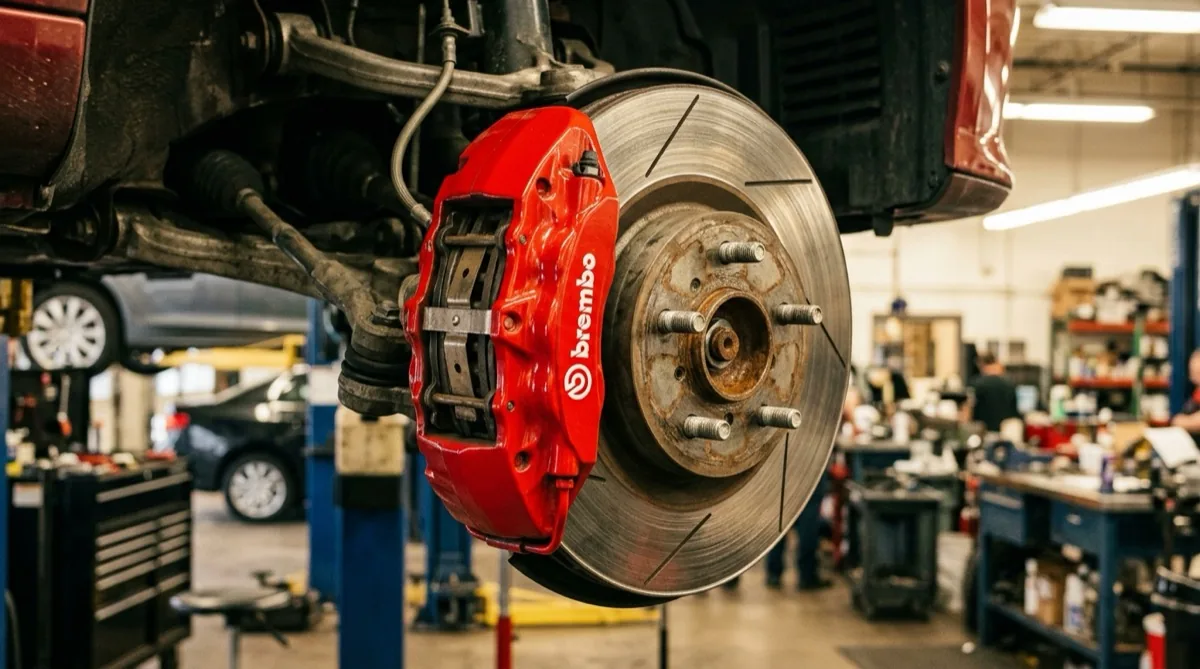
Sourcing a used master cylinder from a salvage yard at the $99 median price and doing the labor yourself brings the total to roughly $110 to $130 for the part, fluid, and bleed fittings. That saves the full $95 to $375 labor charge. For related brake work, see our brake caliper replacement cost guide.