Master Cylinder price snapshot
- Low
- $50
- Average
- $98
- High
- $415
Part price guide
Saurabh Kumar
Co-Founder & CTO, Part Price Guide
Built the pricing pipeline that collects and normalizes used OEM part listings from salvage yards and online marketplaces across the US.
Ambika Sharma
Co-Founder & COO, Part Price Guide
12 years of project management and technical operations experience. Reviews price guides for sample size, fitment accuracy, and data freshness.
Part overview
Across 177 vehicle models, the typical used master cylinder lists for $99, with model-level medians ranging from $50 to $415. Based on 87,067 priced salvage yard listings tracked by PartPriceGuide.
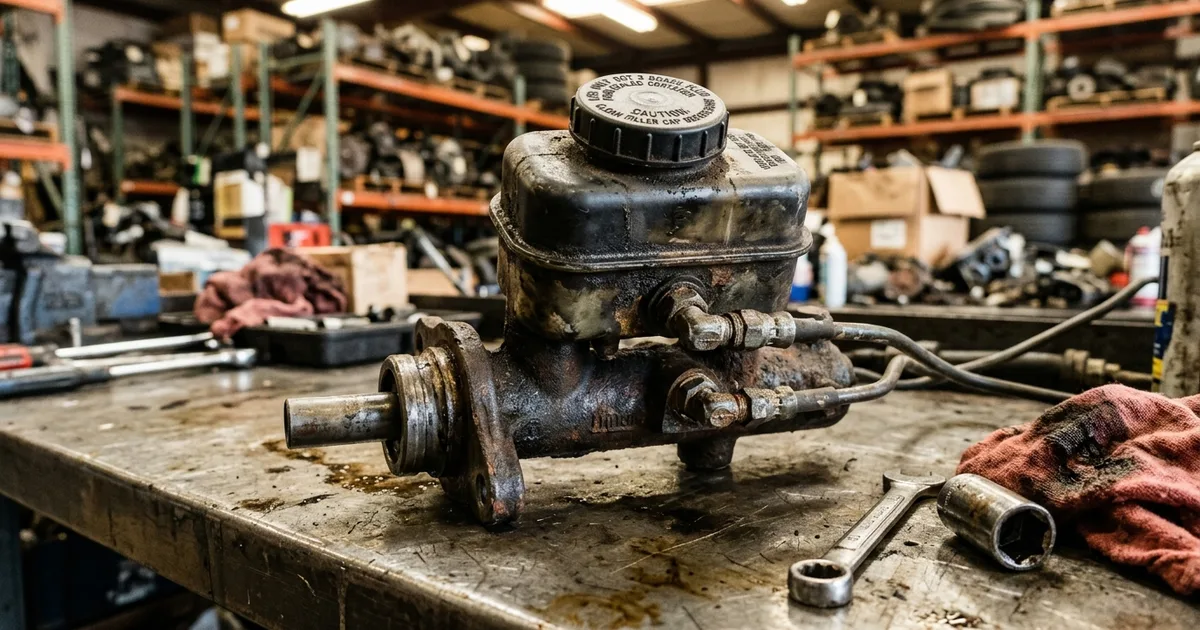
The brake master cylinder converts brake pedal force into hydraulic pressure to operate the front and rear brake calipers.
Replaced when internal seal wear causes the brake pedal to slowly sink to the floor under pressure, reducing stopping power.
A used master cylinder costs $50 to $415, with a median asking price of $99. Based on price data across 177 vehicle-specific guides. Prices exclude shipping, core charges, and installation.
Condition comparison
| Grade | Price range | Relative range | Listings |
|---|---|---|---|
| Grade AClean / low wear | $50–$335 | 177 | |
| Grade BStandard used | $51–$600 | 171 | |
| Grade CVisible wear | $20–$225 | 95 | |
| Grade XUngraded | $25–$290 | 171 |
Median by grade
Median asking price by seller-reported condition grade · $50–$415 overall range
Vehicle-specific reference
177 of 184 guides currently priced
Price data updating
Price data updating
Price data updating
Price data updating
Price data updating
Price data updating
Price data updating
Compare by vehicle
Keep comparing
Common questions
Across 177 vehicle-specific guides with current pricing, used master cylinder guide medians run from $50 to $415, with a typical median of $99. Condition grade, mileage, and fitment move the price within that range.
Usually, yes. Buying a used master cylinder from a salvage yard or auto recycler typically costs a fraction of the new master cylinder replacement cost at a dealership. Compare the grade-level medians above against any replacement quote you've received, and remember our figures exclude shipping and installation labor.
Salvage yards, junkyards, pick-and-pull lots, and online used parts marketplaces all sell used master cylinders. Our index tracks asking prices nationally, so you can benchmark a local quote against the market range before you buy.
Expect to pay toward the upper half of the $50–$415 range for a grade-A master cylinder with low mileage. Check the grade table above for the current grade-level medians, and confirm whether shipping and any core charge are included in the quote.
They can be — condition grade is the key. Grade A parts come off low-mileage vehicles with little to no damage, grade B is average, and grade C or ungraded parts are the gamble. Buy grade A or B from a yard that offers a return window or warranty, and confirm the mileage of the donor vehicle before paying. The grade-level medians above show what each tier should cost.
Yes. A brake master cylinder is another name for a master cylinder. The prices on this page apply regardless of what it's called in your region or by your mechanic.
The brake booster, using engine vacuum or, on some vehicles, an electric/hydraulic assist, multiplies the force from your foot on the pedal. The master cylinder, mounted just in front of the booster, converts that force into hydraulic pressure that actually pushes brake fluid to the calipers and wheel cylinders. A hard, high pedal that still stops the car often points to a failed booster; a soft, sinking pedal or a visible fluid leak at the firewall often points to the master cylinder — different parts, different fixes.
Buying a used brake master cylinder from a reliable donor vehicle is a budget-conscious fix, provided the internal hydraulic seals are fully intact and corrosion-free. Salvage original OEM master cylinders maintain exact bore sizes and reservoir sensor ports designed for your car's hydraulic brake bias. Always bench-bleed the unit before final installation.
Inspect the rear piston bore for fluid leaks, torn dust boots, or surface rust that damages rubber seals. Examine the plastic reservoir for cracks, dark sludgy sediment, or broken fluid level sensor wire ports. Ensure hydraulic brake line threaded ports are unstripped and clean.
A failing master cylinder typically causes a spongy brake pedal that slowly sinks to the floorboard while stopped at a light. You may also notice reduced braking power, dark contaminated brake fluid inside the reservoir, or an illuminated brake warning light. Replacing the hydraulic unit restores firm pedal feel and safe stopping power.
Brake master cylinders vary depending on piston bore diameter, ABS vs non-ABS configurations, and traction control system requirements. Vehicles with upgraded towing packages or larger front calipers often use larger bore master cylinders. Always match original casting numbers and brake line outlet orientations.
Bench bleeding removes trapped air bubbles from the internal hydraulic chambers prior to mounting the master cylinder onto the vehicle brake booster. Attempting to bleed air after mounting makes pedal bleeding difficult and can force residual air through the entire ABS module. Pre-bleeding saves installation time and fluid.
A major mistake is failing to perform a full system brake fluid flush, allowing old, moisture-contaminated fluid to ruin internal seals on the replacement unit. Stripping the flare nut threads on hydraulic brake lines by cross-threading during installation is another common error. Use dedicated flare nut wrenches to tighten metal lines.