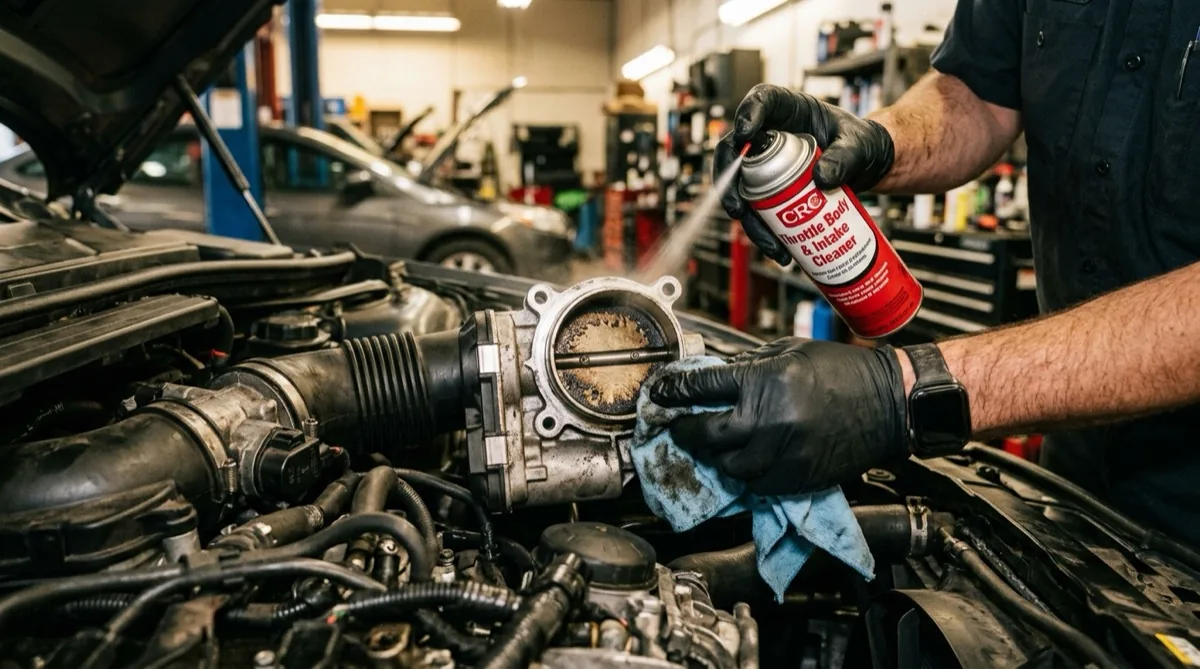
A throttle body cleaning at an independent shop costs $80 to $150. Full throttle body replacement runs $250 to $600 total with a used part, or $300 to $750 with a new aftermarket unit. The important distinction with this part is that most throttle body problems are carbon buildup, not hardware failure, and a $10 can of cleaner often fixes what feels like a $400 repair.
For a broader look at salvage yard pricing, see our used auto parts pricing overview.
A used throttle body runs $100 median across our index of salvage yard listings spanning 63 vehicle models, with a range of $25 to $550. The wide spread reflects the difference between a simple cable-operated throttle body from a 2005 truck and an electronic throttle body with integrated sensors from a late-model European sedan.
- Throttle body cleaning costs $80 to $150 at a shop, or $5 to $15 DIY with a can of throttle body cleaner
- Full replacement costs $250 to $600 with a used part ($100 median), including $150 to $500 in labor
- Most throttle body issues are solved by cleaning, not replacement. Carbon buildup on the throttle plate causes 80% of idle and hesitation complaints
- Bad throttle body symptoms: rough idle, stalling, hesitation on acceleration, check engine light with P0120–P0124 or P2135 codes
- Electronic throttle bodies cost more than cable-operated units because they integrate the motor and position sensors
- DIY cleaning takes 20 minutes and requires only basic tools and a $10 can of cleaner
Throttle Body Cleaning Cost
Professional throttle body cleaning costs $80 to $150 at an independent shop. The price covers 30 to 45 minutes of labor to remove the intake tube, spray the bore and throttle plate with solvent, wipe out the carbon deposits, reassemble, and reset the idle if needed. Some shops include this in a broader intake service, which runs $120 to $200 and also cleans the idle air control passage and mass airflow sensor.
| Cleaning Method | Cost | Time | Skill Level |
|---|---|---|---|
| DIY with throttle body cleaner | $5–$15 | 20 min | Beginner |
| Independent shop | $80–$150 | 30–45 min | Professional |
| Dealership | $120–$200 | 30–45 min | Professional |
| Intake cleaning service (includes MAF, IAC) | $120–$250 | 45–60 min | Professional |
*Labor rates based on independent shop averages of $95 to $150 per hour.*
Throttle Body Replacement Cost Breakdown
When cleaning does not fix the problem, replacement is the next step. The cost depends heavily on whether the vehicle uses a simple cable-operated throttle body or a modern electronic throttle body with integrated motor and sensors.
| Cost Component | Used | Aftermarket New | OEM New |
|---|---|---|---|
| Part cost | $25–$550 (median $100) | $100–$400 | $200–$600 |
| Labor (1–2.5 hrs) | $150–$500 | $150–$500 | $150–$500 |
| Total | $250–$600 | $300–$750 | $400–$950 |
Electronic throttle bodies require a relearn procedure after installation, which adds 15 to 30 minutes of scan tool time. Most independent shops include this in the labor quote, but ask before approving the job.
For comparison, RepairPal estimates throttle body replacement at $500 to $750 nationally, reflecting new OEM parts at dealer labor rates. Used parts from salvage yards cut the total by 30 to 50 percent.
*Part pricing source: PartPriceGuide.com analysis of salvage yard listings across 63 vehicle models, August 2026.*
Cleaning vs Replacement: A Decision Guide
The most expensive throttle body mistake is replacing a part that only needed cleaning. The second most expensive mistake is cleaning a part that has failed electrically. The decision tree is straightforward.
Start with cleaning if the symptoms are gradual, the check engine light is off, and the vehicle idles rough or hesitates without throwing codes. Carbon buildup causes these symptoms in the vast majority of cases, and a cleaning resolves them within minutes.
Move to replacement if any of these apply:
- Cleaning did not resolve idle or hesitation issues
- The check engine light is on with throttle position sensor codes (P0120, P0121, P0122, P0123, P0124, or P2135)
- The throttle plate sticks or binds mechanically even after cleaning
- The vehicle enters limp mode repeatedly
- The throttle body motor does not respond (electronic throttle control warning light stays on)
| Scenario | Recommended Action | Expected Cost |
|---|---|---|
| Rough idle, no codes | Clean | $80–$150 (shop) or $5–$15 (DIY) |
| Rough idle, still present after cleaning | Replace | $250–$600 (used part) |
| TPS codes (P0120–P0124) | Replace | $250–$600 (used part) |
| Dual-range TPS correlation code (P2135) | Replace | $300–$600 (used part) |
| Sticking throttle plate after cleaning | Replace | $250–$600 (used part) |
| Limp mode with ETC light | Replace | $300–$750 (aftermarket) |
For more on diagnostic codes, see our check engine light diagnosis and cost guide.
Bad Throttle Body Symptoms
Throttle body problems produce symptoms that overlap with several other engine issues. Knowing which combination of symptoms points to the throttle body helps avoid unnecessary diagnostics.
Rough or unstable idle. The engine idle speed bounces between 500 and 1,200 RPM or hunts up and down continuously. Carbon deposits on the throttle plate prevent it from sealing consistently at the idle position. This is the single most common throttle body symptom and usually responds to cleaning.
Stalling at stops. When carbon buildup reduces airflow past the throttle plate at idle, the engine may not get enough air to sustain combustion. The vehicle idles fine when cold (because the ECU commands a higher idle during warmup) but stalls when fully warmed up and the idle drops to its normal target.
Hesitation or stumble on acceleration. A dirty or failing throttle body causes a brief lag when you press the accelerator. The engine stumbles for a fraction of a second before responding. On electronic throttle bodies, this can also indicate a failing throttle actuator motor that cannot open the plate fast enough.
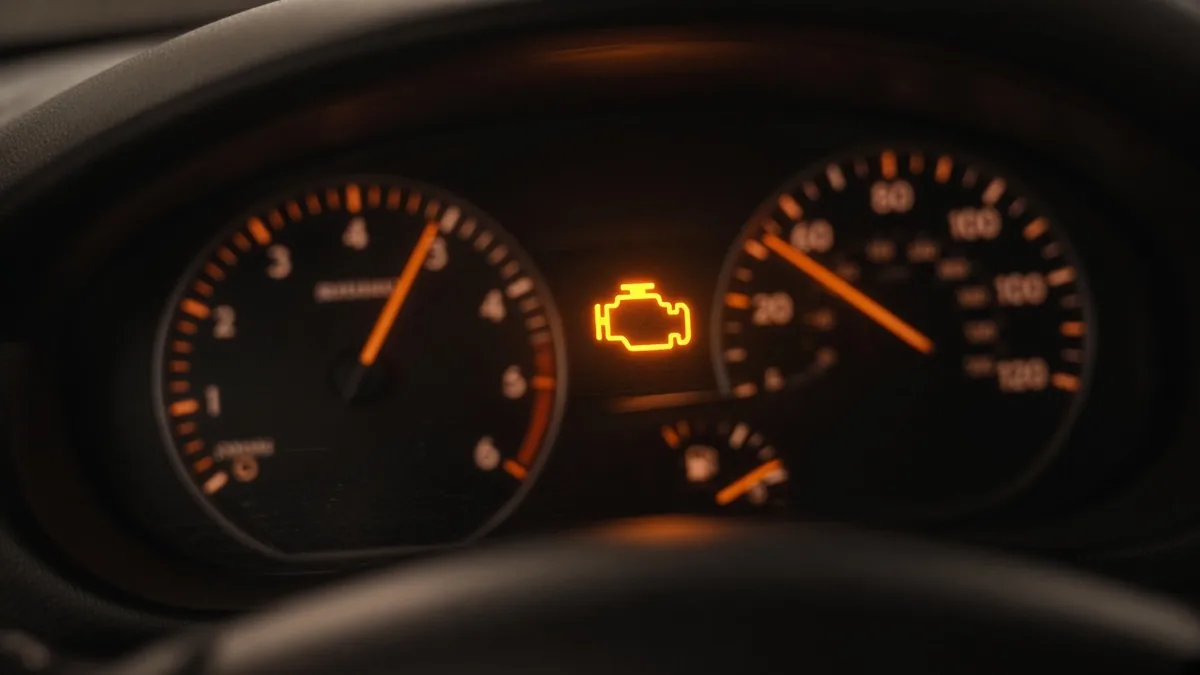
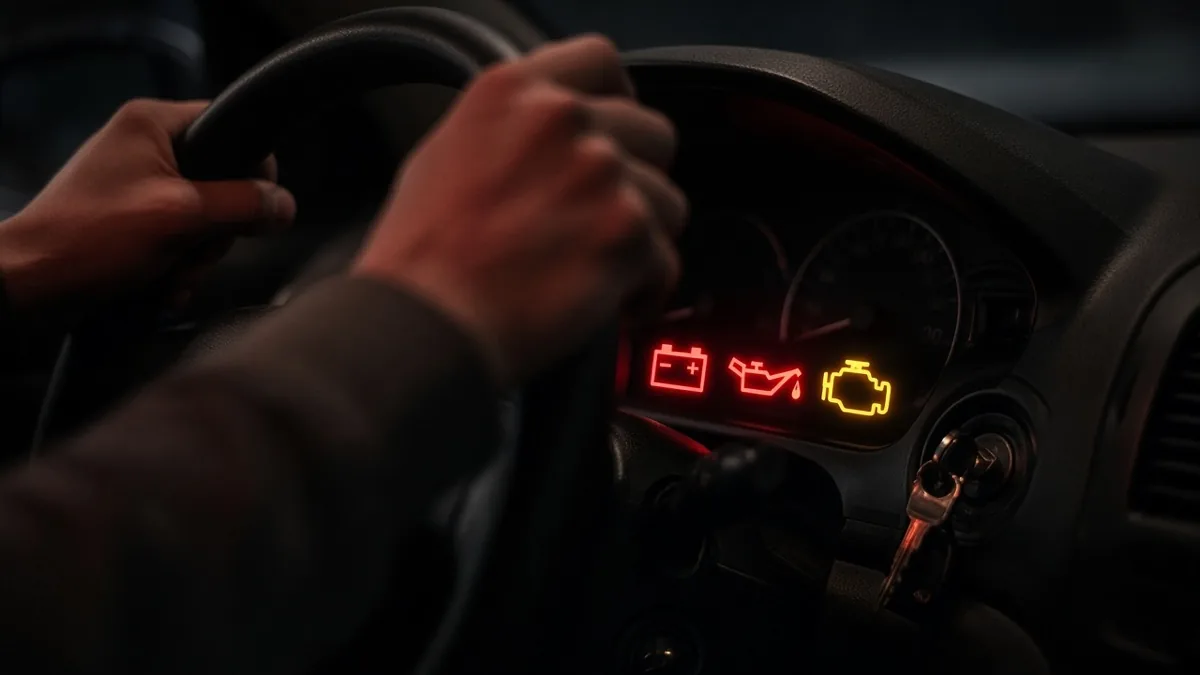
Check engine light with specific codes. Throttle position sensor codes (P0120 through P0124) indicate a sensor reading outside its expected range. Code P2135 specifically flags a disagreement between the two throttle position sensors inside the throttle body, a safety-critical fault that will put the vehicle into limp mode.
Reduced power or limp mode. Modern vehicles with electronic throttle control have a failsafe mode that limits engine power when the ECU detects a throttle body malfunction. The car may accelerate only to 25 to 35 mph. The dashboard shows a "Reduced Engine Power" or "ETC" warning. This symptom requires replacement, not cleaning.
If your vehicle also has starting problems, see our guide to diagnosing why a car won't start.
Electronic vs Mechanical Throttle Bodies
Understanding which type your vehicle has determines both the likely failure mode and the replacement cost.
Cable-operated (mechanical) throttle bodies connect directly to the accelerator pedal through a steel cable. The throttle plate opens in direct proportion to pedal movement. These were standard on most vehicles built before 2005 and remain on some truck platforms into the 2010s. They are simpler, cheaper ($25 to $150 used), and rarely fail outright. When they do need service, it is almost always a cleaning job.
Electronic throttle bodies (drive-by-wire) replaced the cable with a motor and dual position sensors. The accelerator pedal sends an electrical signal to the ECU, which commands the throttle body motor to open the plate. This system allows the ECU to manage traction control, cruise control, and stability control through throttle input. Nearly every vehicle built after 2010 uses this design.
| Feature | Cable-Operated | Electronic (Drive-by-Wire) |
|---|---|---|
| Used part cost | $25–$150 | $75–$550 |
| Common failure | Carbon buildup | Carbon buildup, sensor failure, motor failure |
| Limp mode capable | No | Yes |
| Relearn required after replacement | No | Yes (scan tool) |
| DIY difficulty | Easy | Moderate (requires relearn) |
Check current pricing for your vehicle on our throttle body price lookup.
DIY Throttle Body Cleaning Guide
Cleaning a throttle body is one of the easiest DIY maintenance tasks on a car. It requires no special tools, takes about 20 minutes, and costs under $15 in materials. This procedure works on both cable-operated and electronic throttle bodies.
What you need:
- Throttle body cleaner spray ($5 to $15 at any auto parts store)
- Clean shop towels or lint-free rags
- A Phillips or flathead screwdriver, or an 8mm/10mm socket (for hose clamps)
- Nitrile gloves (the solvent is harsh on skin)
Step-by-step process:
- Locate the throttle body. Follow the large air intake tube from the air filter box to where it connects to the engine. The throttle body is the aluminum housing at the end of that tube, just before the intake manifold.
- Remove the air intake tube. Loosen the hose clamp where the tube meets the throttle body and pull it free. On some vehicles, you also disconnect a mass airflow sensor connector or a breather hose.
- Inspect the throttle plate. Look inside the bore. You will see a round plate (the throttle plate or butterfly valve). Carbon buildup appears as a dark, oily film on the plate edges and bore walls.
- Spray and wipe. Spray throttle body cleaner onto the plate and bore walls. Let it soak for 30 seconds. Wipe with a clean rag. Repeat until the metal surfaces are clean and shiny. On electronic throttle bodies, do not force the plate open by hand. Instead, have someone press the accelerator pedal (key on, engine off) to open it, or spray with the plate in its resting position.
- Reassemble. Reconnect the air intake tube and any disconnected sensors or hoses. Tighten the hose clamp.
- Idle relearn. Start the engine. It may idle rough for 30 to 60 seconds as the cleaner residue burns off. On electronic throttle bodies, you may need to perform an idle relearn: turn the key to "on" without starting for 10 seconds, start the engine, let it idle for three minutes without touching the accelerator, then shut off and restart.
Important cautions:
- Use only throttle body cleaner, not carburetor cleaner. Carb cleaner can damage the throttle position sensor and the protective coatings inside electronic throttle bodies.
- Do not remove the throttle body from the engine for cleaning. Cleaning it in place is faster and avoids the need to replace the gasket.
- If the carbon buildup is heavy enough that it does not respond to spray cleaning, the throttle body may need to be removed for soaking, which takes the job from 20 minutes to about an hour.
For more context on DIY parts sourcing, see our guide to junkyard parts pricing.
See also our used auto parts price guide for pricing across all part categories.