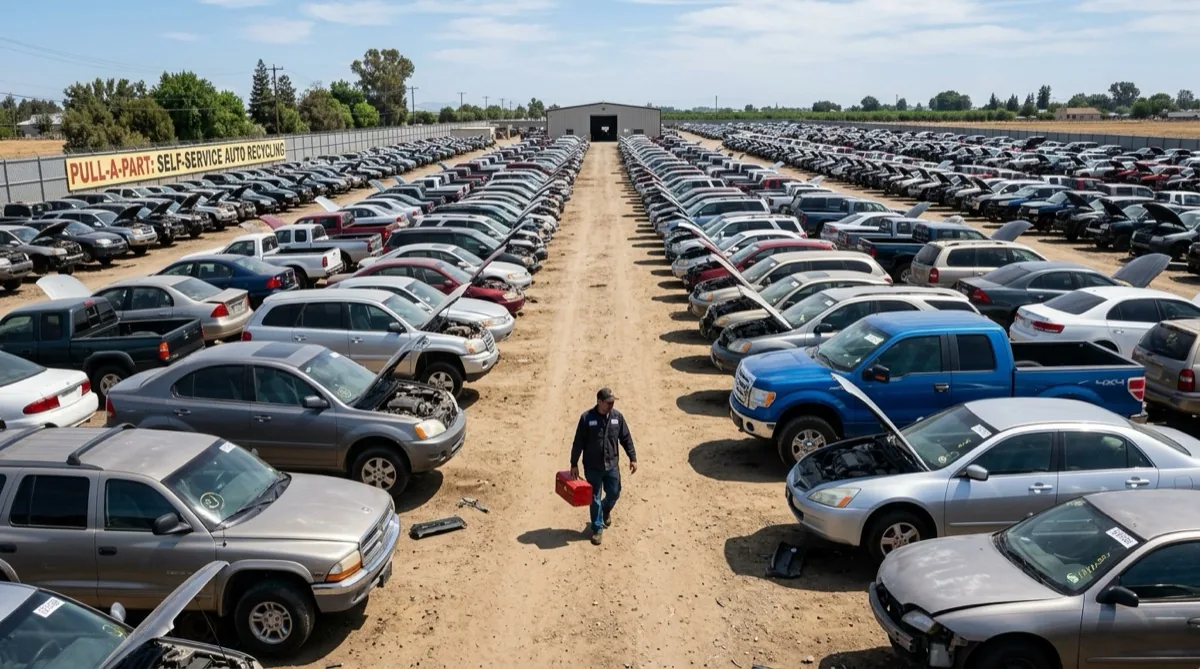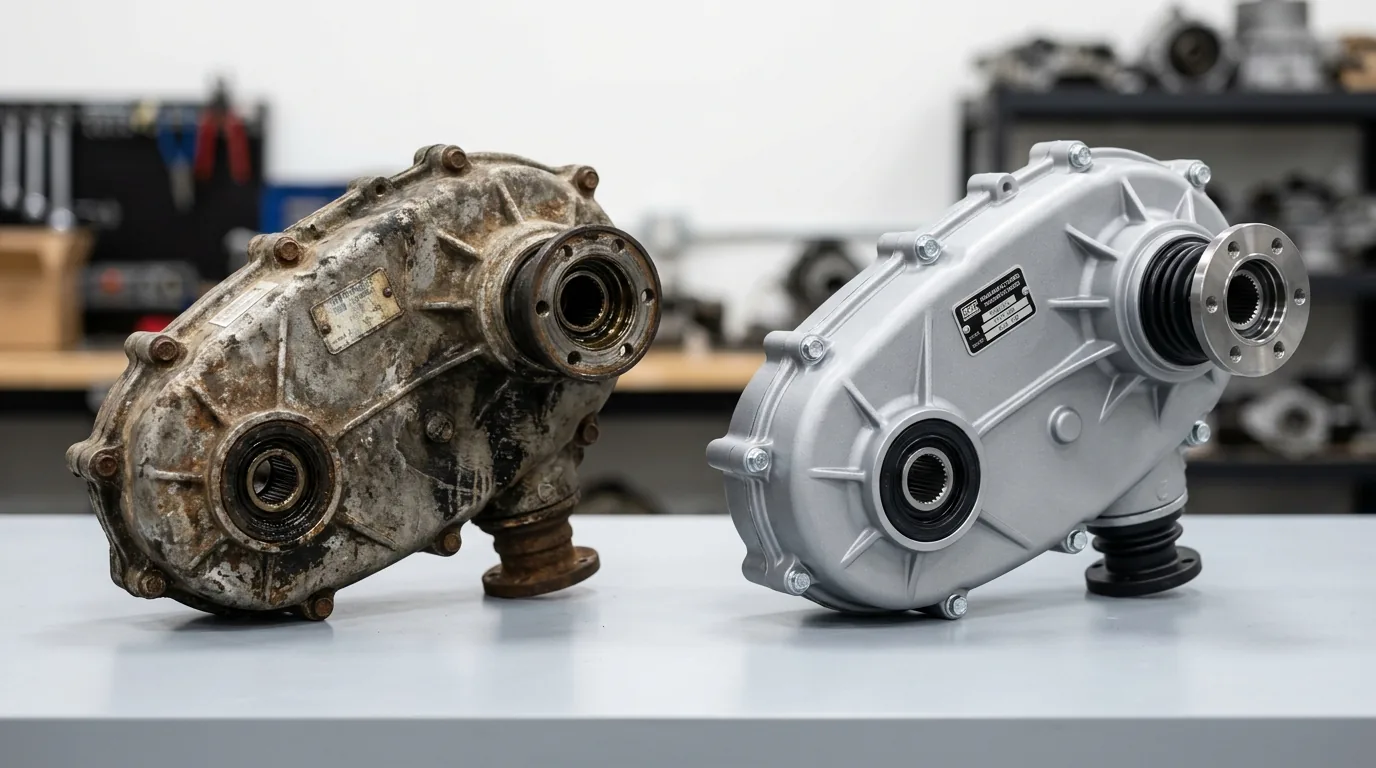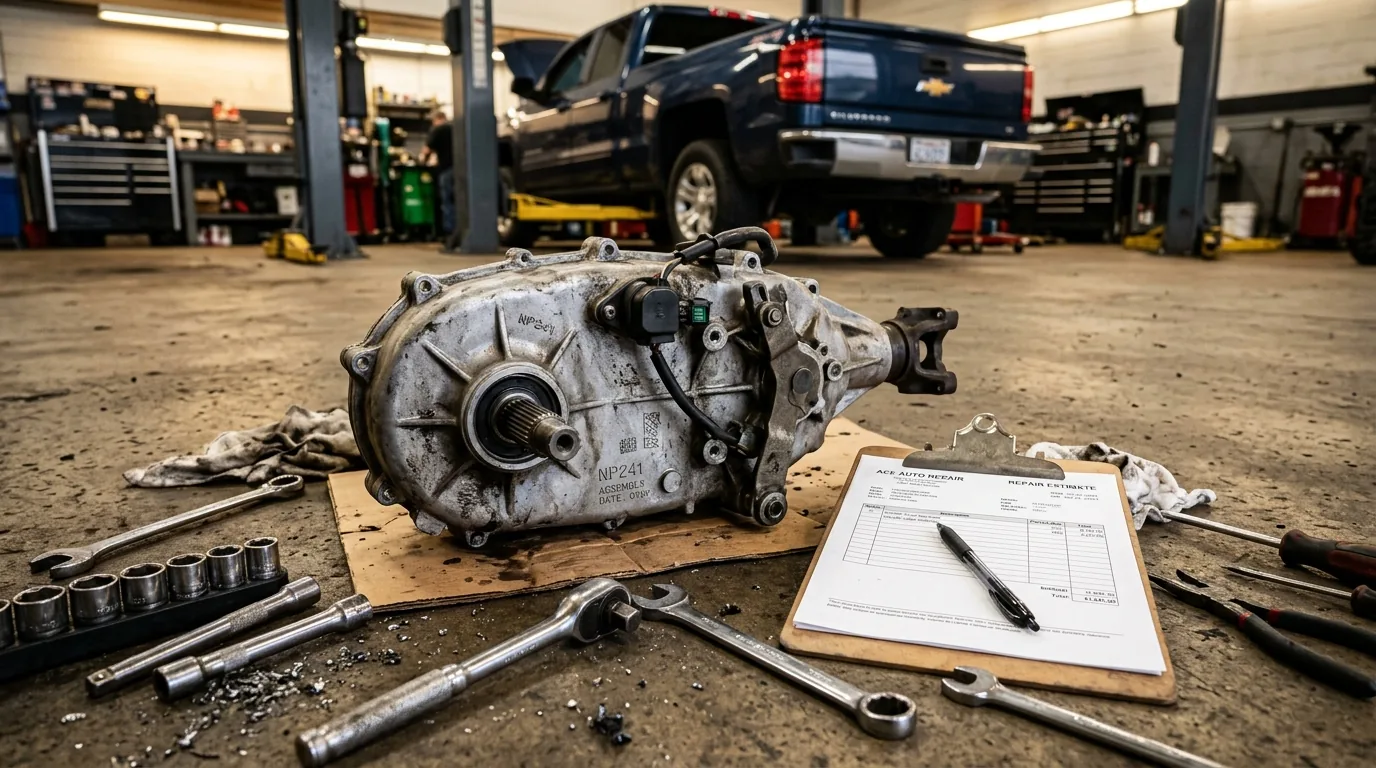
Replacing a transfer case costs $893 to $1,908 total with a used unit, $1,585 to $2,500 with a remanufactured one, or $2,385 to $4,900 with new OEM. A used transfer case runs $308 median across 40,954 priced salvage listings in our index. Labor adds $585 to $1,600 for 3 to 6 hours of shop time, plus transfer case fluid and potentially new output shaft seals.
The labor portion dominates this repair. The transfer case bolts between the transmission and the driveshafts, and reaching it means disconnecting both driveshafts, the shift linkage, the wiring harness, and sometimes the exhaust crossover pipe. The physical swap of the case itself takes minutes, but the access and reconnection work fills the rest of the 3-to-6-hour window.
See also: how much do junkyards charge for parts.
- Used transfer case total: $893–$1,908. $308 median part plus $585–$1,600 labor
- Remanufactured total: $1,585–$2,500. Factory-rebuilt with warranty, higher part cost
- New OEM total: $2,385–$4,900. Dealer pricing, best for vehicles under warranty
- Labor runs 3–6 hours at $95–$160/hr, plus transfer case fluid and output shaft seals
- A used unit undercuts a rebuild — rebuilds run $1,500–$3,000 in labor alone before parts
- Dataset: 40,954 priced transfer case listings, August 2026
What Transfer Case Replacement Costs
Transfer case replacement breaks into three cost components: the case itself, the labor to swap it, and the ancillary items that come with every job — transfer case fluid, output shaft seals, and sometimes a new shift motor or encoder if the original is corroded.
| Cost Component | Used | Remanufactured | New OEM |
|---|---|---|---|
| Part cost | $175–$550 (median $308) | $800–$1,200 | $1,500–$3,500 |
| Labor (3–6 hrs at $95–$160/hr) | $585–$1,600 | $585–$1,600 | $585–$1,600 |
| Fluid + seals | $50–$120 | $50–$120 | $50–$120 |
| Total | $893–$1,908 | $1,585–$2,500 | $2,385–$4,900 |
*Part pricing source: PartPriceGuide.com analysis of 40,954 salvage yard listings, August 2026. Labor range consistent with RepairPal national estimates.*
For a deeper look at used versus remanufactured options, see our used vs remanufactured transfer case comparison.
Why Labor Runs 3 to 6 Hours
Transfer case labor is high because the case sits in the middle of the drivetrain, connected to everything around it. Getting it out requires a methodical disconnection sequence, and putting the new one in requires reversing that sequence with precise alignment.
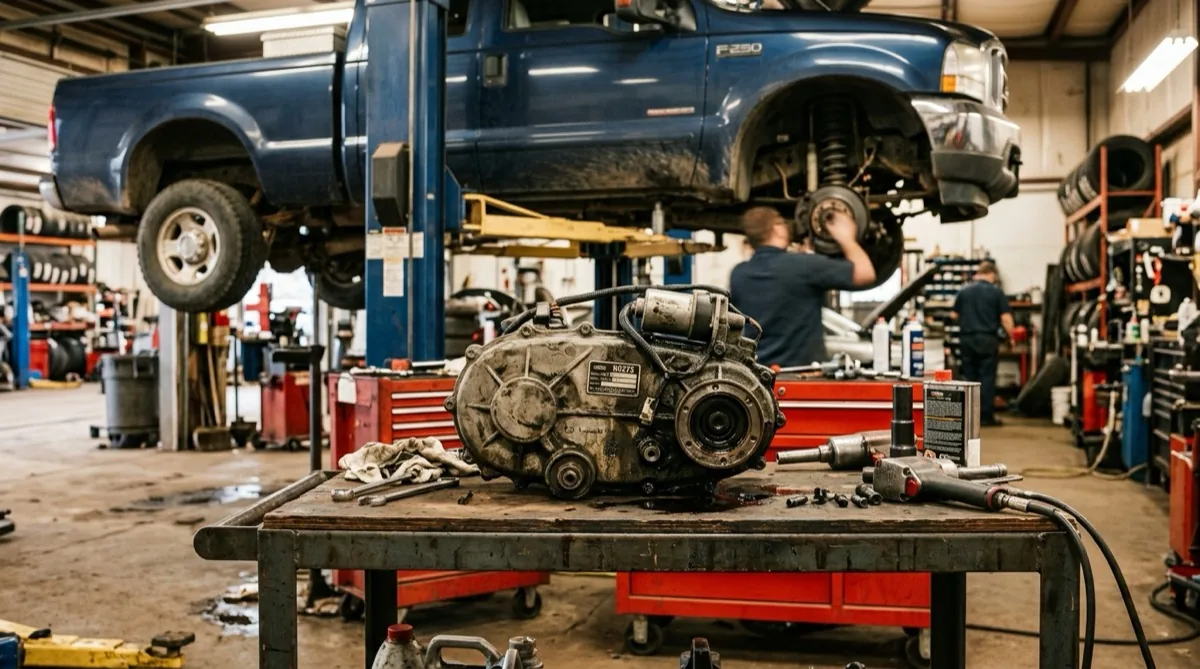
The removal sequence on a typical body-on-frame truck (3–4 hours):
- Raise the vehicle and support it on a lift or jack stands
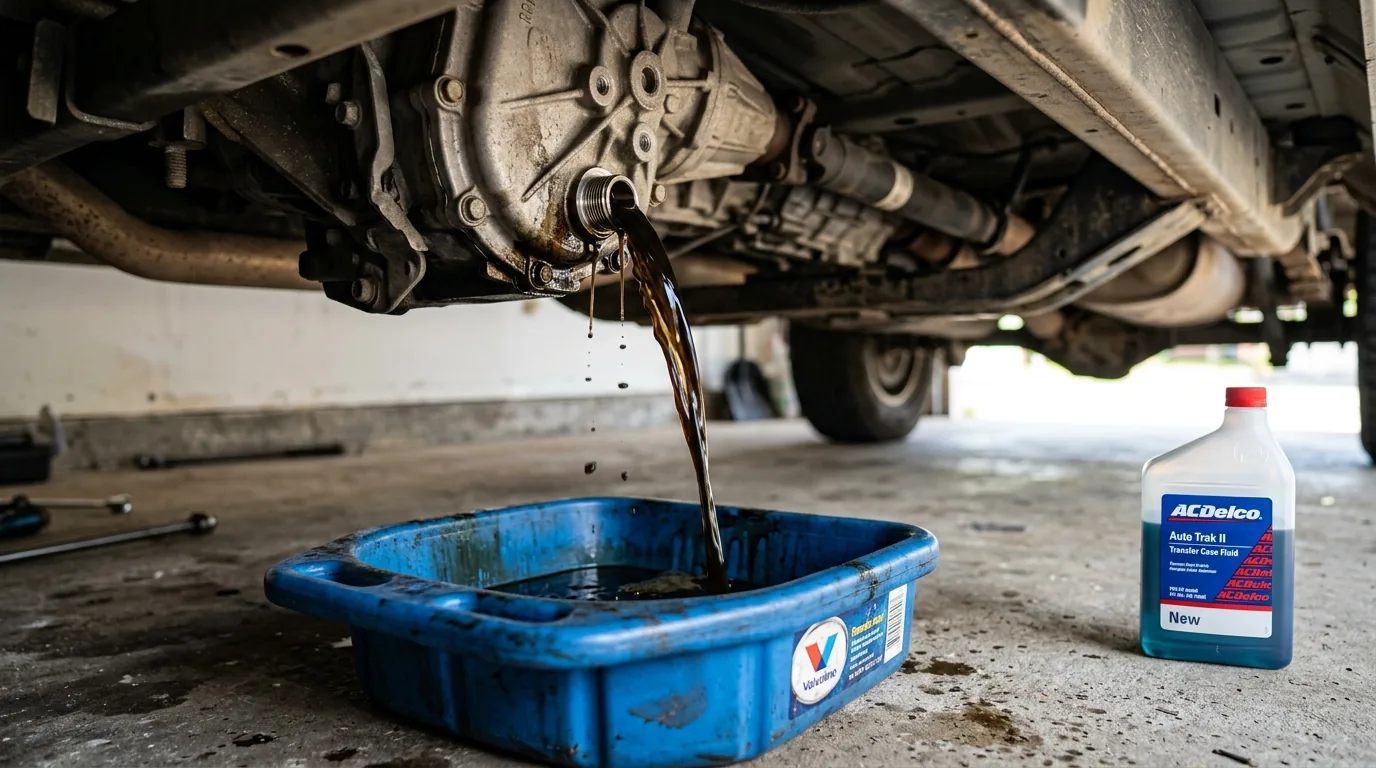
- Drain the transfer case fluid
- Disconnect the front and rear driveshafts from the transfer case output yokes
- Disconnect the shift linkage or electronic shift motor wiring
- Disconnect the speed sensor wiring
- Support the transfer case with a transmission jack
- Remove the bolts securing the transfer case to the transmission tailhousing
- Slide the transfer case rearward off the transmission output shaft
- Lower it out from under the vehicle
What adds time (pushing toward 5–6 hours):
- Exhaust crossover removal. On many GM trucks and SUVs, the exhaust Y-pipe runs directly beneath the transfer case. Corroded exhaust bolts can add an hour of labor on older vehicles.
- Crossmember interference. Some vehicles require removing or lowering a transmission crossmember to create enough clearance to slide the transfer case out.
- AWD systems with integrated cases. On AWD crossovers like the Honda CR-V or Toyota RAV4, the transfer case (often called a power transfer unit or PTU) bolts directly to the transaxle and sits higher in the chassis, requiring more disassembly to access.
- Corroded fasteners. Undercarriage components on vehicles driven in salt-belt states corrode. Every seized bolt adds time.
The reinstallation also includes filling the case with the correct transfer case fluid (ATF, gear oil, or a manufacturer-specific fluid depending on the application) and verifying the shift linkage operates through all ranges — 2H, 4H, neutral, 4L. An ASE-certified technician will road-test the vehicle after installation to confirm all four-wheel-drive modes engage properly.
Cost by Vehicle Type
Transfer case replacement cost varies by vehicle class. Trucks with traditional part-time four-wheel-drive systems use simpler, more common transfer cases that cost less and are easier to source from salvage yards. AWD crossovers with electronically controlled systems cost more for both the part and the labor.
| Vehicle Type | Used Part (est.) | Labor | Estimated Total |
|---|---|---|---|
| Mid-size truck (Tacoma, Colorado) | $200–$350 | $585–$900 | $835–$1,370 |
| Full-size truck (F-150, Silverado) | $250–$400 | $585–$960 | $885–$1,480 |
| Body-on-frame SUV (4Runner, Tahoe) | $275–$450 | $640–$1,100 | $965–$1,670 |
| Jeep Wrangler / Gladiator | $300–$500 | $585–$960 | $935–$1,580 |
| AWD crossover (RAV4, CR-V, Outback) | $250–$400 | $780–$1,280 | $1,080–$1,800 |
| Luxury / European AWD (BMW X5, Audi Q7) | $400–$650 | $900–$1,600 | $1,350–$2,370 |
| Heavy-duty truck (F-250, 2500HD) | $350–$550 | $640–$1,100 | $1,040–$1,770 |
Jeep Wranglers carry a slight premium on the used transfer case because Wrangler owners frequently modify their four-wheel-drive systems, and the NP231 and NP241OR cases are in high demand from the off-road community. Supply is strong — Wranglers are well represented in salvage yards — but demand keeps pricing above average.
For current pricing on your specific vehicle, check our transfer case price lookup. If you're weighing the overall economics, our guide on whether transfer case replacement is worth it runs the cost-versus-vehicle-value math with worked examples.
Signs Your Transfer Case Is Failing
Transfer case failure is less common than transmission or engine problems because the internal components — a chain or gear set, bearings, and a shift mechanism — are mechanically simple and bathed in lubricant. When failure does happen, it's usually gradual and produces distinct warning signs.
Grinding or whining noise from under the vehicle. A worn chain or damaged bearings produce a metallic grinding or high-pitched whine that increases with vehicle speed. The sound comes from the center of the vehicle, roughly between the front and rear axles, which distinguishes it from wheel bearing noise (which is louder on one side) and transmission noise (which changes with gear selection).
Difficulty shifting into or out of 4WD. If the transfer case won't engage four-wheel drive, or won't disengage back to two-wheel drive, the shift fork, shift motor, or encoder ring may be worn. On electronically shifted cases, this often triggers a "Service 4WD" or "4WD Fault" warning on the dashboard.
Fluid leak underneath the vehicle. Transfer case fluid leaks at the output shaft seals, the input shaft seal (where it meets the transmission), or the case halves. The fluid is typically reddish (ATF) or amber (gear oil), and the puddle will be centered under the vehicle rather than offset to the engine or transmission side.
Vibration at highway speed. A transfer case with worn bearings or an unbalanced chain can produce a vibration that feels like a driveshaft issue. If a driveshaft balance and U-joint inspection come back clean, the transfer case internals are the next suspect.
Popping out of 4WD under load. A worn shift fork or detent spring inside the case can allow the transfer case to slip out of the selected range when the drivetrain is under load — climbing a grade, towing, or accelerating hard on loose surfaces.
Before replacing the case, it's worth checking the transfer case fluid condition. Dark, burnt-smelling fluid with metallic particles confirms internal wear. Clean fluid with no metal contamination points to an external issue like a shift motor or wiring problem, which costs far less to fix.
Can You Replace a Transfer Case Yourself?
Transfer case replacement is a realistic DIY project for experienced home mechanics with a transmission jack, a good set of sockets, and a weekend to spare. The work is heavy and awkward, but mechanically straightforward — no special tools, no computer programming, and no precision torque sequences beyond standard bolt specs.
What you'll need: a transmission jack or a floor jack with a wide saddle adapter, jack stands rated for the vehicle weight, a socket set (metric and SAE), a breaker bar for driveshaft bolts, a drain pan, the correct transfer case fluid (check the owner's manual — ATF, 75W-90, or manufacturer-specific), and new output shaft seals if the originals show any wear.
The critical steps. Mark the driveshaft flanges before disconnecting them so they go back in the same orientation. Support the transfer case securely with the transmission jack before removing the last mounting bolt. The case weighs 60 to 100 pounds depending on the application, and it will slide rearward off the transmission shaft once the bolts are out. Have a helper guide it onto the jack.
Budget a full day (6–10 hours) for a first attempt. Experienced DIYers can finish in 4 to 5 hours. The time savings translate to $585 to $1,600 in labor avoided, making this one of the higher-payoff DIY jobs if you have the space and equipment.
Skip the DIY if you don't have a proper transmission jack or if the undercarriage is heavily corroded. Dropping a 90-pound transfer case off a floor jack is dangerous, and fighting seized exhaust bolts without a lift or proper penetrating oil can turn a weekend project into a multi-week ordeal.
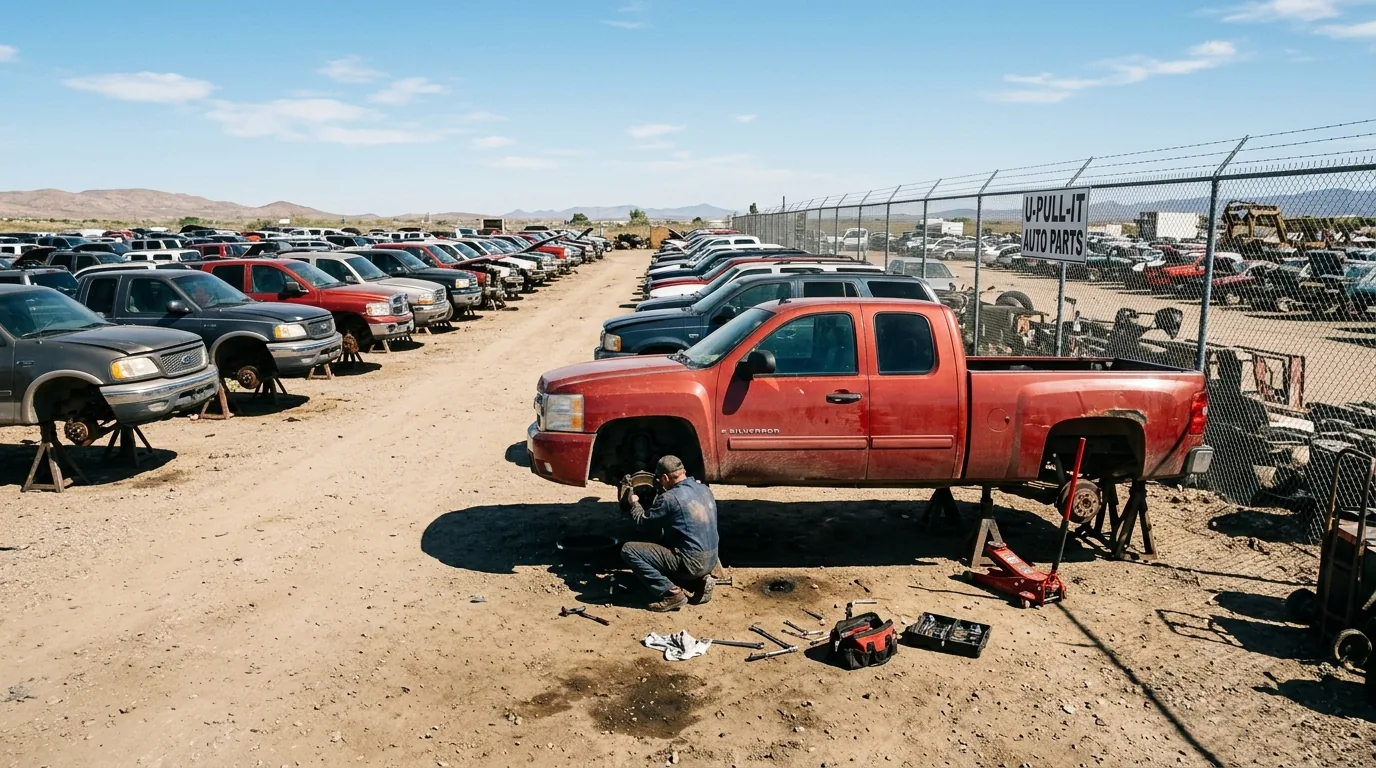
Sourcing a used transfer case from a junkyard at the $308 median and doing the labor yourself brings the total cost to under $450 for parts, fluid, and seals. For tips on inspecting a used case before buying, see our junkyard transfer case buying guide.