Exhaust Manifold price snapshot
- Low
- $36
- Average
- $243
- High
- $1,000
Part price guide
Saurabh Kumar
Co-Founder & CTO, Part Price Guide
Built the pricing pipeline that collects and normalizes used OEM part listings from salvage yards and online marketplaces across the US.
Ambika Sharma
Co-Founder & COO, Part Price Guide
12 years of project management and technical operations experience. Reviews price guides for sample size, fitment accuracy, and data freshness.
Part overview
Across 156 vehicle models, the typical used exhaust manifold lists for $220, with model-level medians ranging from $36 to $1,000. Based on 61,333 priced salvage yard listings tracked by PartPriceGuide.
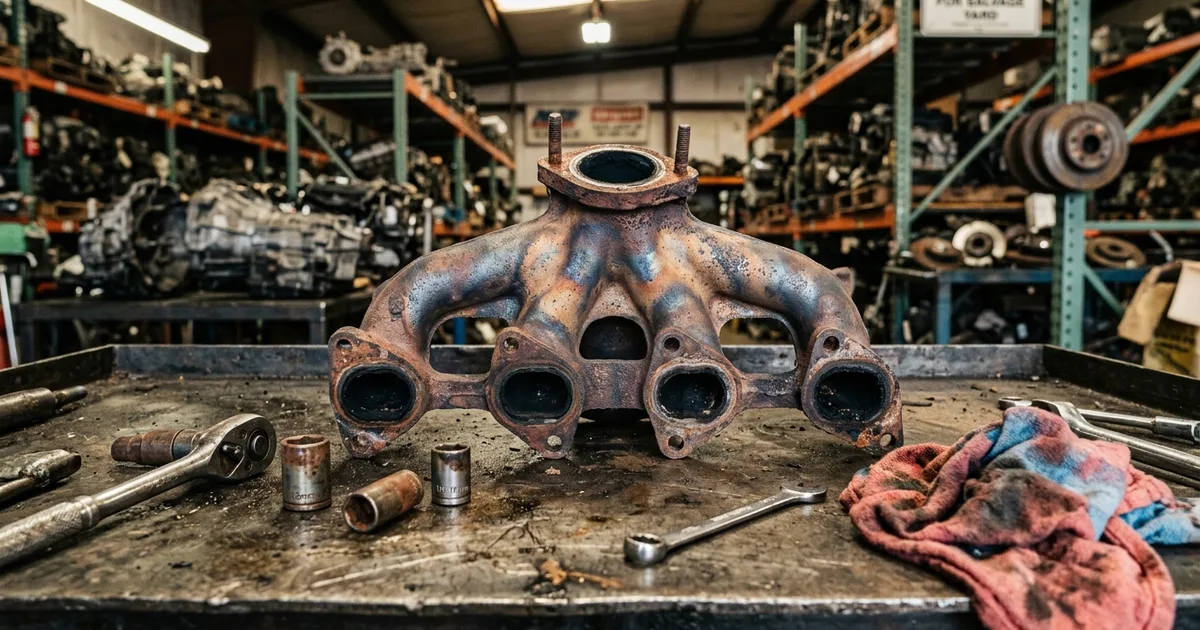
The exhaust manifold collects hot exhaust gas directly from the engine cylinders and routes it into the exhaust system.
Replaced when cast metal cracks or warps, causing loud ticking sounds during startup and exhaust fumes in the engine bay.
A used exhaust manifold costs $36 to $1,000, with a median asking price of $220. Based on price data across 156 vehicle-specific guides. Prices exclude shipping, core charges, and installation.
Condition comparison
| Grade | Price range | Relative range | Listings |
|---|---|---|---|
| Grade AClean / low wear | $36–$1,000 | 161 | |
| Grade BStandard used | $50–$1,863 | 135 | |
| Grade CVisible wear | $34–$500 | 84 | |
| Grade XUngraded | $35–$1,000 | 146 |
Median by grade
Median asking price by seller-reported condition grade · $36–$1,000 overall range
Vehicle-specific reference
156 of 184 guides currently priced
Price data updating
Price data updating
Price data updating
Price data updating
Price data updating
Price data updating
Price data updating
Price data updating
Price data updating
Price data updating
Price data updating
Price data updating
Price data updating
Price data updating
Price data updating
Price data updating
Price data updating
Price data updating
Price data updating
Price data updating
Price data updating
Price data updating
Price data updating
Price data updating
Price data updating
Price data updating
Price data updating
Price data updating
Compare by vehicle
Keep comparing
Common questions
Across 156 vehicle-specific guides with current pricing, used exhaust manifold guide medians run from $36 to $1,000, with a typical median of $220. Condition grade, mileage, and fitment move the price within that range.
Usually, yes. Buying a used exhaust manifold from a salvage yard or auto recycler typically costs a fraction of the new exhaust manifold replacement cost at a dealership. Compare the grade-level medians above against any replacement quote you've received, and remember our figures exclude shipping and installation labor.
Salvage yards, junkyards, pick-and-pull lots, and online used parts marketplaces all sell used exhaust manifolds. Our index tracks asking prices nationally, so you can benchmark a local quote against the market range before you buy.
Expect to pay toward the upper half of the $36–$1,000 range for a grade-A exhaust manifold with low mileage. Check the grade table above for the current grade-level medians, and confirm whether shipping and any core charge are included in the quote.
They can be — condition grade is the key. Grade A parts come off low-mileage vehicles with little to no damage, grade B is average, and grade C or ungraded parts are the gamble. Buy grade A or B from a yard that offers a return window or warranty, and confirm the mileage of the donor vehicle before paying. The grade-level medians above show what each tier should cost.
A factory exhaust manifold is a cast-iron or cast-steel piece designed for durability and tight engine-bay packaging, with runners of unequal length. Exhaust headers are typically an aftermarket, mandrel-bent tubular design with equal-length runners meant to improve exhaust flow and horsepower. A used factory exhaust manifold is the correct OEM replacement part; headers are a performance upgrade, not a like-for-like replacement.
Inspect the metal casting thoroughly for hairline cracks, especially around the collector areas and runner joints where thermal stress is highest. Check the cylinder head mounting flange with a straight edge to confirm it is flat and not warped from extreme exhaust heat.
A cracked manifold causes a distinct ticking or tapping exhaust leak noise when cold, which often fades as the engine heats up and the metal expands. Other symptoms include exhaust fumes inside the cabin, lower engine performance, and check engine lights for oxygen sensor fault codes.
On many modern engines, the catalytic converter is welded directly into the exhaust manifold assembly, but state regulations restrict salvage yards from selling non-certified used converters. Verify whether the manifold is sold as a bare manifold casting or a complete integrated manifold converter assembly.
Used factory cast-iron or heavy-gauge stainless manifolds fit flush against the cylinder head ports and resist heat warping far better than thin aftermarket replacements. OEM castings ensure heat shields and oxygen sensors align perfectly with original engine bay hardware.
Always install brand-new exhaust manifold gaskets, cylinder head studs, and copper locking nuts when installing a used manifold. Reusing old hardware leads to exhaust leaks, snapped studs under thermal expansion, and difficult future service work.
Ensure all exhaust system support hangers and flex pipes downstream are intact, as engine movement from broken motor mounts places heavy strain on the manifold. Torque all mounting nuts in the proper sequence to factory specifications to allow for even thermal expansion.