Replacing a water pump costs $265–$1,039 total at a shop when you use a salvage yard part, or $300–$1,180 with a new OEM unit. The used pump itself runs only $100 median across our index of 62 vehicle models, but labor ranges from $190–$750 depending on how the pump is driven. That labor spread is the real story: a timing belt-driven water pump can cost two to three times more in labor than one bolted to the front of the engine on the accessory belt.
Unlike most cooling system repairs, the water pump itself is not where the money goes. The part is relatively cheap at $45–$209 used or $30–$150 new aftermarket. Labor accounts for 60–75% of the total bill, and it swings widely based on a single variable: whether your vehicle's water pump is driven by the timing belt, the accessory belt, or an electric motor. If you are already paying for a timing belt service, adding the water pump is one of the smartest money moves in car maintenance.
- Total cost with a used water pump: $265–$1,039. $100 median part plus $190–$750 labor and $30–$80 coolant
- New OEM total: $300–$1,180. Higher part cost, identical labor
- Labor is 60–75% of the bill and varies by pump type, not part quality
- Timing belt-driven pumps cost the most because reaching them requires 4–5 hours of teardown
- Replace the pump with the timing belt to avoid paying that labor twice
- Dataset: salvage yard listings across 62 vehicle models, August 2026
What Water Pump Replacement Costs
Water pump replacement has three cost components: the part, the labor, and the coolant refill. Labor stays the same regardless of whether you install a used, aftermarket, or OEM pump, so part choice only shifts one line item on the invoice.
| Cost Component | Used | New Aftermarket | New OEM |
|---|---|---|---|
| Part cost | $45–$209 (median $100) | $30–$150 | $80–$350 |
| Labor (2–5 hrs at $95–$150/hr) | $190–$750 | $190–$750 | $190–$750 |
| Coolant refill | $30–$80 | $30–$80 | $30–$80 |
| Total | $265–$1,039 | $250–$980 | $300–$1,180 |
*Part pricing source: PartPriceGuide.com analysis of salvage yard listings across 62 vehicle models, August 2026.*
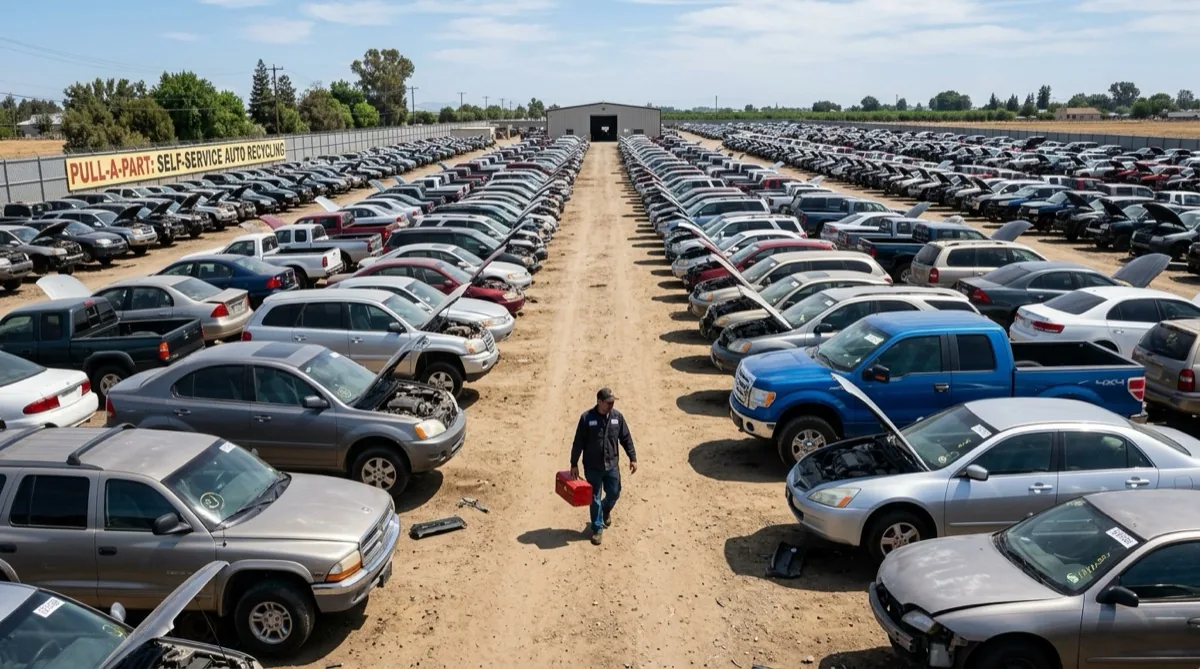
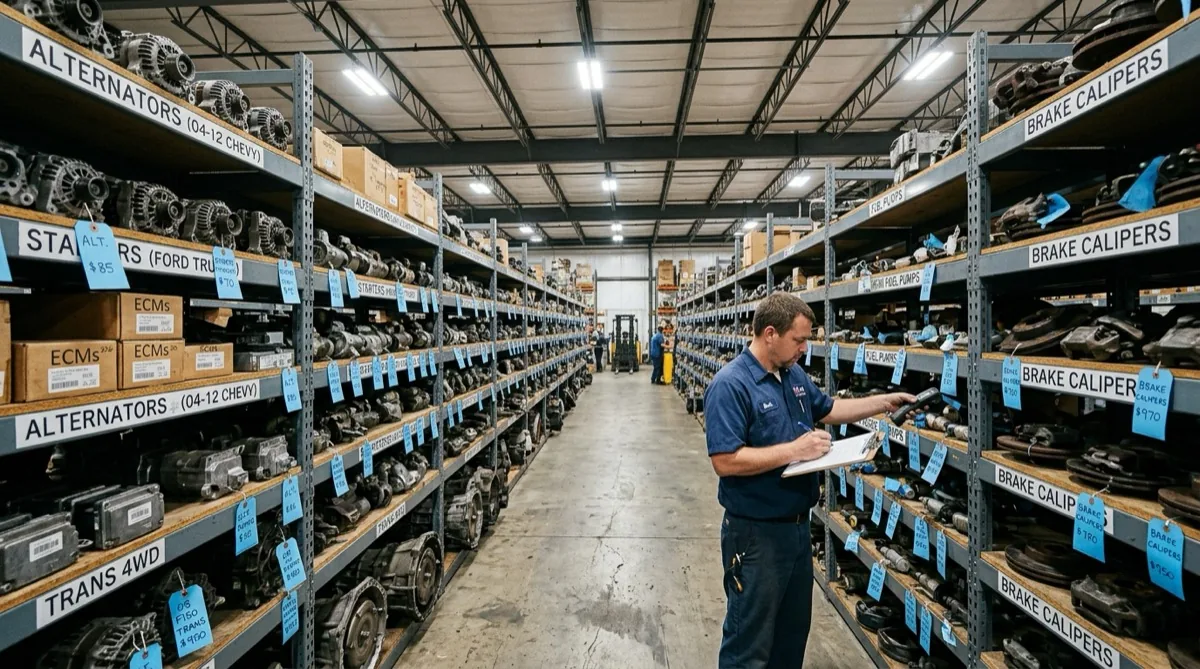
New aftermarket pumps start as low as $30, which means a budget aftermarket unit can cost less than a used OEM part. The tradeoff is build quality: cheap aftermarket pumps sometimes use plastic impellers instead of metal, and those wear faster. Used OEM pumps carry the original manufacturer's build quality but have an unknown number of miles already on them. For more on how salvage part pricing works, our pricing guide covers the fundamentals.
Why Labor Varies So Much
The water pump is always part of the cooling system, but where it sits on the engine determines how long the replacement takes. Three configurations account for nearly every vehicle on the road, and the labor gap between them is enormous.
Timing Belt-Driven Pumps
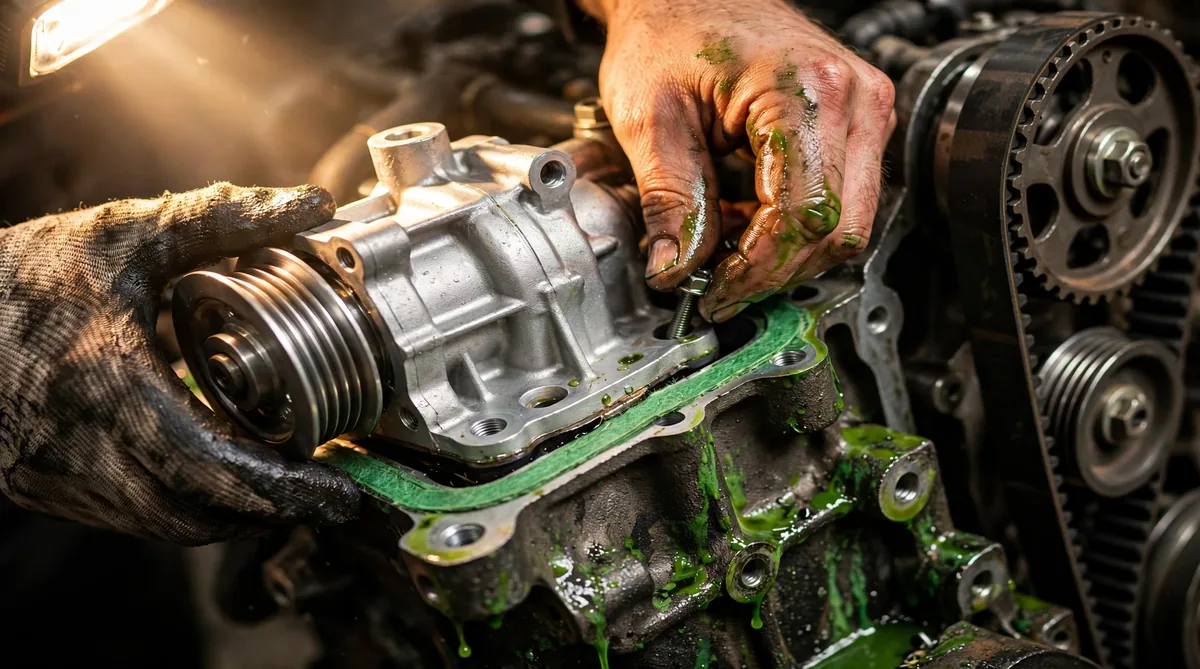
This is the expensive configuration. On engines where the timing belt drives the water pump (common in Honda, Toyota, Subaru, and many European vehicles), the pump sits behind the timing covers on the front of the engine. Reaching it requires removing the accessory drive belt, harmonic balancer, timing covers, and the timing belt itself.
Labor runs 4–5 hours at $95–$150/hr, putting the labor portion at $380–$750 before the part. This teardown is nearly identical to a timing belt replacement, which is why shops strongly recommend doing both jobs at once. On these engines, a water pump replacement is never an isolated repair. You are paying for timing belt access regardless of whether you replace the belt.
Accessory Belt-Driven or Chain-Driven Pumps
On many V8 trucks and some V6 engines, the water pump bolts directly to the front of the engine block and is driven by the serpentine (accessory) belt. Access is straightforward: remove the belt, unbolt the pump, scrape the gasket surface, and bolt on the replacement.
Labor runs 2–3 hours at $95–$150/hr, or $190–$450. This is a fraction of the timing belt-driven cost because the technician never touches the timing system. No special tools, no timing marks, no risk of valve damage from incorrect assembly. Chain-driven pumps that mount externally follow a similar labor profile.
Electric Water Pumps
Some newer vehicles (BMW, Toyota hybrids, and various turbocharged engines) use an electric water pump mounted to the engine block or subframe. These pumps are controlled by the ECU and operate independently of any belt.
Labor runs 1–2 hours in most cases because the pump is typically held by two or three bolts and an electrical connector. The catch is part cost: electric water pumps are more expensive, running $150–$400 new and $80–$250 used. The total cost often lands in the same $300–$650 range as a straightforward belt-driven job, just weighted differently between parts and labor.
Symptoms of a Failing Water Pump
A failing water pump rarely dies without warning. Most pumps give you at least one of these signs before complete failure.
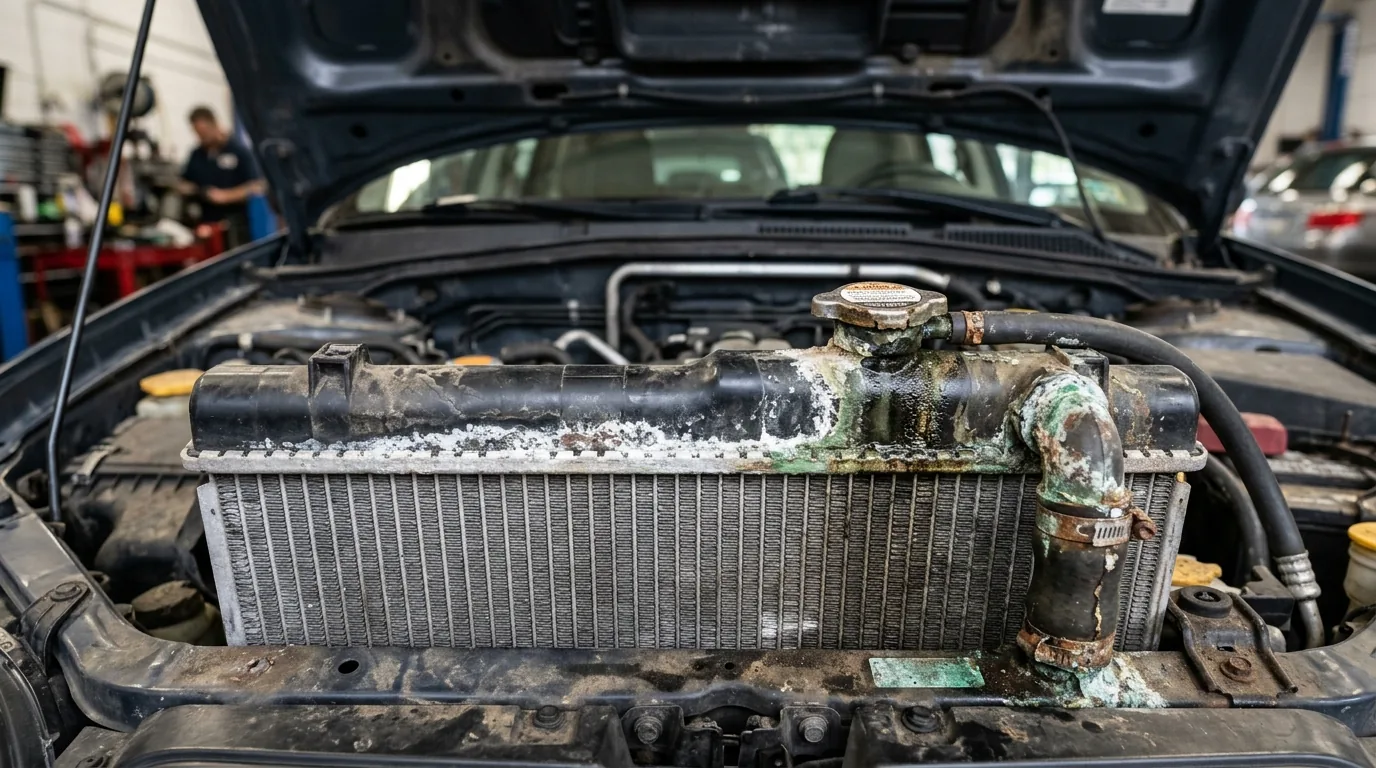
Coolant leak at the front of the engine. This is the most common symptom. Water pumps have a weep hole designed to release coolant when the internal seal starts to fail. You will see a drip or streak of green, orange, or pink coolant below the pump housing. A slow weep is a warning. A steady drip means the seal has failed and replacement is overdue.
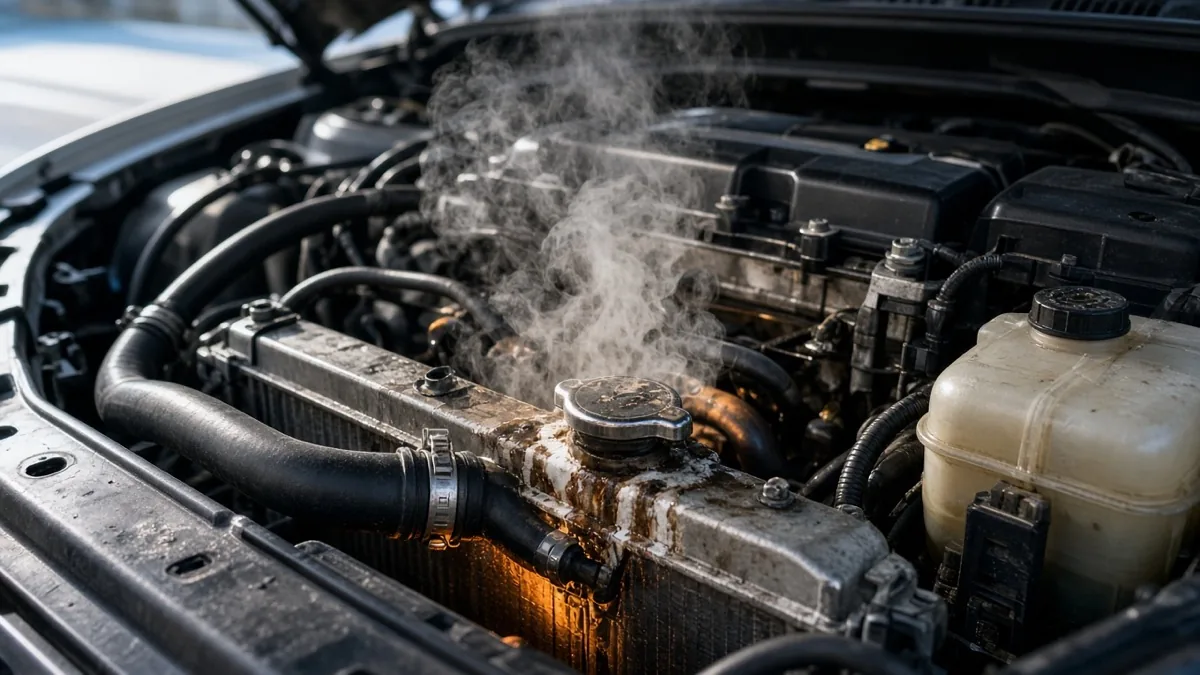
Engine overheating. If the pump's impeller breaks or the bearing seizes, coolant stops circulating. The temperature gauge climbs, and you may see steam from under the hood. This is the symptom that causes expensive secondary damage. A failed water pump that causes the engine to overheat can blow a head gasket, crack the cylinder head, or warp the block, turning a $300–$1,000 water pump repair into a $2,000–$5,000 engine repair.
Whining or grinding noise from the front of the engine. A worn water pump bearing produces a high-pitched whine that changes with engine speed. At advanced stages, the bearing grinds audibly. This noise is easy to confuse with a failing alternator or power steering pump bearing, so a mechanic will typically isolate it with a stethoscope or by removing the accessory belt briefly.
Coolant in the oil or white exhaust smoke. These symptoms usually point to a more advanced failure where coolant has entered the combustion chamber through a blown head gasket caused by overheating. At this stage, the entire cooling system should be inspected alongside the pump to rule out radiator or thermostat problems.
If you notice any combination of these symptoms, get a diagnosis promptly. A water pump that is leaking but still spinning gives you time. A pump with a seized bearing does not.
Replace With the Timing Belt?
If your vehicle has a timing belt-driven water pump, replacing the pump during the scheduled timing belt service is one of the clearest cost-saving decisions in car maintenance. The math leaves little room for debate.
A standalone timing belt replacement costs roughly $500–$1,000 in labor. A standalone water pump replacement on the same engine costs $380–$750 in labor, because reaching either component requires the same 4–5 hour teardown. If you do them separately, you pay for that teardown twice: $880–$1,750 in combined labor.
Replacing the water pump during the timing belt job adds only 15–30 minutes of extra work, because the pump is already exposed once the belt comes off. The incremental cost is just the pump ($45–$209 used, $30–$150 new aftermarket) and a fresh gasket. You save $380–$750 in avoided future labor by doing both at once.
Most vehicle manufacturers endorse this approach. Honda, Toyota, and Subaru all list the water pump as a recommended replacement item during timing belt service, typically at 60,000–100,000 miles depending on the model. Many shops quote a "timing belt kit" price that bundles the belt, tensioner, idler pulleys, and water pump as a package.
The only scenario where skipping the pump makes sense is if it was recently replaced (within the last 30,000 miles) and you have documentation. Otherwise, the risk of paying for the same teardown again within 2–3 years makes the $45–$209 pump a clear value add.
Used vs New Water Pumps
The part-source decision on a water pump depends on the repair context and how much labor you are paying.
Used OEM pumps ($45–$209, median $100) come from salvage yards with unknown mileage on the part. The upside is OEM build quality: a metal impeller, manufacturer-spec bearings, and confirmed fitment for your vehicle. The downside is that you cannot verify how much life remains in the bearings or seals. When buying from a junkyard, inspect the impeller for corrosion and spin the shaft by hand to check for roughness or play.
New aftermarket pumps ($30–$150) are widely available and affordable. Premium aftermarket brands (Gates, GMB, Aisin) produce water pumps that match or exceed OEM specifications. Budget brands at the $30–$50 end sometimes use plastic impellers or lower-grade bearings that wear faster. On a timing belt-driven job where $380–$750 in labor is at stake, saving $50 on a bargain pump is a poor tradeoff.
New OEM pumps ($80–$350) are the safest choice on high-labor installations. Factory specifications, full warranty coverage, and the highest confidence in longevity make them worth the premium when the labor bill is steep. On a timing belt-driven engine where labor exceeds $400, spending an extra $50–$150 for OEM over premium aftermarket is reasonable insurance against doing the job again early.
The general rule: for accessible, belt-driven pumps where labor is under $300, a used OEM or mid-range aftermarket pump is a sensible pick. The labor to redo the job if the part fails is modest. For timing belt-driven engines, buy the best pump you can afford. You do not want to pay for that 4–5 hour teardown twice.
See all water pump pricing data on our water pump price index.