Water Pump price snapshot
- Low
- $45
- Average
- $102
- High
- $450
Part price guide
Saurabh Kumar
Co-Founder & CTO, Part Price Guide
Built the pricing pipeline that collects and normalizes used OEM part listings from salvage yards and online marketplaces across the US.
Ambika Sharma
Co-Founder & COO, Part Price Guide
12 years of project management and technical operations experience. Reviews price guides for sample size, fitment accuracy, and data freshness.
Part overview
Across 179 vehicle models, the typical used water pump lists for $90, with model-level medians ranging from $45 to $450. Based on 72,339 priced salvage yard listings tracked by PartPriceGuide.
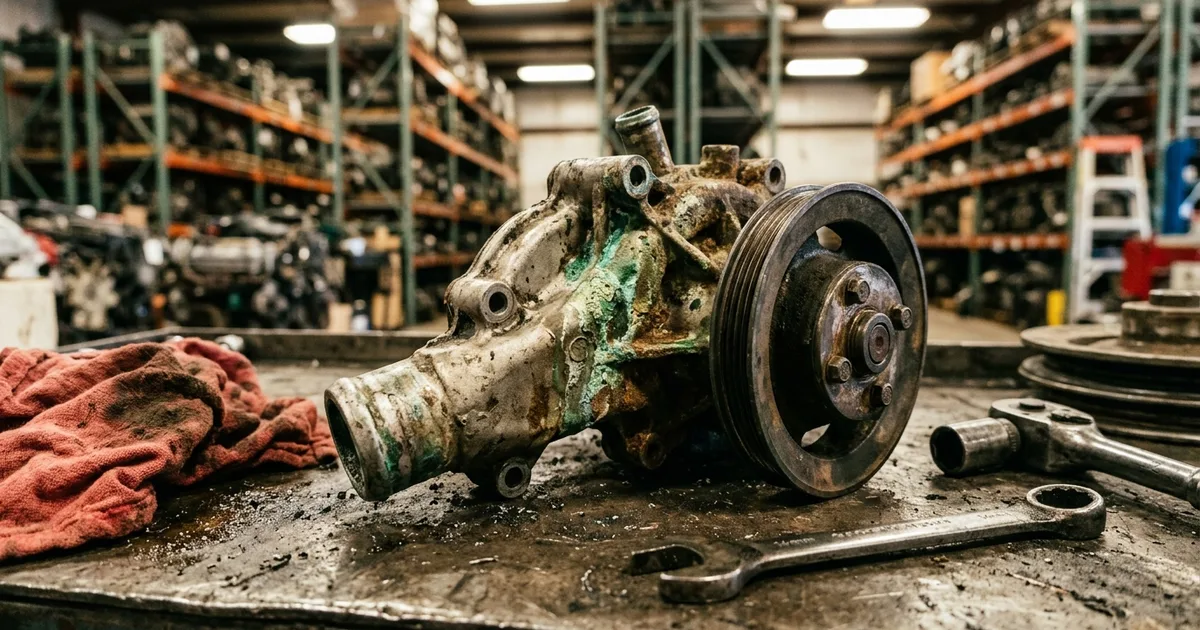
The water pump continuously circulates coolant through the engine and radiator to maintain safe engine operating temperatures.
Replaced when coolant leaks from the weep hole, bearing noise develops, or broken impellers cause engine overheating.
A used water pump costs $45 to $450, with a median asking price of $90. Based on price data across 179 vehicle-specific guides. Prices exclude shipping, core charges, and installation.
Condition comparison
| Grade | Price range | Relative range | Listings |
|---|---|---|---|
| Grade AClean / low wear | $35–$453 | 178 | |
| Grade BStandard used | $30–$495 | 155 | |
| Grade CVisible wear | $24–$390 | 113 | |
| Grade XUngraded | $35–$450 | 170 |
Median by grade
Median asking price by seller-reported condition grade · $45–$450 overall range
Vehicle-specific reference
179 of 184 guides currently priced
Price data updating
Price data updating
Price data updating
Price data updating
Price data updating
Compare by vehicle
Keep comparing
Common questions
Across 179 vehicle-specific guides with current pricing, used water pump guide medians run from $45 to $450, with a typical median of $90. Condition grade, mileage, and fitment move the price within that range.
Usually, yes. Buying a used water pump from a salvage yard or auto recycler typically costs a fraction of the new water pump replacement cost at a dealership. Compare the grade-level medians above against any replacement quote you've received, and remember our figures exclude shipping and installation labor.
Salvage yards, junkyards, pick-and-pull lots, and online used parts marketplaces all sell used water pumps. Our index tracks asking prices nationally, so you can benchmark a local quote against the market range before you buy.
Expect to pay toward the upper half of the $45–$450 range for a grade-A water pump with low mileage. Check the grade table above for the current grade-level medians, and confirm whether shipping and any core charge are included in the quote.
They can be — condition grade is the key. Grade A parts come off low-mileage vehicles with little to no damage, grade B is average, and grade C or ungraded parts are the gamble. Buy grade A or B from a yard that offers a return window or warranty, and confirm the mileage of the donor vehicle before paying. The grade-level medians above show what each tier should cost.
Yes. A coolant pump is another name for a water pump. Other common names include engine water pump. The prices on this page apply regardless of what it's called in your region or by your mechanic.
Spin the pump pulley by hand to ensure the shaft rotates smoothly without grinding, shaft play, or binding. Inspect the weep hole for dried coolant residue or rust staining, which indicates that the internal mechanical shaft seal is failing.
Common signs include engine overheating, coolant puddling under the front of the car, and high-pitched squealing or growling noises from the front timing cover area. Play in the fan pulley or visible coolant weeping from the pump housing also indicate imminent pump failure.
Buying a used water pump is generally recommended only for expensive housing assemblies or rare housing designs where original replacement parts are hard to source. For standard maintenance, ensure any used pump comes from a low-mileage donor car and features clean impeller vanes.
Salvage water pumps often come with the attached belt pulley and integrated thermostat housing, depending on the engine design. However, you should always replace the thermostat itself and the main rubber housing gasket with new components before mounting.
Match the exact material and impeller configuration of your vehicle's original pump to preserve factory coolant flow rates and electrochemical compatibility. Check metal impeller blades on used pumps for rust scale or cavitation pitting caused by old coolant.
Thoroughly scrape away all old gasket material and corrosion from the engine block mating surface using a plastic scraper and solvent. Install a new factory specification gasket or O-ring and torque all mounting bolts evenly to prevent housing distortion.