Heater Core price snapshot
- Low
- $51
- Average
- $126
- High
- $340
Part price guide
Saurabh Kumar
Co-Founder & CTO, Part Price Guide
Built the pricing pipeline that collects and normalizes used OEM part listings from salvage yards and online marketplaces across the US.
Ambika Sharma
Co-Founder & COO, Part Price Guide
12 years of project management and technical operations experience. Reviews price guides for sample size, fitment accuracy, and data freshness.
Part overview
Across 128 vehicle models, the typical used heater core lists for $116, with model-level medians ranging from $51 to $340. Based on 63,579 priced salvage yard listings tracked by PartPriceGuide.
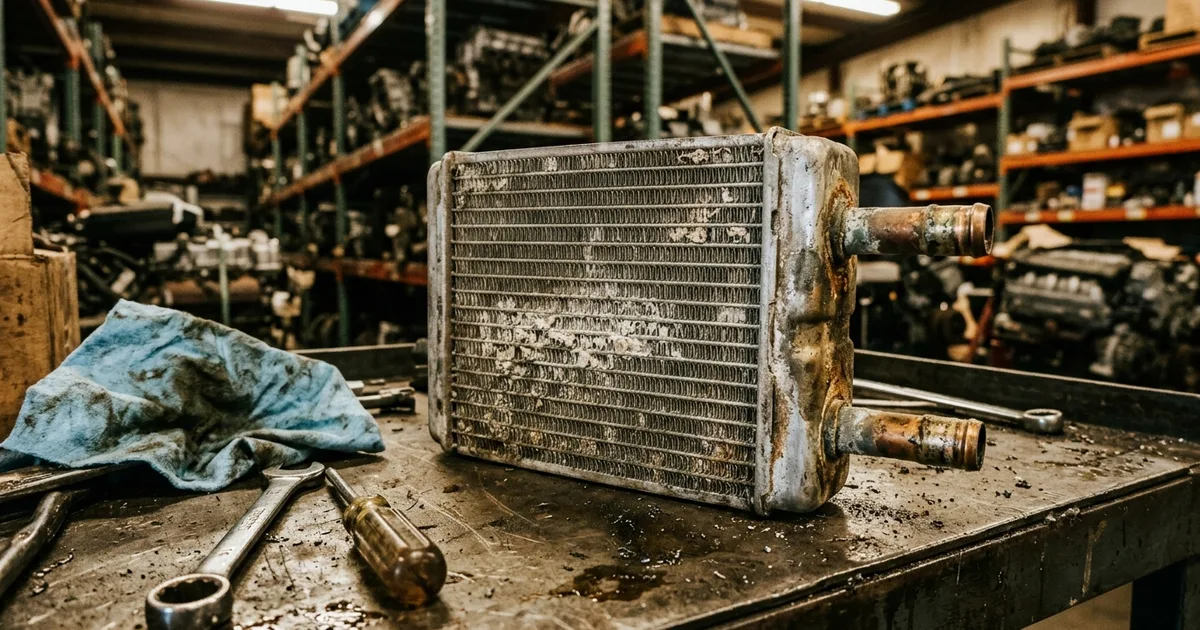
The heater core is a small radiator under the dashboard that uses engine coolant warmth to heat the cabin air.
Replaced when internal leaks cause sweet-smelling coolant mist on the windshield, wet carpet, or loss of cabin heat.
A used heater core costs $51 to $340, with a median asking price of $116. Based on price data across 128 vehicle-specific guides. Prices exclude shipping, core charges, and installation.
Condition comparison
| Grade | Price range | Relative range | Listings |
|---|---|---|---|
| Grade AClean / low wear | $51–$340 | 128 | |
| Grade BStandard used | $51–$746 | 126 | |
| Grade CVisible wear | $56–$395 | 34 | |
| Grade XUngraded | $45–$395 | 97 |
Median by grade
Median asking price by seller-reported condition grade · $51–$340 overall range
Vehicle-specific reference
128 of 184 guides currently priced
Price data updating
Price data updating
Price data updating
Price data updating
Price data updating
Price data updating
Price data updating
Price data updating
Price data updating
Price data updating
Price data updating
Price data updating
Price data updating
Price data updating
Price data updating
Price data updating
Price data updating
Price data updating
Price data updating
Price data updating
Price data updating
Price data updating
Price data updating
Price data updating
Price data updating
Price data updating
Price data updating
Price data updating
Price data updating
Price data updating
Price data updating
Price data updating
Price data updating
Price data updating
Price data updating
Price data updating
Price data updating
Price data updating
Price data updating
Price data updating
Price data updating
Price data updating
Price data updating
Price data updating
Price data updating
Price data updating
Price data updating
Price data updating
Price data updating
Price data updating
Price data updating
Price data updating
Price data updating
Price data updating
Price data updating
Price data updating
Compare by vehicle
Keep comparing
Common questions
Across 128 vehicle-specific guides with current pricing, used heater core guide medians run from $51 to $340, with a typical median of $116. Condition grade, mileage, and fitment move the price within that range.
Usually, yes. Buying a used heater core from a salvage yard or auto recycler typically costs a fraction of the new heater core replacement cost at a dealership. Compare the grade-level medians above against any replacement quote you've received, and remember our figures exclude shipping and installation labor.
Salvage yards, junkyards, pick-and-pull lots, and online used parts marketplaces all sell used heater cores. Our index tracks asking prices nationally, so you can benchmark a local quote against the market range before you buy.
Expect to pay toward the upper half of the $51–$340 range for a grade-A heater core with low mileage. Check the grade table above for the current grade-level medians, and confirm whether shipping and any core charge are included in the quote.
They can be — condition grade is the key. Grade A parts come off low-mileage vehicles with little to no damage, grade B is average, and grade C or ungraded parts are the gamble. Buy grade A or B from a yard that offers a return window or warranty, and confirm the mileage of the donor vehicle before paying. The grade-level medians above show what each tier should cost.
No — the radiator is the large cooling core at the front of the vehicle that rejects engine heat to outside air. The heater core is a much smaller version of the same idea mounted inside the dashboard, using hot engine coolant to warm cabin air blown across it. A leaking heater core typically shows up as a sweet smell and a fogged windshield inside the car, while a leaking radiator shows up as coolant loss and overheating — very different symptoms pointing to two different parts.
Buying a used heater core is generally recommended only if original factory parts are discontinued or if you obtain a thoroughly pressure-tested OEM unit. Because replacing a heater core involves extensive dashboard disassembly labor, installing a pressure-tested salvage unit saves money while avoiding low-quality aftermarket fitment issues. Always verify leak-free condition prior to installation.
Inspect the copper or aluminum inlet and outlet tubes for corrosion, bent ends, or severe crushing that impedes hose sealing. Check the matrix cooling fins for heavy oxidation, mineral crust deposits, or damp oily residue that indicates internal leaks. Flush the core with clean water to confirm unrestricted flow without clogs.
Key symptoms of a failed heater core include a sweet maple syrup smell inside the cabin, greasy fog coating the interior windshield, and wet carpet in the front passenger footwell. You may also experience persistent engine coolant loss without visible exterior leaks under the hood and weak cabin heater output. Replacing the core restores HVAC efficiency.
Heater cores are generally uniform within a specific vehicle model family, but differences exist between automatic climate control units and manual HVAC systems. Pipe routing angles and tube diameters can also vary between gas and diesel engines or left-hand and right-hand drive models. Cross-reference part dimensions and tube orientations carefully.
Installing a heater core requires removing the entire front dashboard, center console, steering column support, and HVAC distribution box from the firewall. Because the core sits deep inside the passenger compartment housing, accessing it involves several hours of teardown and reassembly labor. Thoroughly testing the replacement core before rebuilding the dash is vital.
Flush your vehicle's engine cooling system completely and refill it with fresh, correctly mixed coolant to prevent electrolysis and corrosion inside the used core. Ensure all heater hose clamps are properly tightened and check that cabin air filters are clean to avoid moisture buildup. Maintaining proper coolant pH levels protects internal aluminum passages.