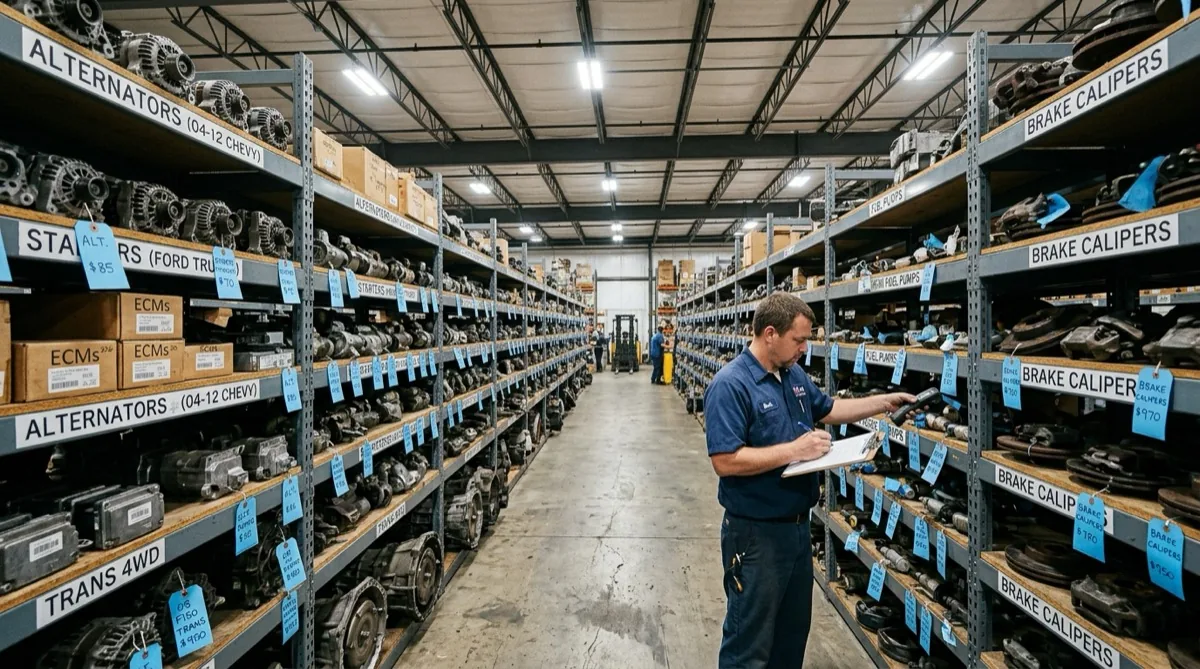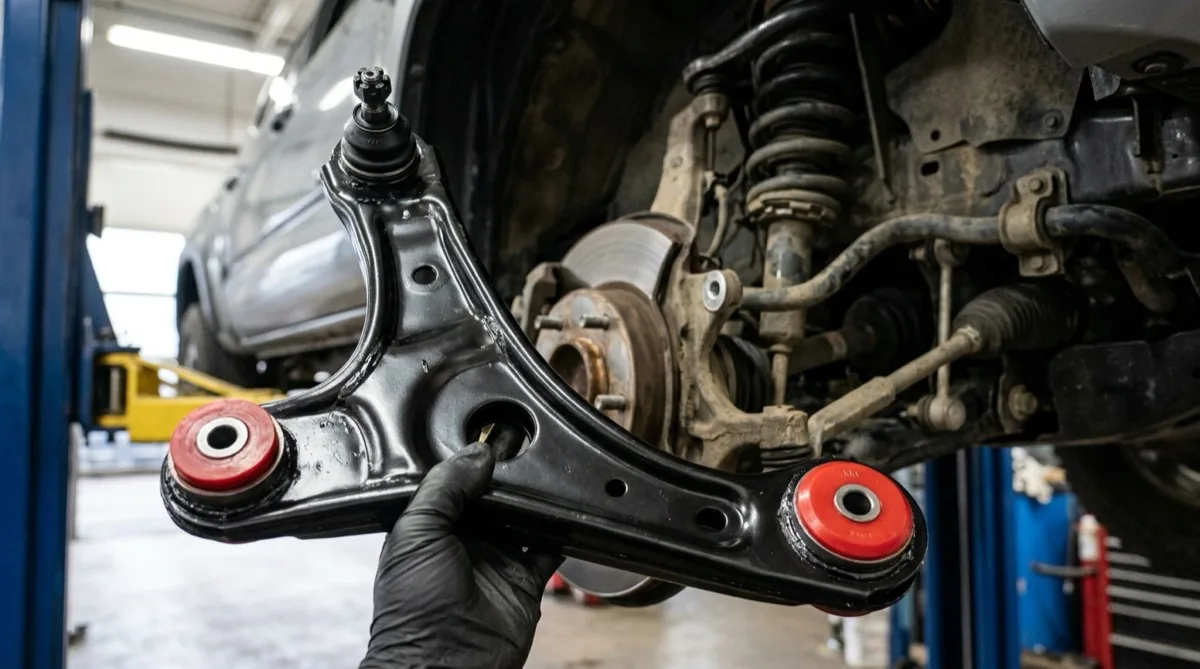
Replacing a control arm costs $320 to $650 total at a shop when you use a salvage yard part, $255 to $775 with a new aftermarket arm, and $345 to $925 with a new OEM unit. Every one of those totals includes a line item most people forget: the $100 to $150 wheel alignment that has to follow the job, because the control arm directly sets your wheel angles.
For a detailed breakdown, see our used auto parts pricing data guide.
A used control arm runs $125 median across our index of 27,279 priced salvage yard listings. That puts the part in the mid-range category, more than a brake caliper ($82) but well below a strut assembly ($138 median). The labor is the variable that swings the bill: a straightforward lower arm on a truck takes about an hour, while a corroded upper arm on a northern-climate SUV can push past two and a half hours.
- Total cost with a used control arm: $320–$650, including $125 median part, $95–$375 labor, and $100–$150 alignment
- Lower control arms cost more to replace than uppers on most vehicles, because they carry more load and are harder to access
- Alignment is mandatory, not optional. The control arm sets camber and caster angles, and skipping alignment destroys tires
- Bushing-only replacement saves money ($150–$350) when the arm itself is undamaged, but many modern arms use non-serviceable pressed-in bushings
- Bad control arm symptoms: clunking over bumps, steering pull, uneven tire wear, and vibration at highway speed
- DIY is realistic on many vehicles and saves $95–$375 in labor, but you still need a shop alignment afterward
What Control Arm Replacement Costs
Control arm replacement has three cost components: the part, the labor to swap it, and the alignment that follows. Unlike a starter or alternator job where you can skip the alignment, a control arm replacement without an alignment will chew through a set of tires in a few thousand miles.
| Cost Component | Used | Aftermarket New | OEM New |
|---|---|---|---|
| Part cost | $60–$250 (median $125) | $60–$250 | $150–$400 |
| Labor (1–2.5 hrs) | $95–$375 | $95–$375 | $95–$375 |
| Alignment | $100–$150 | $100–$150 | $100–$150 |
| Total | $320–$650 | $255–$775 | $345–$925 |
For comparison, RepairPal estimates the national average for control arm replacement at $790 to $915, which reflects new OEM parts at dealer labor rates. Independent shops using salvage parts bring that number down by 40 to 60 percent.
*Part pricing source: PartPriceGuide.com analysis of 27,279 salvage yard listings, August 2026. Labor rates based on AAA shop rate averages.*
Upper vs Lower Control Arms
Most vehicles have a lower control arm on each front corner. Trucks, body-on-frame SUVs, and some performance sedans add an upper control arm as well. The two arms do different jobs, and the cost difference reflects that.
Lower control arms carry the weight of the vehicle. They connect the steering knuckle to the subframe, hold the lower ball joint, and absorb every pothole and speed bump. Because they handle more stress, lower arms are larger, heavier, and more expensive. They also sit lower on the vehicle, where they collect road salt and moisture. On northern-climate vehicles with 100,000 or more miles, the mounting bolts can seize into the subframe, adding 30 to 60 minutes of labor for penetrant soaking and torch work.
Upper control arms manage wheel geometry, specifically camber and caster. They are smaller, lighter, and easier to access because they bolt to the top of the knuckle and the upper part of the subframe or frame rail. Replacement is typically faster by about 30 minutes.
| Arm Type | Typical Part Cost (Used) | Typical Labor | Total (Including Alignment) |
|---|---|---|---|
| Lower control arm | $80–$250 | $130–$375 | $310–$775 |
| Upper control arm | $60–$180 | $95–$280 | $255–$610 |
Bad Control Arm Symptoms
Control arms fail gradually through their bushings and ball joints, which means the symptoms start mild and worsen over months. Catching them early keeps repair costs lower and prevents tire damage.
Clunking or knocking over bumps. A worn bushing or ball joint allows play in the suspension. You hear a metallic clunk when hitting potholes, speed bumps, or uneven pavement, especially at low speed. This is the most common first symptom.
Steering pull to one side. When a control arm bushing collapses, it shifts the wheel's alignment angles. The car drifts left or right under braking or on flat roads. This symptom overlaps with tire pressure and brake issues, so a visual inspection of the bushings narrows it down.
Uneven tire wear. Misaligned camber from a worn control arm wears the inside or outside edge of the tire faster than the center. If you are replacing tires prematurely on one corner, check the control arm bushings before buying new tires and paying for an alignment that will not hold.
Vibration at highway speed. A loose ball joint allows the wheel to oscillate slightly at speed, producing a shimmy through the steering wheel. This can mimic a wheel balance problem, but a balance job will not fix it if the control arm is the cause.
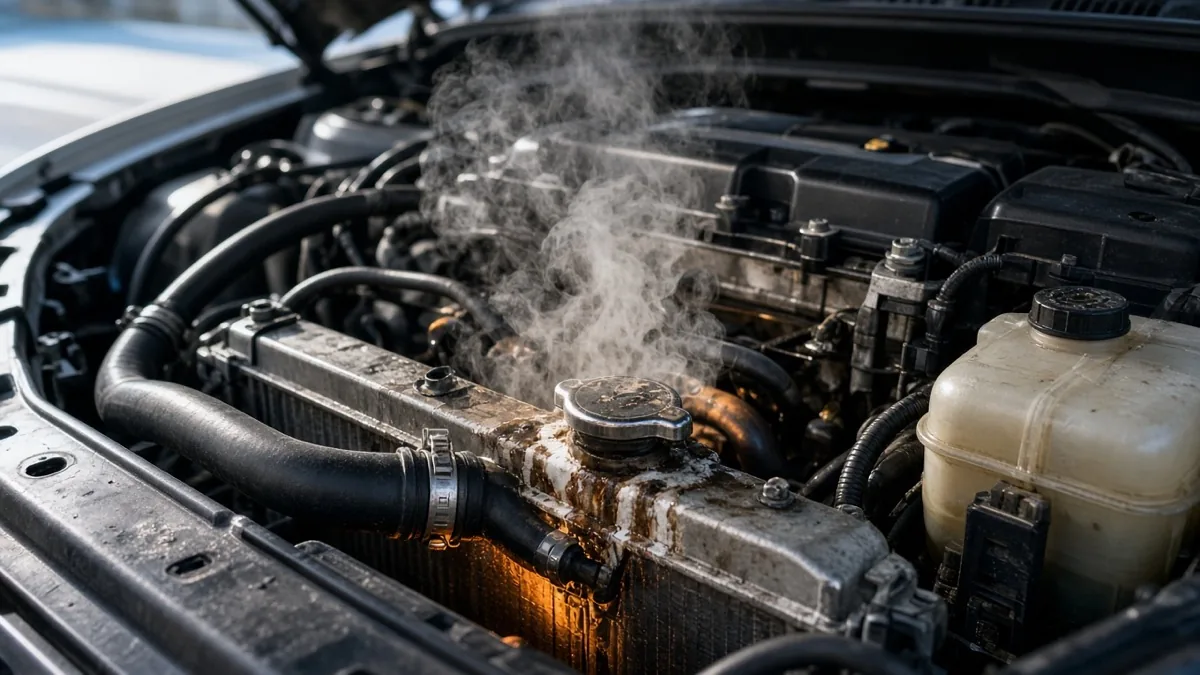
If your vehicle also pulls and runs hot, see our guide to diagnosing car overheating causes and repair costs.
Visual inspection. With the vehicle on a lift or jack stands, look for cracked rubber bushings, torn boots on ball joints, and visible play when you pry the arm with a bar. Any rubber that is split, bulging, or oil-soaked has failed. Ball joints with more than a few thousandths of an inch of play are past their service life.
Cost by Popular Model
Part prices below reflect the median used control arm price from our salvage listing index. Labor estimates assume a $95 to $150 per hour independent shop rate. All totals include a $100 to $150 alignment.
| Vehicle | Used Part (Median) | Labor | Alignment | Estimated Total |
|---|---|---|---|---|
| Honda Civic | $80 | $95–$190 | $100–$130 | $275–$400 |
| Toyota Camry | $90 | $110–$200 | $100–$130 | $300–$420 |
| Ford F-150 (lower) | $110 | $130–$250 | $100–$150 | $340–$510 |
| Honda Accord | $95 | $110–$220 | $100–$130 | $305–$445 |
| Chevy Silverado 1500 (lower) | $120 | $130–$260 | $100–$150 | $350–$530 |
| Toyota 4Runner (lower) | $115 | $140–$280 | $100–$150 | $355–$545 |
| Jeep Wrangler (lower) | $130 | $130–$250 | $100–$150 | $360–$530 |
| Ford Escape | $100 | $130–$260 | $100–$140 | $330–$500 |
| Jeep Grand Cherokee (lower) | $140 | $150–$300 | $100–$150 | $390–$590 |
| BMW X3 | $160 | $170–$340 | $120–$150 | $450–$650 |
| BMW X5 | $180 | $190–$375 | $120–$150 | $490–$705 |
| Mercedes C-Class | $175 | $180–$350 | $120–$150 | $475–$675 |
Check current pricing for your exact year and make on our control arm price lookup, and browse related strut pricing if your suspension work extends beyond the control arms.
Bushing-Only Replacement vs Full Arm
When a control arm fails, the bushing is almost always the weak point. The arm itself is a forged or stamped steel (or aluminum) piece that rarely bends or cracks under normal driving. That raises a fair question: can you just replace the bushing and keep the original arm?
When bushing-only replacement works. Older domestic trucks and body-on-frame vehicles (Ford F-150, Chevy Silverado, Ram 1500, Toyota 4Runner) often use control arms with bolt-in or press-fit bushings that can be replaced independently. A shop presses out the old bushing and presses in a new one. The bushing costs $20 to $60, and the labor runs $150 to $350 because the arm still has to come off the vehicle and go into a press.
When you need the full arm. Many modern cars and crossovers, especially European and Japanese models from the mid-2010s onward, use control arms with bonded or molded-in bushings that are not designed to be serviced separately. The bushing is vulcanized directly into the arm. Attempting to press it out destroys the arm. On these vehicles, the full arm is the only option, and aftermarket suppliers sell the arm with new bushings and ball joint pre-installed as a single assembly.
| Approach | Part Cost | Labor | Alignment | Total |
|---|---|---|---|---|
| Bushing only | $20–$60 | $150–$350 | $100–$150 | $270–$560 |
| Full arm (used) | $60–$250 | $95–$375 | $100–$150 | $320–$650 |
| Full arm (aftermarket) | $60–$250 | $95–$375 | $100–$150 | $255–$775 |
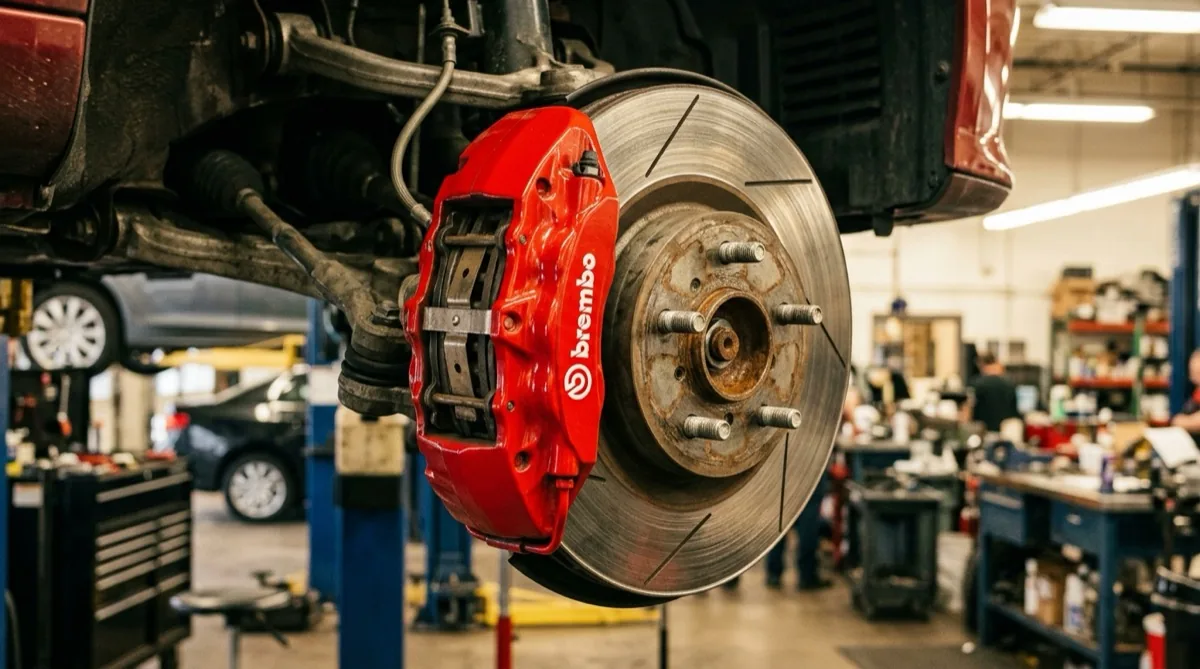
For a detailed breakdown, see our brake caliper replacement for related suspension brake work guide.
Can You Replace a Control Arm Yourself?
Yes, and it is one of the more accessible suspension DIY jobs. The mechanical work is straightforward: support the vehicle, remove the wheel, disconnect the sway bar end link, pop the ball joint from the knuckle, unbolt the arm from the subframe, and reverse the process. Budget two to three hours for a first attempt.
What you need. A floor jack and jack stands (or a set of ramps for access), a basic socket set, a ball joint separator or pickle fork, a torque wrench, and penetrating oil if you live in a salt-belt state. A breaker bar helps with seized bolts. Total tool investment for someone starting from scratch is $80 to $150, which pays for itself on the first job since you are saving $95 to $375 in labor.
The catch: you still need an alignment. No amount of careful installation eliminates the need for a professional alignment. Budget $100 to $150 at an alignment shop after the install. This is non-negotiable.
Skip the DIY if the bolts are severely corroded. On vehicles from northern states with 100,000 or more miles, the control arm mounting bolts can fuse to the subframe. Removing them requires sustained heat from a torch and careful work to avoid damaging the subframe threads. If you snap a bolt in the subframe, the repair escalates quickly.
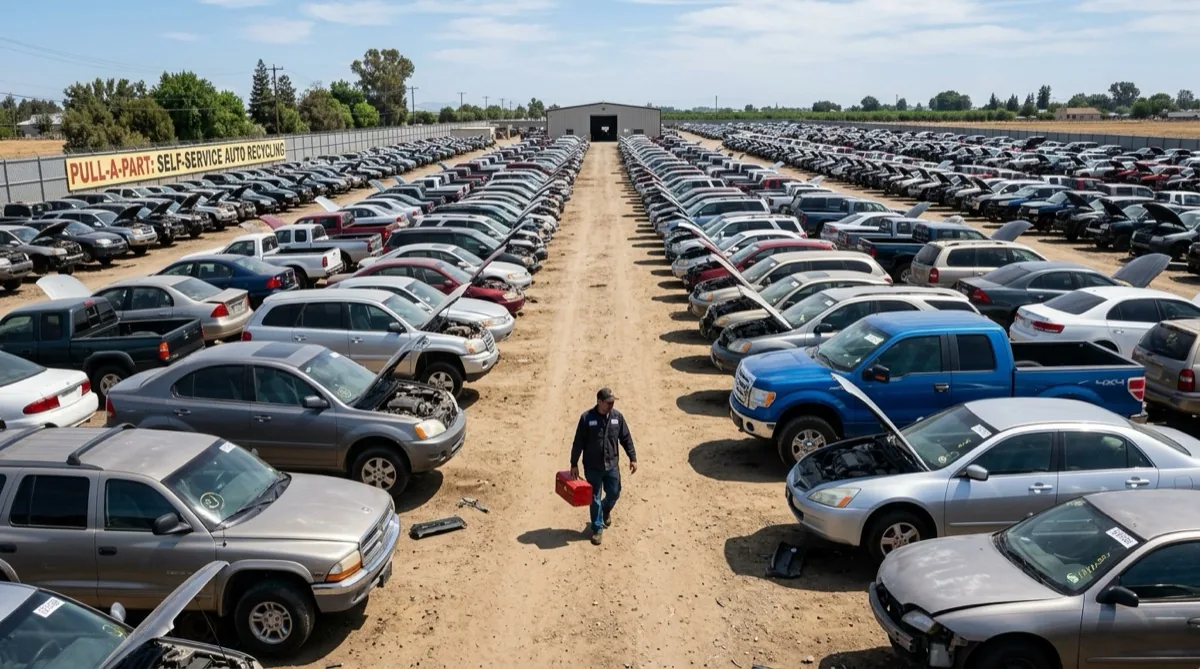
Ball joint tip. When separating the ball joint from the knuckle, use a proper ball joint separator or press-style fork rather than hammering the knuckle. Hammering can damage the knuckle bore, which turns a $125 part swap into a $400 knuckle replacement. If you are sourcing the control arm from a salvage yard, our junkyard parts pricing guide covers what to inspect and what to expect on pricing.