Control Arm price snapshot
- Low
- $50
- Average
- $124
- High
- $467
Part price guide
Saurabh Kumar
Co-Founder & CTO, Part Price Guide
Built the pricing pipeline that collects and normalizes used OEM part listings from salvage yards and online marketplaces across the US.
Ambika Sharma
Co-Founder & COO, Part Price Guide
12 years of project management and technical operations experience. Reviews price guides for sample size, fitment accuracy, and data freshness.
Part overview
Across 179 vehicle models, the typical used control arm lists for $115, with model-level medians ranging from $50 to $467. Based on 205,265 priced salvage yard listings tracked by PartPriceGuide.
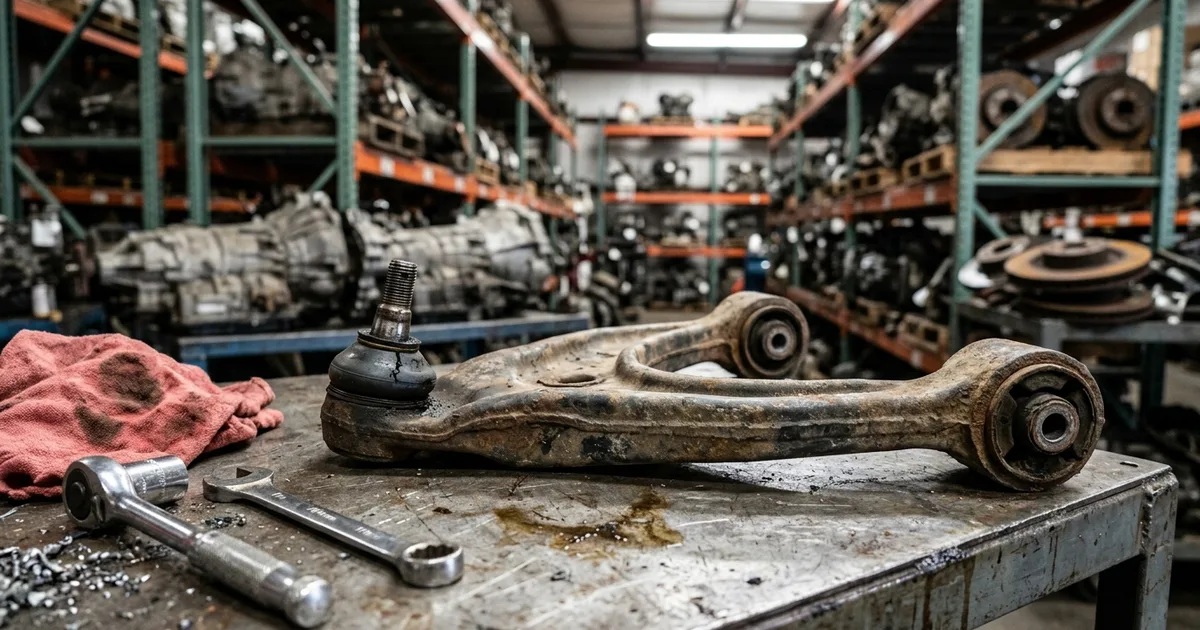
A control arm is a hinged suspension link connecting the wheel hub to the vehicle frame, allowing controlled vertical wheel movement.
Replaced when worn ball joints or deteriorated rubber bushings cause clunking over bumps, loose steering feel, or uneven tire wear.
A used control arm costs $50 to $467, with a median asking price of $115. Based on price data across 179 vehicle-specific guides. Prices exclude shipping, core charges, and installation.
Condition comparison
| Grade | Price range | Relative range | Listings |
|---|---|---|---|
| Grade AClean / low wear | $50–$467 | 179 | |
| Grade BStandard used | $50–$385 | 177 | |
| Grade CVisible wear | $36–$150 | 108 | |
| Grade XUngraded | $35–$500 | 178 |
Median by grade
Median asking price by seller-reported condition grade · $50–$467 overall range
Vehicle-specific reference
179 of 184 guides currently priced
Price data updating
Price data updating
Price data updating
Price data updating
Price data updating
Compare by vehicle
Keep comparing
Common questions
Across 179 vehicle-specific guides with current pricing, used control arm guide medians run from $50 to $467, with a typical median of $115. Condition grade, mileage, and fitment move the price within that range.
Usually, yes. Buying a used control arm from a salvage yard or auto recycler typically costs a fraction of the new control arm replacement cost at a dealership. Compare the grade-level medians above against any replacement quote you've received, and remember our figures exclude shipping and installation labor.
Salvage yards, junkyards, pick-and-pull lots, and online used parts marketplaces all sell used control arms. Our index tracks asking prices nationally, so you can benchmark a local quote against the market range before you buy.
Expect to pay toward the upper half of the $50–$467 range for a grade-A control arm with low mileage. Check the grade table above for the current grade-level medians, and confirm whether shipping and any core charge are included in the quote.
They can be — condition grade is the key. Grade A parts come off low-mileage vehicles with little to no damage, grade B is average, and grade C or ungraded parts are the gamble. Buy grade A or B from a yard that offers a return window or warranty, and confirm the mileage of the donor vehicle before paying. The grade-level medians above show what each tier should cost.
Yes. A lower control arm is another name for a control arm. Other common names include a-arm, wishbone. The prices on this page apply regardless of what it's called in your region or by your mechanic.
The ball joint is the pivoting connector at the outer end of the control arm that lets the wheel assembly steer and move with suspension travel. On many vehicles the ball joint is pressed in and can be replaced separately from the control arm, but a growing number of modern control arms come with the ball joint permanently riveted in, sold only as one complete "control arm assembly." Check whether your specific control arm uses a serviceable or integrated ball joint before deciding which used part to buy.
Check the steel or aluminum arm body for bends, cracks, or deep gouges caused by collisions or curb impacts. Inspect the integrated ball joint for torn rubber boots and excessive play, and examine the rubber bushings for dry rot, tearing, or metal sleeve separation.
Purchasing a used control arm is safe and cost-effective, particularly for structural aluminum or heavy-duty steel arms from low-mileage donor cars. If the rubber bushings or ball joint show wear, you can press inexpensive new bushings into the solid factory arm casting.
Symptoms of a bad control arm include clunking or popping noises over bumps, steering wheel vibration, and noticeable wandering or drift while driving straight. Inspecting the vehicle off the ground will reveal uneven tire wear and excessive movement in the suspension bushings or ball joint.
Most salvage yards sell control arms complete with their installed rubber bushings and lower ball joints, though their condition varies based on donor mileage. Inspect these rubber parts closely upon arrival, as press-fit ball joints can be replaced prior to mounting the arm on your vehicle.
Factory original control arms offer exact suspension geometry, heavier structural thickness, and superior metal strength compared to budget aftermarket replacements. Used OEM arms align perfectly with subframe mounting points and resist fatigue under severe road stress.
Yes, replacing a control arm alters your vehicle's camber, caster, and toe settings, making a professional wheel alignment necessary after installation. Driving without an alignment leads to rapid, irregular tire wear and compromised vehicle handling dynamics.