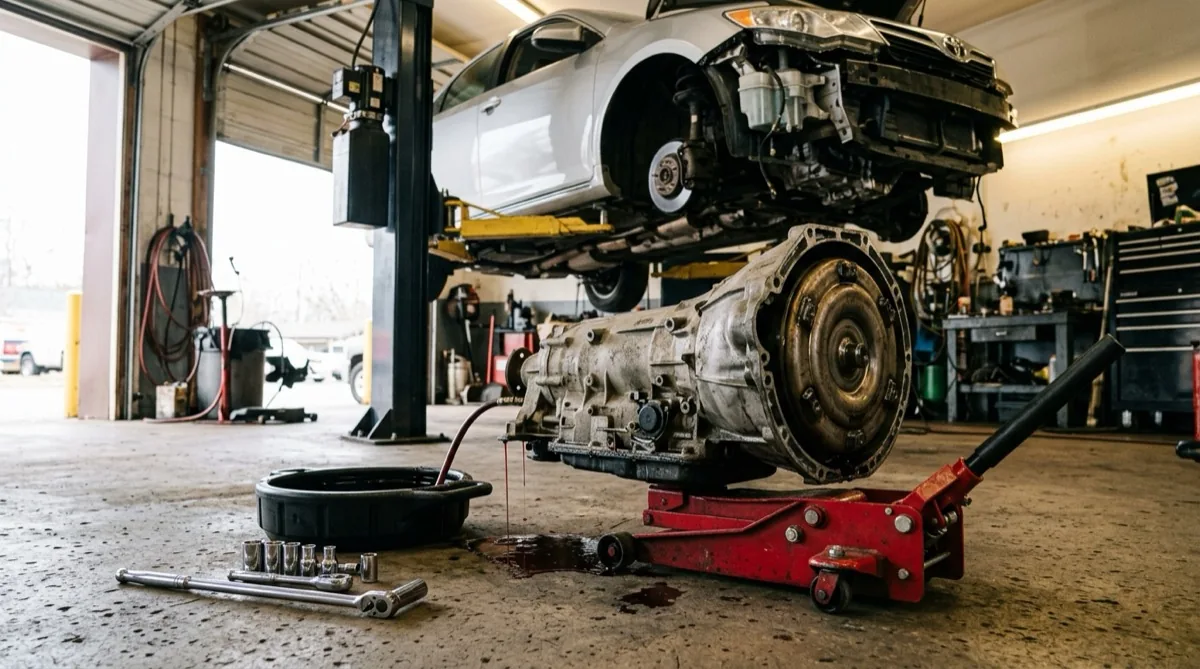
A slipping transmission costs $150 to fix if the cause is low fluid, or $1,970 to $3,200 for a full replacement with a used unit if internal clutch packs have failed. The gap between those two numbers is enormous, and the symptom — engine RPMs climbing without matching acceleration — is the same in both cases. That makes diagnosis the single most important step before authorizing any transmission work.
For a detailed breakdown of replacement pricing, see our transmission replacement cost guide.
- Fluid change: $150–$250 — fixes low-fluid slipping and costs less than a diagnostic at many shops
- Solenoid replacement: $300–$600 — the most common electrical cause of intermittent slipping
- Rebuild: $2,070–$5,300 — new clutch packs, bands, seals, and gaskets inside the original case
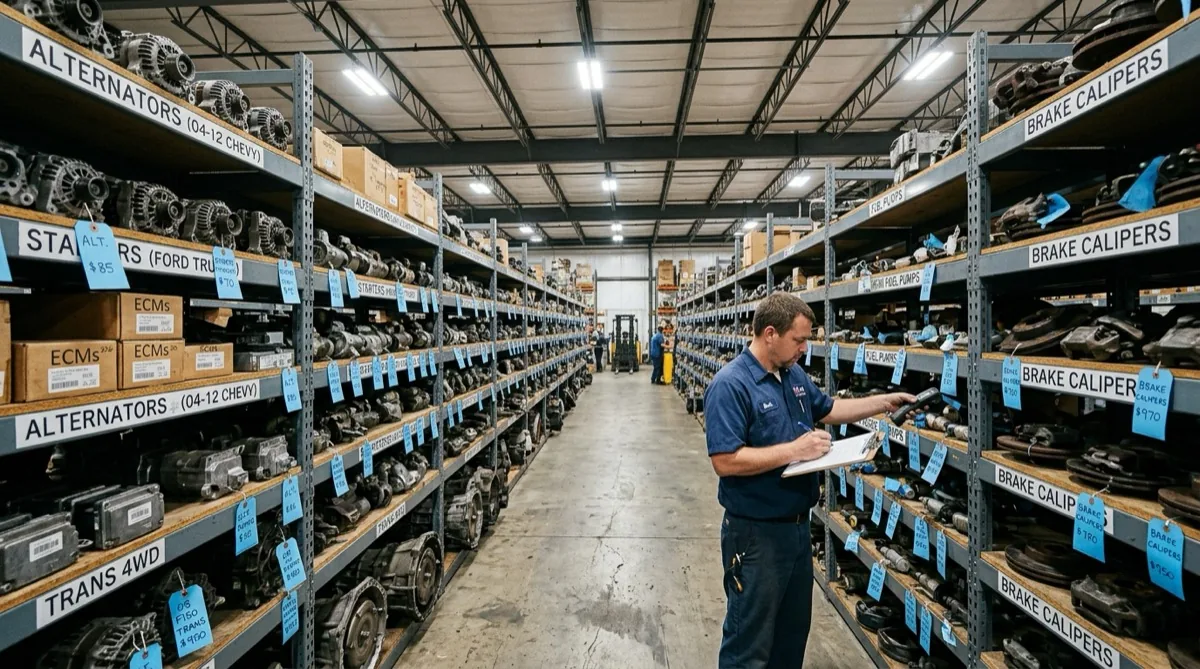
- Used replacement: $1,970–$3,200 — a complete used transmission at $1,400 median plus $570–$1,800 labor
- Driving on a slip accelerates damage — excess heat from clutch friction can turn a minor repair into a rebuild within weeks
- Dataset: 95,948 priced transmission listings, August 2026
What Transmission Slipping Feels Like
Transmission slipping is the disconnect between engine speed and vehicle speed. The engine revs higher than normal — you hear it and see the tachometer climb — but the vehicle does not accelerate proportionally. It feels like the drivetrain is momentarily in neutral before catching again.
The sensation is distinct from other drivetrain problems. A bad torque converter produces a shudder at highway speeds. A failing alternator causes electrical symptoms before affecting driveability. Transmission slipping specifically affects the relationship between throttle input and forward motion, and it gets worse under load: highway merges, uphill grades, and towing.
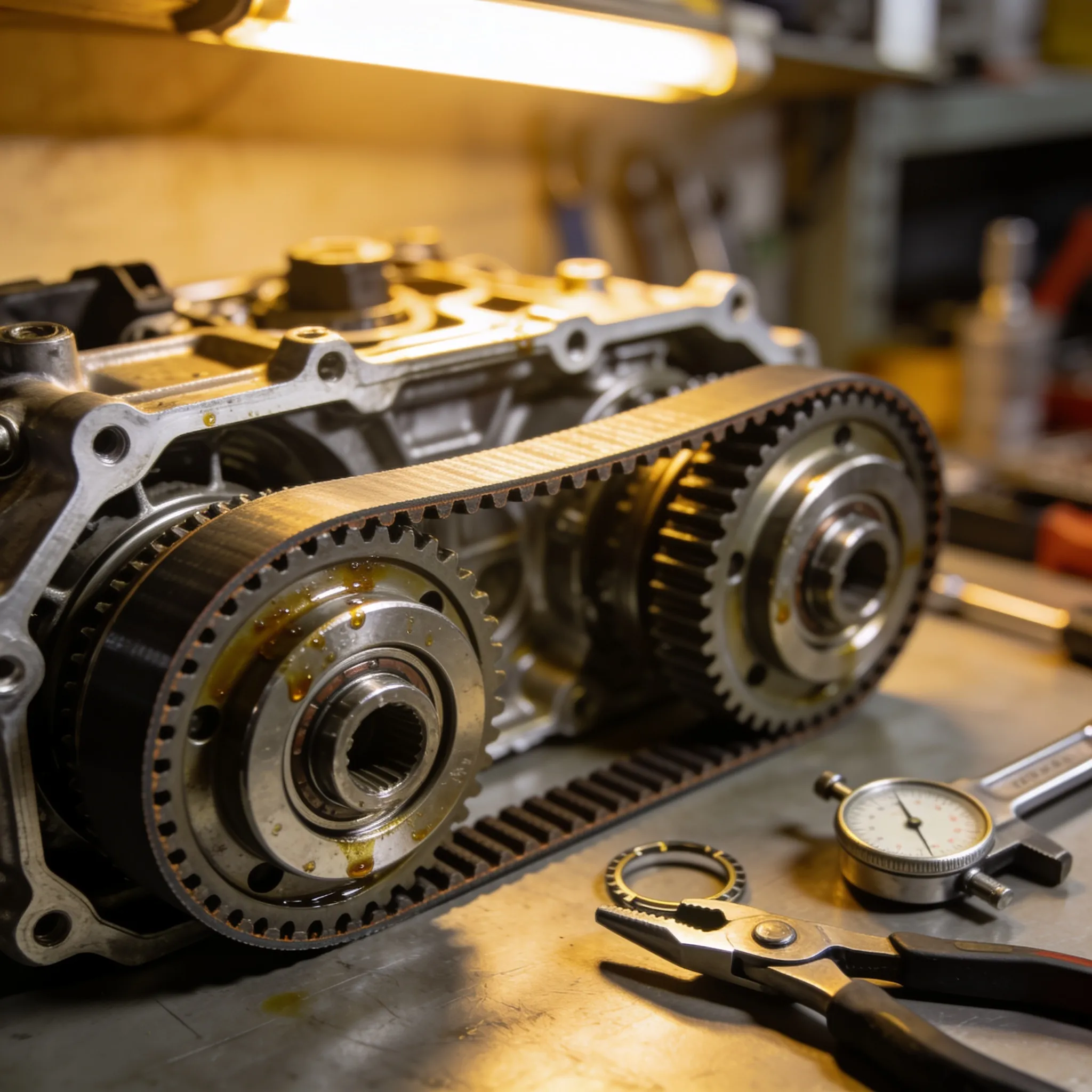
On vehicles with a traditional automatic, slipping happens when the friction material on the clutch packs or bands wears thin and can no longer hold the gear under the hydraulic pressure the transmission applies. On CVTs, the steel belt or chain loses grip on the variator pulleys, producing a similar RPM-speed disconnect. Either way, the root cause is a failure in the mechanism that transfers engine torque through the transmission and into the driveshaft.
Six Symptoms of a Slipping Transmission
1. RPM flare without acceleration
The most obvious symptom. Under moderate throttle, the tachometer jumps 500 to 1,000 RPM above where it should sit for that gear and speed. The engine sounds like it is working harder than the vehicle's acceleration justifies. This is the defining sign that clutch packs or bands are not holding.
2. Delayed or harsh engagement
Shifting from Park or Neutral into Drive or Reverse takes two to three seconds instead of engaging immediately, or the engagement comes with a hard thump. A healthy transmission engages within half a second with a barely perceptible bump. A delay longer than one second, combined with a firm jolt, points to low line pressure or worn clutch apply components.
3. Gear hunting on flat roads
The transmission upshifts and downshifts repeatedly at a steady speed on level ground. The vehicle cannot settle into a gear. This "hunting" happens when the transmission control module detects slippage and cycles through gears trying to find one that holds.
4. Burning smell
Overheated transmission fluid smells sharp and acrid — distinctly different from engine oil or coolant. If you smell it after highway driving or stop-and-go traffic, the fluid temperature has exceeded its operating range. Chronic overheating degrades ATF rapidly, thinning it to the point where it cannot maintain hydraulic pressure.
5. Check engine or transmission warning light
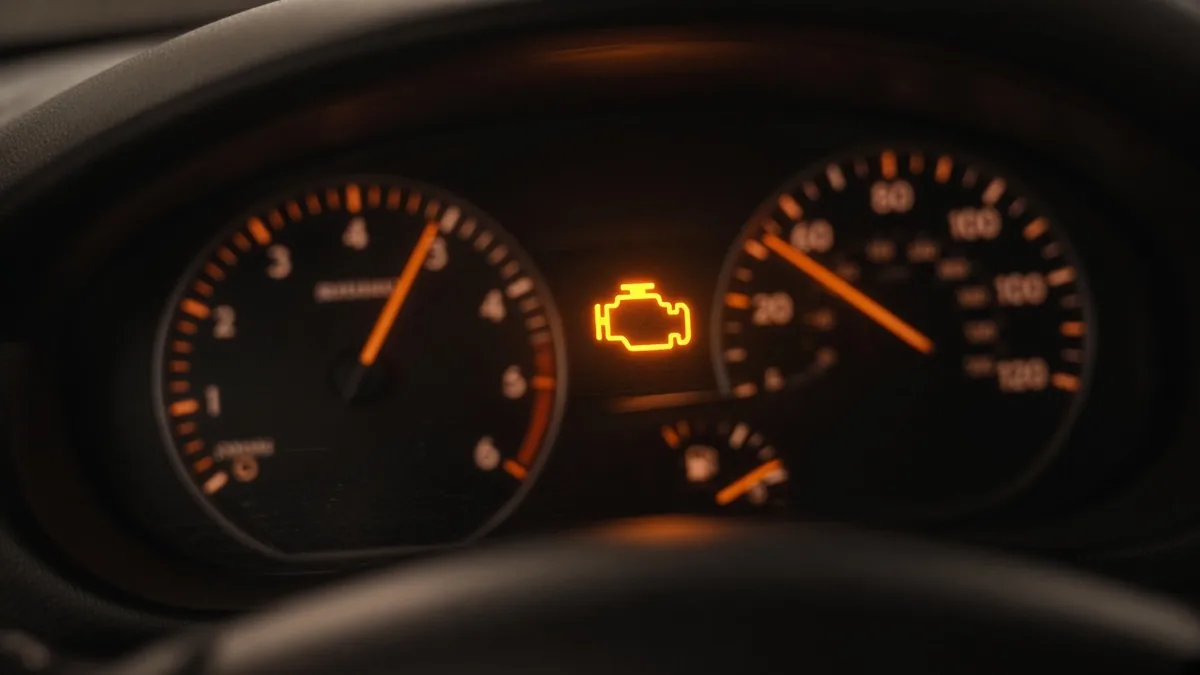
The transmission control module monitors input and output shaft speeds. When the ratio between them diverges from the expected value for a given gear — the definition of slipping — the module stores a diagnostic trouble code and illuminates the check engine light. Common DTCs include P0730 (incorrect gear ratio), P0735 (gear 5 incorrect ratio), and P2714 (pressure control solenoid D stuck off).
See our check engine light diagnostic costs guide for what a full scan costs.
6. Fluid color or level abnormalities
Healthy ATF is translucent red or pink. Fluid that has turned brown, smells burnt, or contains visible particles indicates internal wear. Low fluid level — checked with the engine running and the transmission warm — means either a leak or fluid breakdown. Either condition can cause or worsen slipping because the hydraulic system cannot maintain the pressure needed to apply clutch packs.
What Causes a Transmission to Slip
The four most common causes, ranked from cheapest to most expensive to fix.
Low or degraded fluid
Transmission fluid does two jobs: it transfers hydraulic pressure to engage gears, and it lubricates and cools internal components. When the fluid level drops (leak) or the fluid breaks down (age and heat), neither job gets done properly. Clutch packs slip because line pressure drops below the threshold needed to hold them against the spring force and engine torque.
Fix: A drain-and-fill with new ATF and a filter replacement. If the problem was purely low fluid, this resolves the slipping immediately. If the fluid was severely degraded, the new fluid may reveal underlying wear that the thick old fluid was masking.
Failed shift solenoid
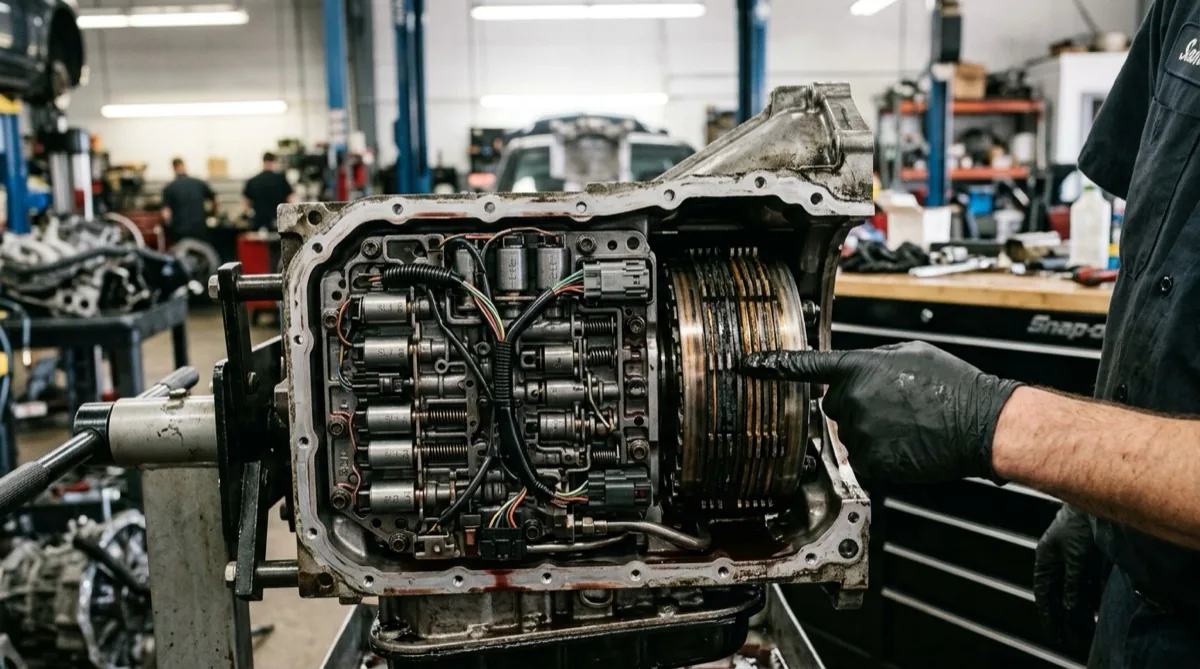
Shift solenoids are electromechanical valves that direct hydraulic pressure to specific clutch packs. The transmission control module commands them open or closed to execute gear changes. A solenoid that is stuck, leaking internally, or has a broken electrical circuit cannot deliver the correct pressure to engage the target gear, producing slipping in that specific gear.
Fix: Replace the failed solenoid. Access usually requires dropping the transmission pan and removing the valve body, which takes 2 to 4 hours. The solenoid itself costs $50 to $150; labor is the majority of the bill.
Worn torque converter clutch
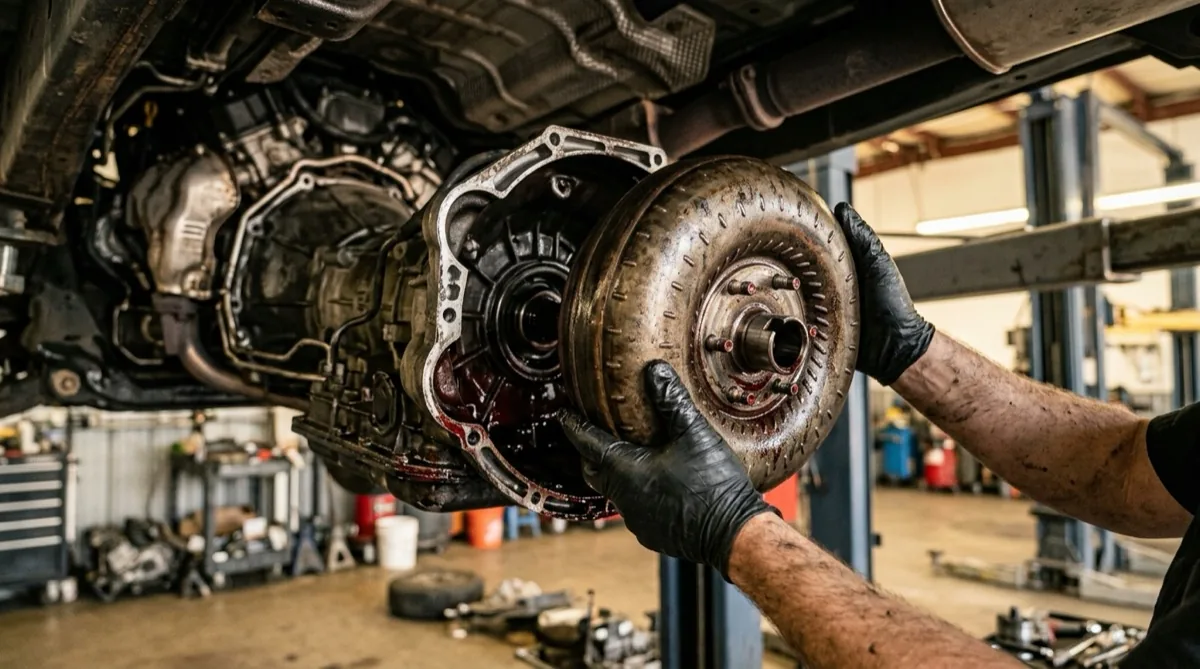
The torque converter lockup clutch is a friction disc inside the torque converter that creates a direct mechanical link between the engine and transmission at highway speeds. When its friction material wears thin, it slips during lockup, producing a shudder or vibration at 40 to 60 mph. This is technically a torque converter problem, not a transmission problem, but the symptoms overlap and the repair requires removing the transmission.
Fix: Replace the torque converter. A used converter runs $275 median across 1,245 listings. The labor to remove the transmission, swap the converter, and reinstall runs $570 to $1,800 — the same labor cost as a full transmission replacement, because the transmission must come out either way.
Internal clutch pack or band failure
This is the terminal diagnosis. The friction plates inside the transmission that hold each gear are worn through. Metal-to-metal contact generates debris that circulates through the valve body and damages solenoids and seals, turning a single-gear slip into a cascade failure. At this stage, the transmission needs a rebuild or replacement.
Fix: Rebuild ($2,070 to $5,300) or replace with a used unit ($1,970 to $3,200). New OEM is $3,570 to $7,300 and rarely justified outside of late-model or luxury vehicles.
Repair Cost by Cause
| Cause | Part Cost | Labor | Total Cost | Timeline |
|---|---|---|---|---|
| Fluid and filter change | $40–$80 (fluid + filter) | $110–$170 | $150–$250 | Same day |
| Shift solenoid replacement | $50–$150 | $250–$450 | $300–$600 | Same day |
| Torque converter replacement | $275 median used | $570–$1,800 | $845–$2,075 | 2–4 days |
| Transmission rebuild | $1,500–$3,500 (parts + machine work) | $570–$1,800 | $2,070–$5,300 | 1–3 weeks |
| Used transmission replacement | $1,400 median | $570–$1,800 | $1,970–$3,200 | 2–4 days |
| New OEM replacement | $3,000–$5,500 | $570–$1,800 | $3,570–$7,300 | 3–7 days (order wait) |
The cost gap between a fluid change and a rebuild is 15x. That gap is why a proper diagnosis — not a guess — is worth the $100 to $200 a transmission shop charges for an inspection. A technician who can tell you "it's a solenoid" versus "the third gear clutch pack is gone" just saved you either $2,500 or $400 in unnecessary work.
For broader context on salvage part pricing, see our junkyard parts pricing overview.
Rebuild vs Replace — Which Costs Less
The rebuild-vs-replace decision comes down to five factors: cost, warranty, timeline, vehicle value, and parts availability.
Used replacement: $1,970–$3,200
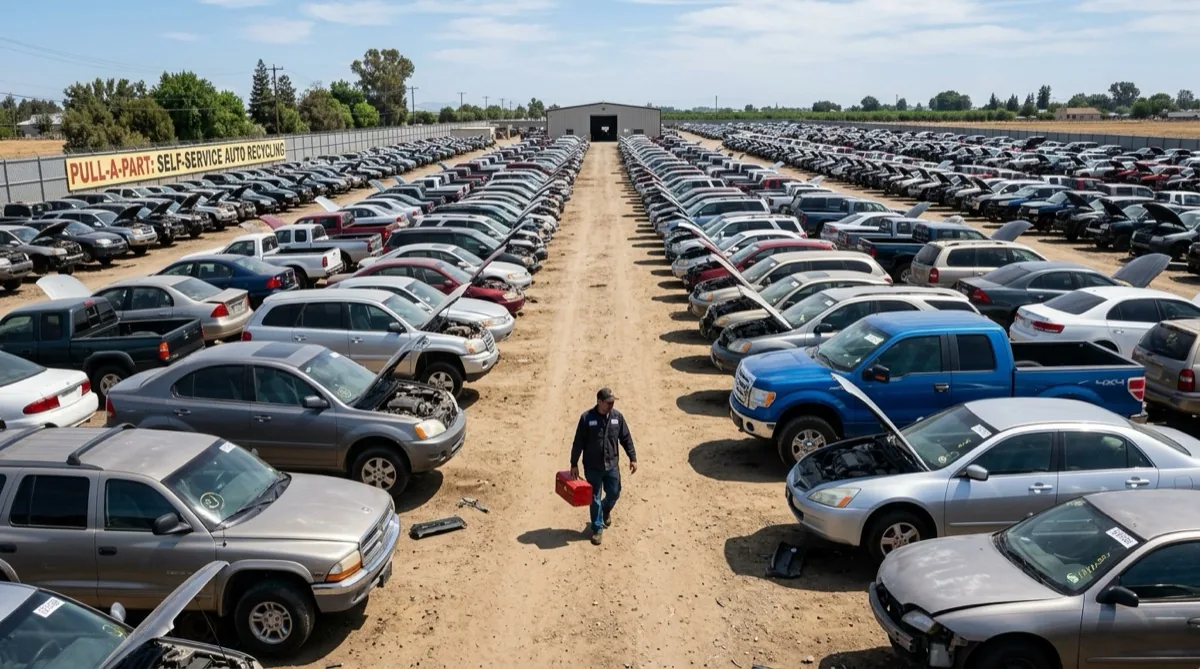
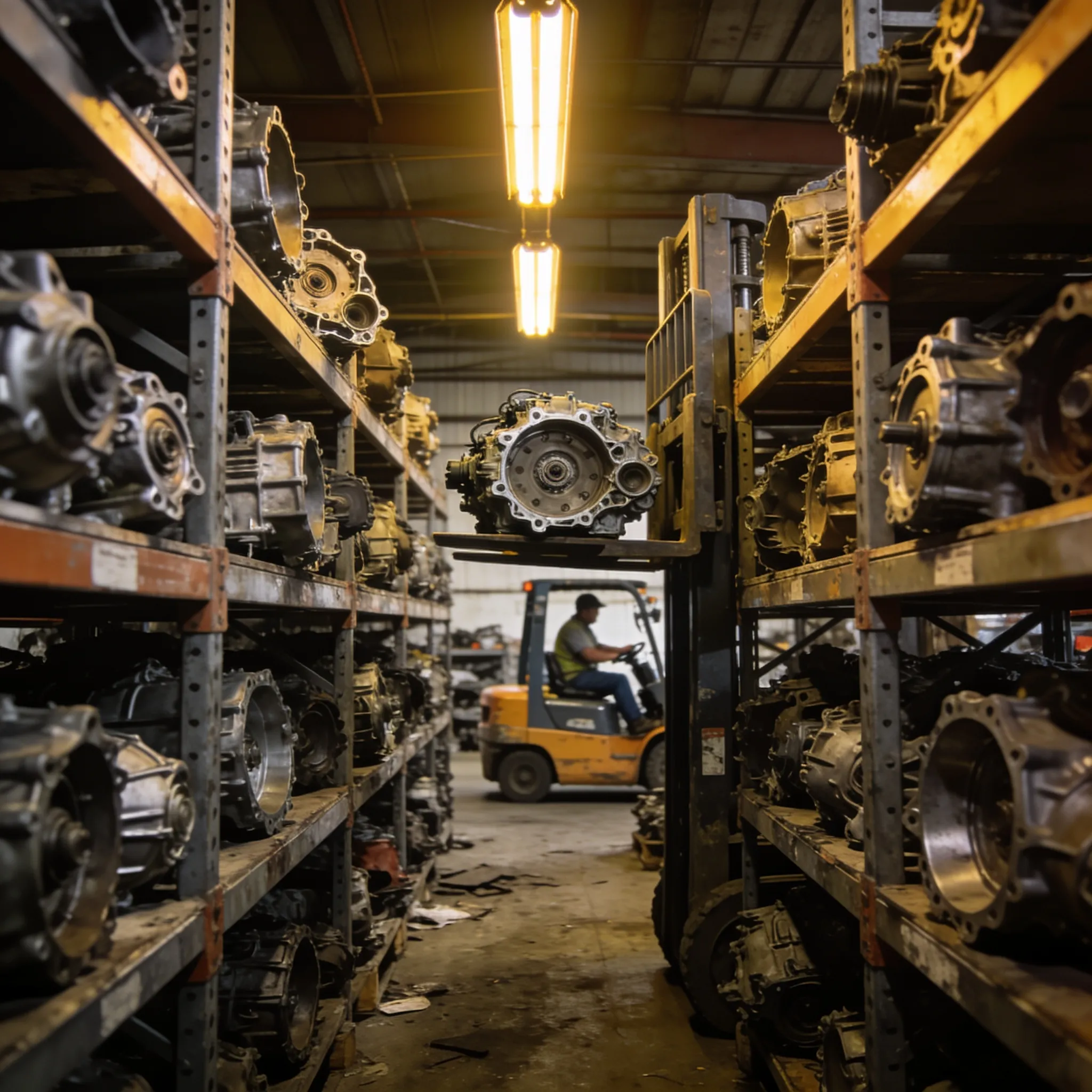
Buy a used transmission from a salvage yard at the $1,400 median price, pay a shop $570 to $1,800 for the swap. Total turnaround is 2 to 4 days. Warranty is typically 30 to 90 days from the salvage yard.
Best for: older vehicles where spending more than $3,000 on the drivetrain does not make financial sense, and vehicles where the owner needs the car back quickly. Used transmissions work or they do not — there is no "partial" failure on install. If the unit shifts cleanly after a test drive, it will continue to do so.
For tips on sourcing, see our used transmission buying guide.
Rebuild: $2,070–$5,300
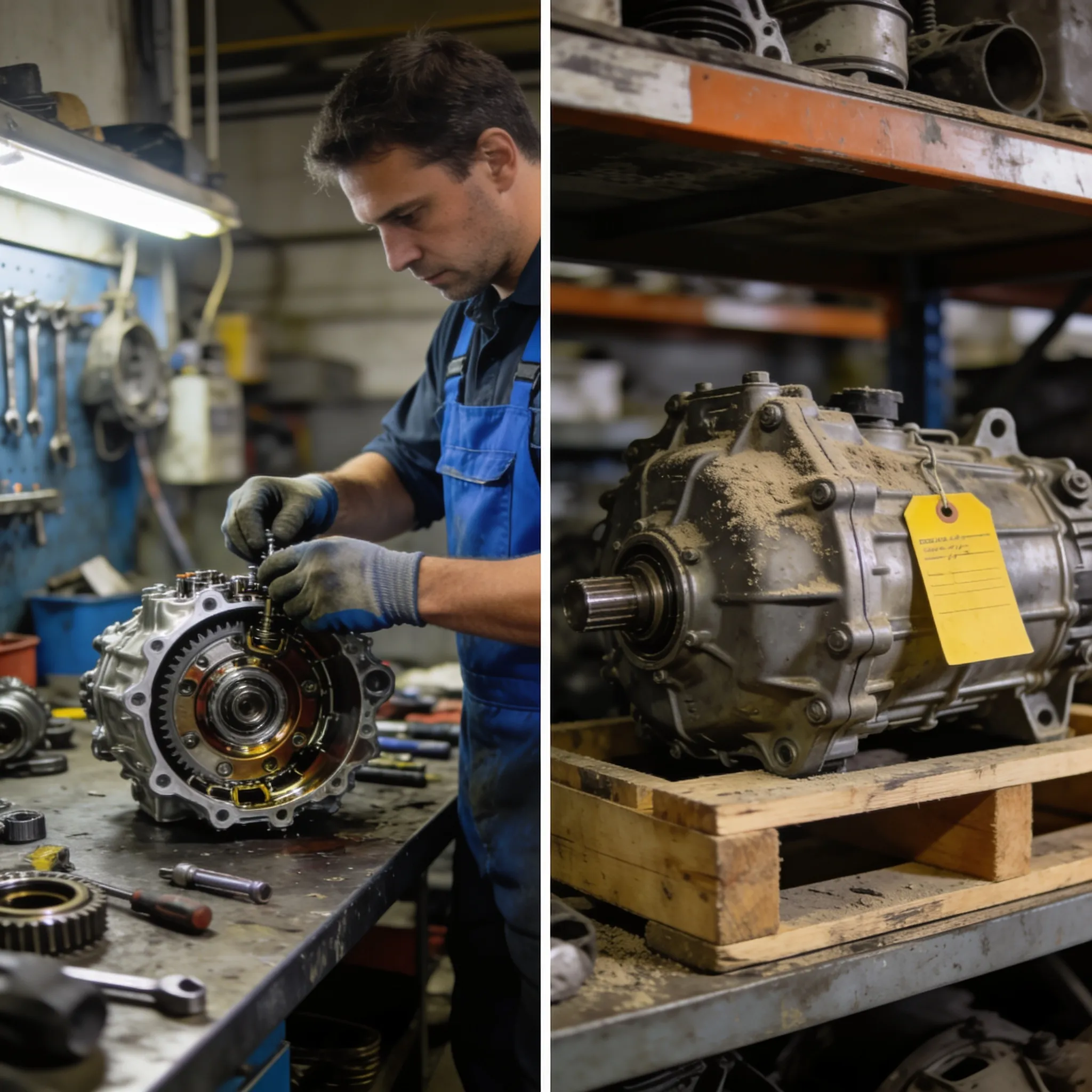
A transmission specialist disassembles your existing unit, replaces worn clutch packs, bands, seals, gaskets, and any damaged hard parts, then reassembles and tests it. Timeline is 1 to 3 weeks because the rebuild is done on a bench after removal.
Best for: late-model vehicles where a used unit is hard to source or expensive, vehicles the owner plans to keep for 100,000+ more miles, and situations where a remanufactured unit is not available for the application.
The Automatic Transmission Rebuilders Association (ATRA) maintains a directory of member shops that follow standardized rebuild procedures. An ATRA member shop typically offers a 12- to 36-month warranty on the rebuild.
New OEM: $3,570–$7,300
A factory-new transmission from the vehicle manufacturer. Justified almost exclusively for vehicles under powertrain warranty, late-model luxury vehicles where the owner wants maximum longevity, or fleet vehicles where downtime costs exceed the price premium.
For a deeper cost comparison, see our transmission replacement cost guide.
CVTs are a special case
CVT transmissions cannot be rebuilt by most independent shops because the steel belt and variator pulleys require specialized tooling. Used replacement is the practical path for CVT-equipped Nissan, Honda, and Subaru models. For more, see our CVT rebuild analysis.
When to Repair vs When to Scrap
Use this framework to decide whether fixing the transmission makes financial sense.
Repair makes sense when:
- The repair cost is under 50% of the vehicle's current market value
- The rest of the drivetrain (engine, suspension, body) is in good condition
- You plan to keep the vehicle at least 2 more years
- The fix is on the cheap end (fluid change, solenoid) regardless of vehicle value
Consider scrapping when:
- The repair cost exceeds 60% of the vehicle's market value
- The engine has its own problems (burning oil, knocking, overheating)
- The vehicle has multiple other expensive pending repairs
- The vehicle has over 200,000 miles and the transmission is not the only failing system
The middle ground (40–60% of vehicle value):
- A used transmission at the $1,400 median might tip the math in favor of repair, since the total ($1,970 to $3,200) stays below the replacement-vehicle cost that includes sales tax, registration, and the risk of buying someone else's problems
- Factor in what a replacement vehicle costs in your market — if comparable vehicles sell for $6,000 to $8,000, spending $2,500 on a known vehicle with a fresh transmission can be the better financial move
For related cost context, see our used auto parts price guide.