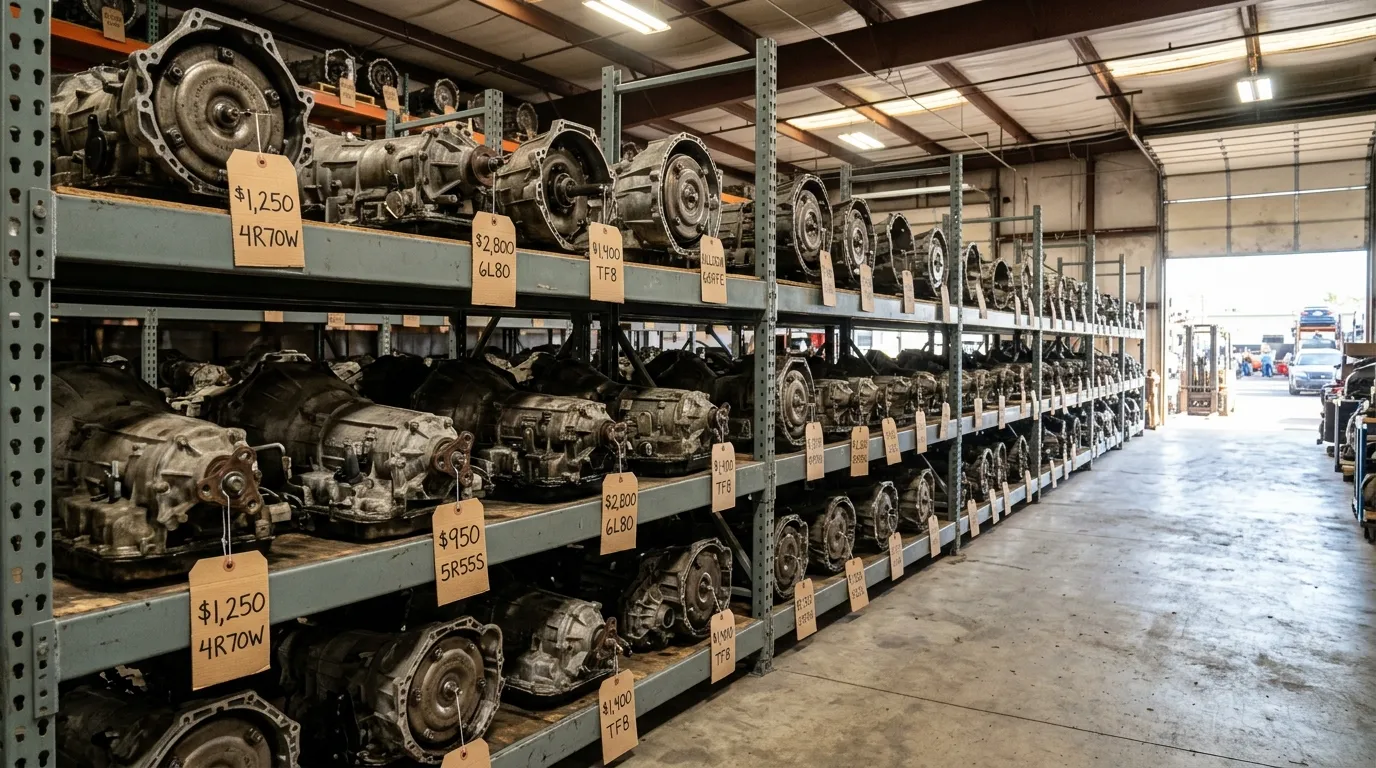
Transmission replacement costs $1,970 to $3,200 total with a used unit, $2,070 to $5,300 with a rebuild, and $3,570 to $7,300 with new OEM. The part is the dominant line item. A used transmission runs $1,400 median across 95,948 priced salvage listings in our index, and labor adds $570 to $1,800 depending on the vehicle and drivetrain layout.
Those numbers put transmission replacement in a different category from jobs like starter replacement or headlight swaps, where labor dominates and the part is a rounding error. Here the part is 50 to 70 percent of the bill, which means the biggest decision you face is not which shop to use, but which type of transmission to install: used, rebuilt, remanufactured, or new OEM.
- Used transmission total: $1,970–$3,200, based on a $1,400 median part plus $570–$1,800 labor
- Rebuild total: $2,070–$5,300, using the same core with new clutch packs, seals, and bands
- New OEM total: $3,570–$7,300, with full manufacturer warranty but rarely justified outside luxury or late-model vehicles
- Labor runs 6–12 hours at $95–$150/hr, the transmission has to come out from underneath the vehicle
- CVTs are a special case, most shops cannot rebuild them, making used replacement the practical option
- Dataset: 95,948 priced salvage listings, August 2026
What Transmission Replacement Costs
Transmission replacement has two line items: the unit and the labor to swap it. Unlike starters and alternators, the part is the larger half of the bill in every scenario, so the source you choose for the transmission moves the total more than labor rate shopping ever will.
| Cost Component | Used | Rebuild | Remanufactured | New OEM |
|---|---|---|---|---|
| Part cost | $800–$2,200 (median $1,400) | $1,500–$3,500 | $2,000–$4,000 | $3,000–$5,500 |
| Labor (6–12 hrs at $95–$150/hr) | $570–$1,800 | $570–$1,800 | $570–$1,800 | $570–$1,800 |
| Total | $1,970–$3,200 | $2,070–$5,300 | $2,570–$5,800 | $3,570–$7,300 |
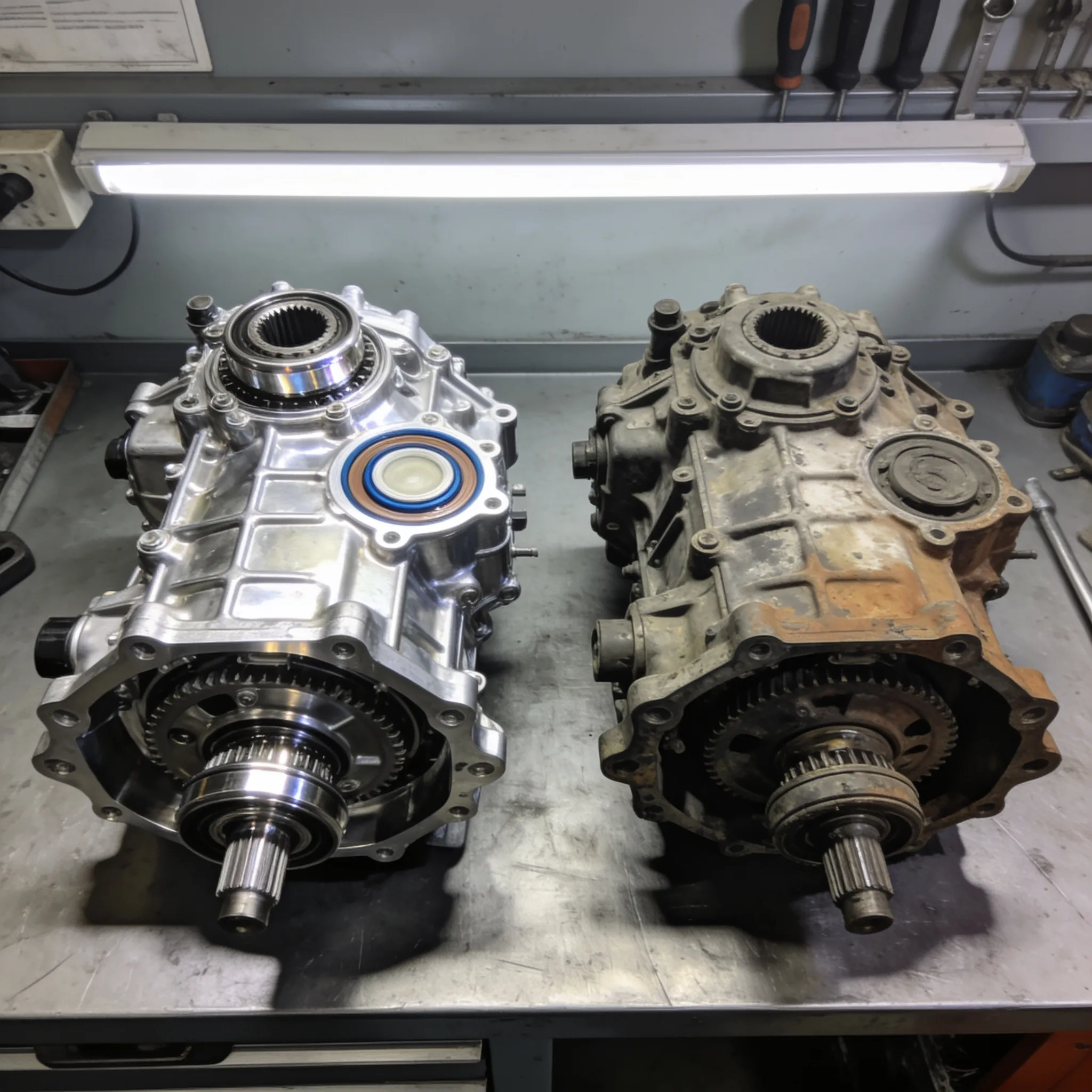
A few things stand out in that table. First, the labor column is identical across all four rows. Swapping in a used transmission takes the same shop time as installing a new one because the physical work is the same: drop the old unit, bolt in the replacement. Second, the remanufactured option sits in a middle ground that often makes financial sense for vehicles worth keeping long-term. You pay more than used but get a unit that has been fully disassembled, machined, and tested with new wear components throughout.
The SERP-wide range you'll see quoted online ($3,000 to $8,000, or $10,000-plus for luxury vehicles) reflects a mix of these scenarios weighted toward rebuilds and new OEM at dealer labor rates. If you're installing a used unit at an independent shop, you're on the low end of that range.
For a detailed breakdown, see our full used pricing breakdown guide.
Rebuild vs Replace: When Each Makes Sense
The rebuild-versus-replace question is the core decision in any transmission job. Both options involve removing the transmission from the vehicle, but what happens next is very different.
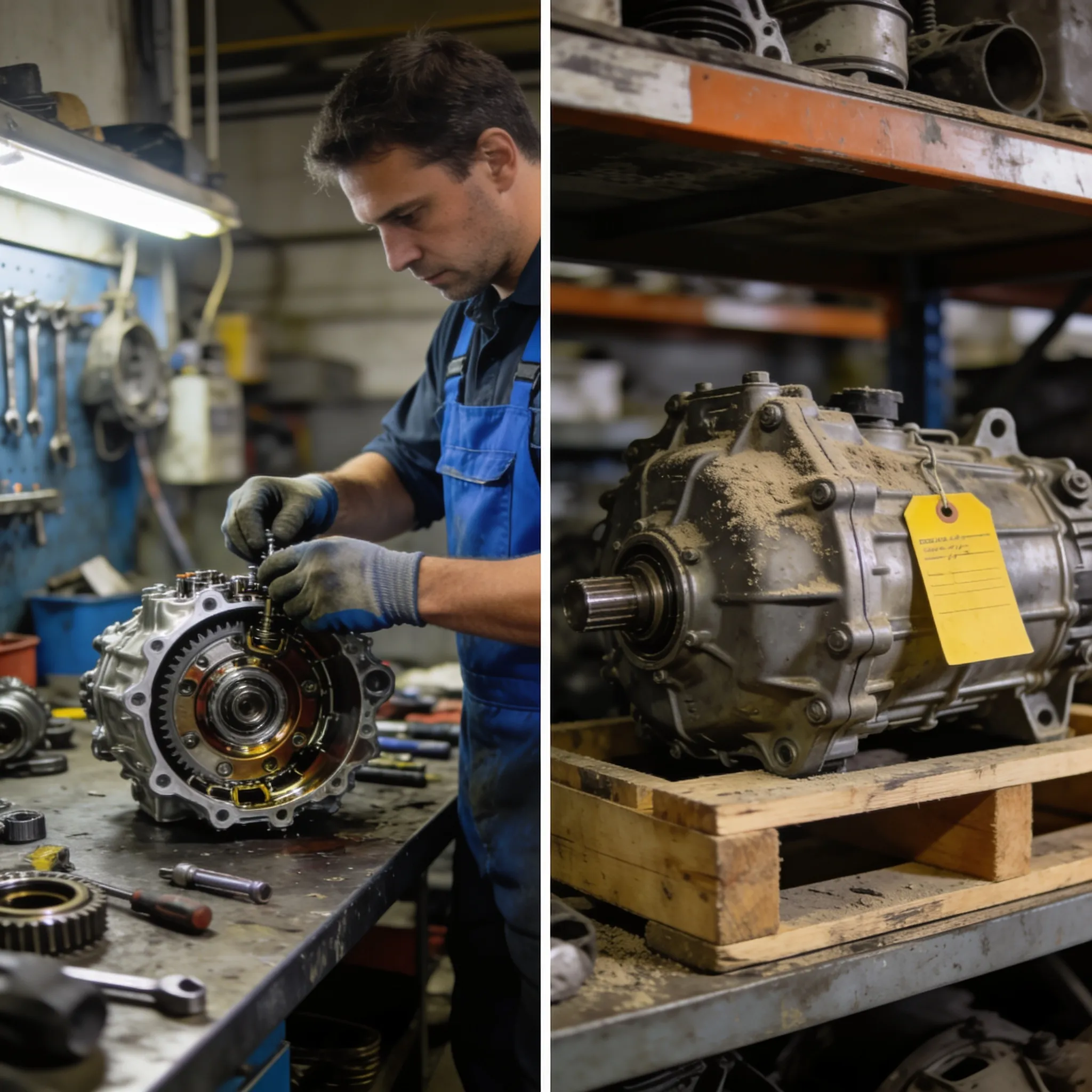
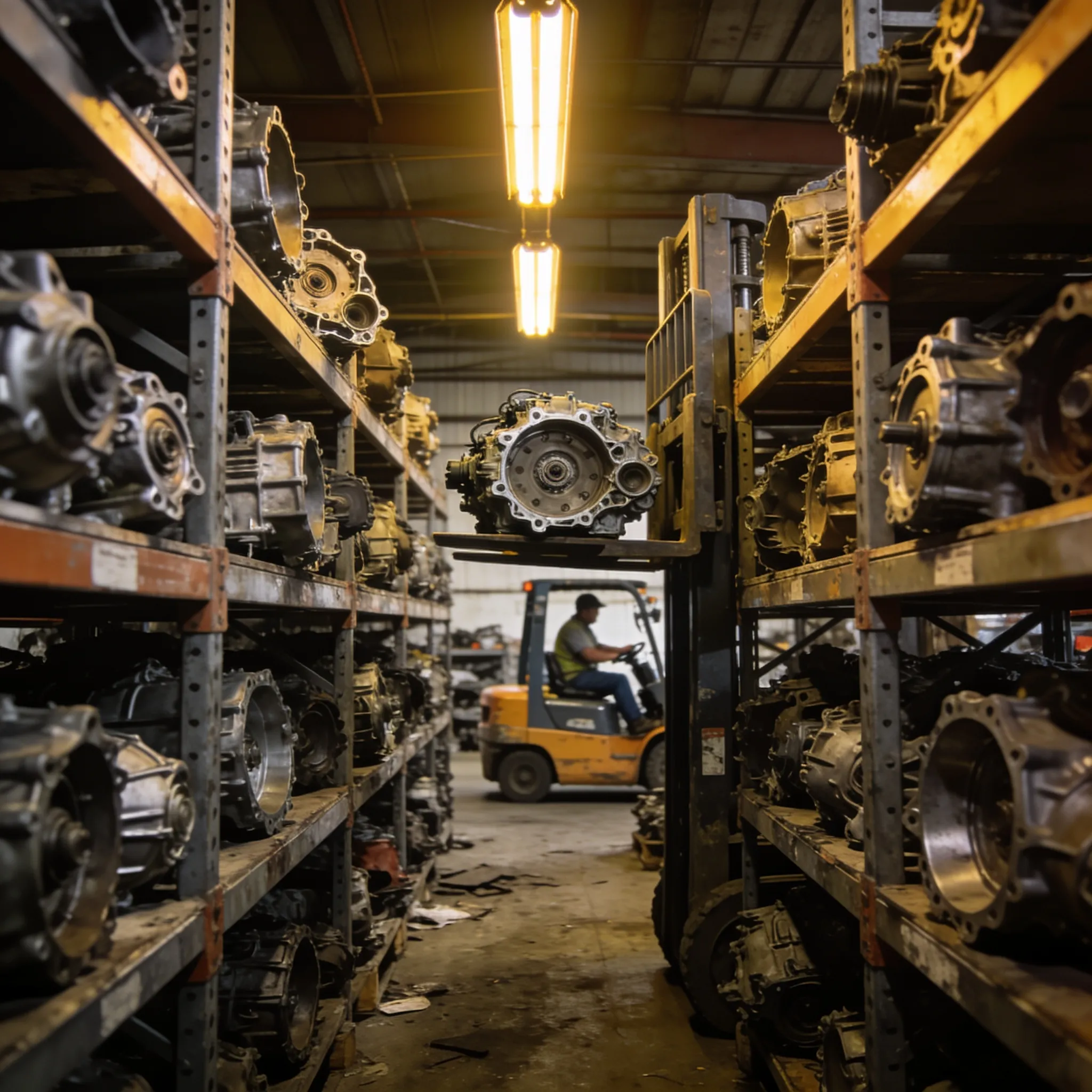
Replacing with a used transmission means pulling a working unit from a salvage vehicle and bolting it into yours. The part costs less ($1,400 median versus $1,500 to $3,500 for a rebuild), and the swap is faster because there's no teardown, inspection, and reassembly cycle. You get a transmission with unknown internal wear, offset by the fact that most full-service salvage yards offer 30 to 90-day warranties, and some offer 6 months to a year.
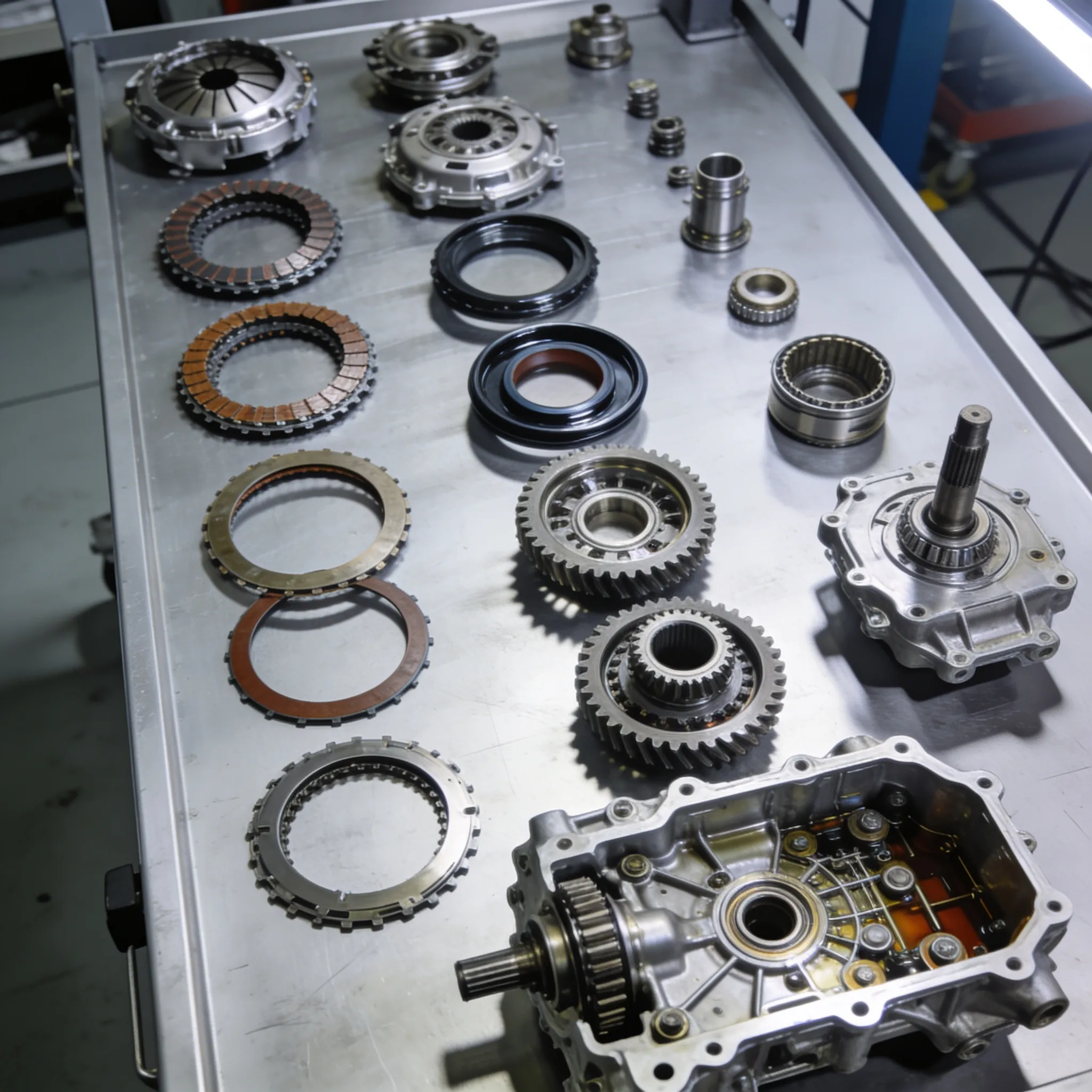
Rebuilding your existing transmission means a technician disassembles it completely, replaces all clutch packs, bands, seals, gaskets, and the torque converter, and reassembles it to ATRA factory specifications. The result is a unit with new wear surfaces inside your original case. Rebuilds take 1 to 3 weeks because the shop has to order parts, wait for them, and test the completed unit.
Here's when each path makes sense:
Choose used replacement when:
- The vehicle is worth under $10,000 and spending $3,000-plus on a rebuild is hard to justify
- You need the vehicle back quickly (same-day or next-day with a used unit on hand)
- The transmission type is common and well-represented in salvage yards (domestic trucks, common SUVs)
- You plan to keep the vehicle for 2 to 4 more years
Choose a rebuild when:
- The vehicle is worth keeping long-term (5-plus years) and you want a known-good unit
- Your specific transmission is rare or poorly supplied in salvage (European, high-performance, or AWD-specific units)
- There's a known design flaw in the original production run, and a rebuild lets the shop use updated parts
- You want a longer warranty (many rebuilders offer 2 to 3 years, versus 30 to 90 days on used)
For the full financial breakdown, see our rebuild vs replace analysis. For longevity expectations, our rebuilt vs used transmission lifespan comparison covers what to expect from each.
CVT Transmission Costs
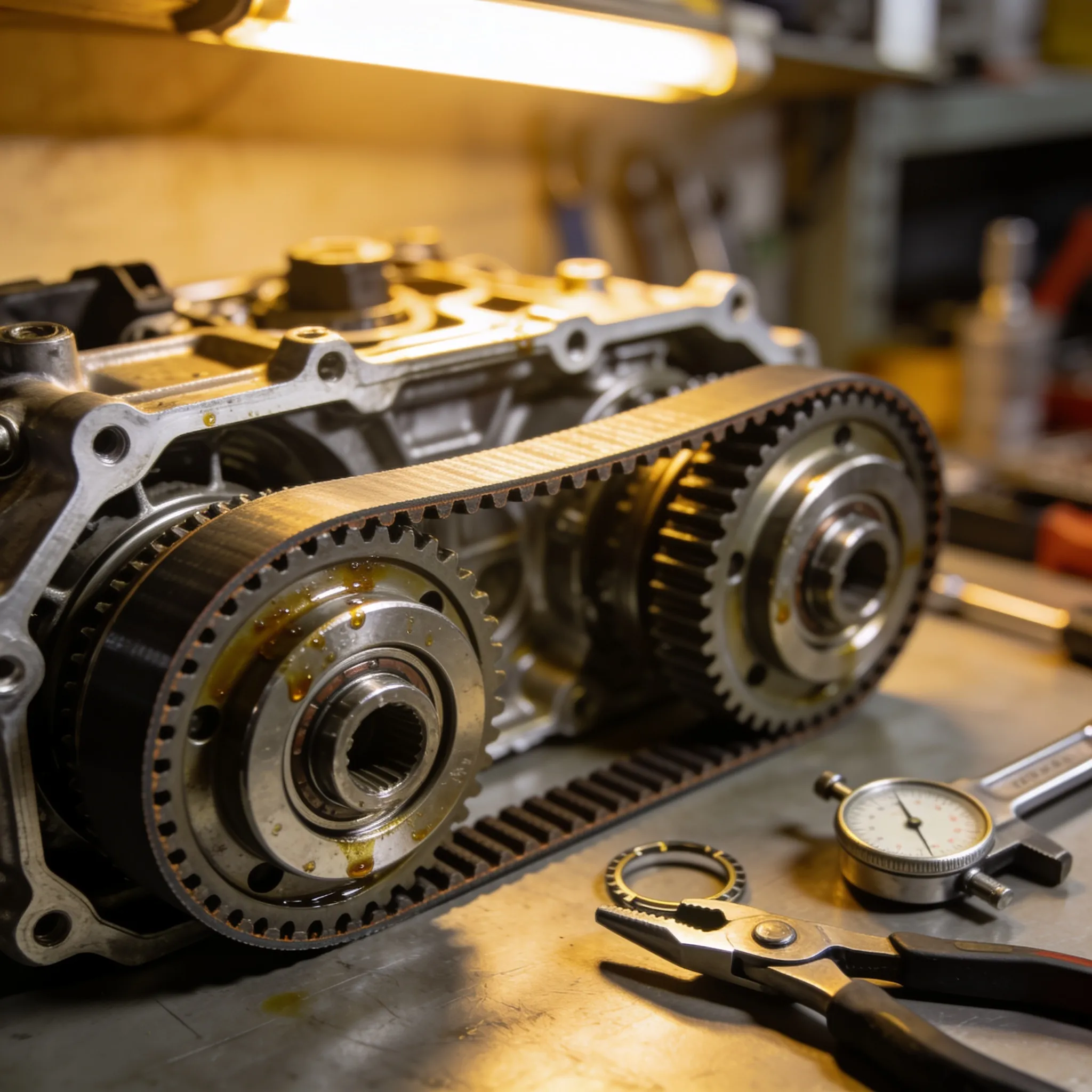
CVT (continuously variable transmission) replacement is a separate category because most transmission shops cannot rebuild a CVT. The belt-and-pulley assembly requires specialized tooling and training that fewer than 20 percent of shops have invested in, which makes used replacement the default path for CVT-equipped vehicles.
A used CVT runs $748 to $1,654 median depending on the model, putting total replacement at roughly $1,320 to $3,450 with labor. That's often less than a conventional automatic replacement because CVT units are lighter and somewhat faster to remove, trimming half an hour to an hour from the labor side.
| CVT Factor | Detail |
|---|---|
| Used CVT part cost | $748–$1,654 median |
| CVT rebuild cost (where available) | $2,500–$5,000 |
| Total replacement with used | $1,320–$3,450 |
| Rebuild availability | Under 20% of shops |
| Common failure modes | Belt/chain stretch, variator pulley wear, overheating |
The critical thing to understand about CVT failures: they tend to be systemic rather than isolated. A conventional automatic might have one clutch pack fail while everything else remains serviceable. A CVT belt slips, generates metal shavings, contaminates the fluid, and damages the variator pulleys in a cascade. This is why even when a rebuild is available, a used CVT from a different production batch can be a better bet — you're getting an entirely separate unit rather than rebuilding one with the same wear pattern.
For full detail on CVT rebuilds, see our complete CVT rebuild guide.
Why Labor Is So High
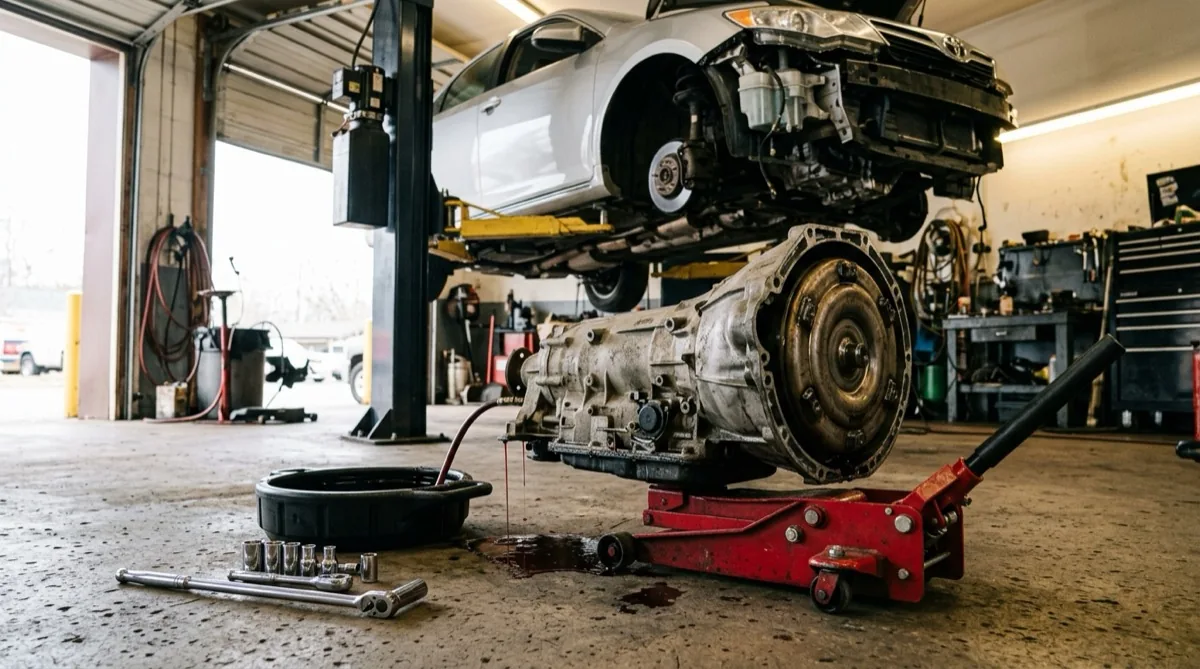
Transmission replacement labor runs $570 to $1,800 because the job takes 6 to 12 hours of shop time. That's 3 to 6 times longer than most other under-car repairs, and the reason is purely mechanical: the transmission is the heaviest, most centrally located component on the vehicle, and getting it out requires disconnecting or removing half the drivetrain.
Here's what the labor covers, step by step:
- Disconnect electrical, cooler lines, and linkage (30 to 60 minutes). The transmission has wiring harnesses, shift linkage, speedometer sensor, and fluid cooler lines running to the radiator. All of these come off first.
- Remove the driveshaft or axles (30 to 90 minutes). On rear-wheel-drive vehicles, the driveshaft unbolts from the rear flange. On front-wheel-drive vehicles, both axles have to come out, which often means removing the lower ball joints or steering knuckles.
- Support the engine (15 to 30 minutes). Once the transmission is unbolted, the engine has nothing holding up its back end. A support bar or jack holds the engine in place while the transmission slides out.
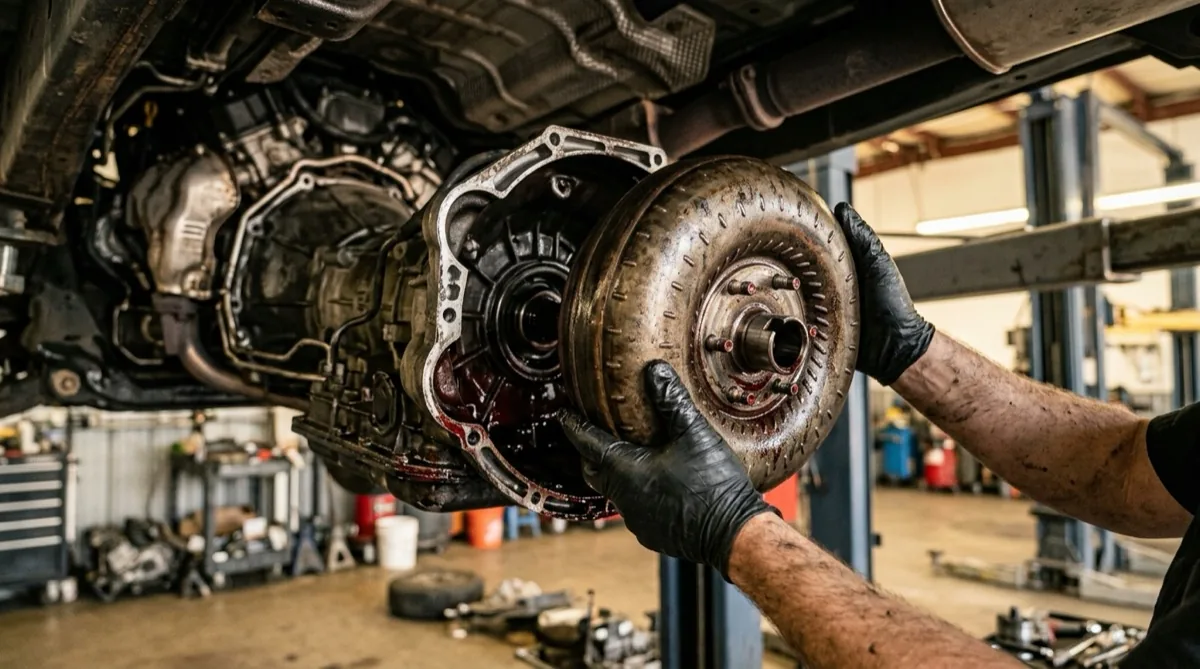
- Unbolt and drop the transmission (60 to 120 minutes). The transmission bolts to the engine block with 6 to 10 bolts, sits on a crossmember, and connects to the torque converter through the flexplate. The transmission jack lowers the unit out from underneath.
- Swap the torque converter (30 to 60 minutes). If the torque converter is being reused, it needs to be inspected. A replacement torque converter runs $275 median and many shops recommend replacing it alongside the transmission.
- Install the replacement and reassemble (120 to 240 minutes). Reverse the entire process, then fill with the correct fluid type and quantity, set the linkage adjustment, and test drive.
For a detailed breakdown, see our torque converter pricing guide.
The drivetrain layout is the biggest variable. Rear-wheel-drive trucks and body-on-frame SUVs (F-150, Silverado, Ram 1500, 4Runner) trend toward 6 to 8 hours because the transmission drops straight down without disturbing the axles, subframe, or steering. Front-wheel-drive and all-wheel-drive vehicles (Camry, Accord, Highlander, CRV) push toward 8 to 12 hours because the axles, and sometimes the subframe, come out with the transmission.
Cost by Popular Model
Part prices below are the median used transmission price from our salvage listing index. Labor estimates assume a $95 to $150 per hour independent shop rate. Actual labor hours vary by model and drivetrain configuration.
| Vehicle | Used part (median) | Drivetrain | Est. labor | Est. total (used) |
|---|---|---|---|---|
| Ram 1500 | $600 | RWD/4WD | $570–$1,050 | $1,170–$1,650 |
| Ford F-150 | $850 | RWD/4WD | $570–$1,050 | $1,420–$1,900 |
| Chevy Silverado 1500 | $900 | RWD/4WD | $570–$1,050 | $1,470–$1,950 |
| Honda Civic | $800 | FWD | $760–$1,350 | $1,560–$2,150 |
| Toyota Camry | $900 | FWD | $760–$1,350 | $1,660–$2,250 |
| Honda CR-V | $1,100 | AWD | $760–$1,500 | $1,860–$2,600 |
| Nissan Altima (CVT) | $850 | FWD | $570–$1,050 | $1,420–$1,900 |
| Subaru Outback (CVT) | $1,200 | AWD | $950–$1,500 | $2,150–$2,700 |
| Jeep Grand Cherokee | $1,500 | 4WD | $760–$1,350 | $2,260–$2,850 |
| GMC Yukon | $1,800 | 4WD | $760–$1,200 | $2,560–$3,000 |
| Chevy Tahoe | $2,700 | 4WD | $760–$1,200 | $3,460–$3,900 |
| Toyota Highlander | $3,300 | AWD | $950–$1,800 | $4,250–$5,100 |
For a detailed breakdown, see our junkyard transmission pricing guide.
Salvage Transmission Tips
Buying a used transmission from a salvage yard is the most cost-effective path, but it carries risk that you can manage with the right approach.
Verify the donor vehicle's history
The most important data point is how the donor vehicle ended up in the yard. A rear-end collision that totaled the body but left the drivetrain untouched is the ideal scenario. A vehicle that was scrapped for mechanical issues or overheating is a red flag. Full-service yards can usually pull the donor vehicle's history and tell you the mileage and reason for salvage.
Match the transmission exactly
Transmissions are not universal. You need to match the year, model, engine, and drivetrain configuration. A 4WD transmission won't work in a 2WD vehicle without modification, and even within the same model, manufacturers change transmission calibrations and gear ratios across model years. Your shop or the salvage yard's interchange system will confirm compatibility.
Check the warranty terms
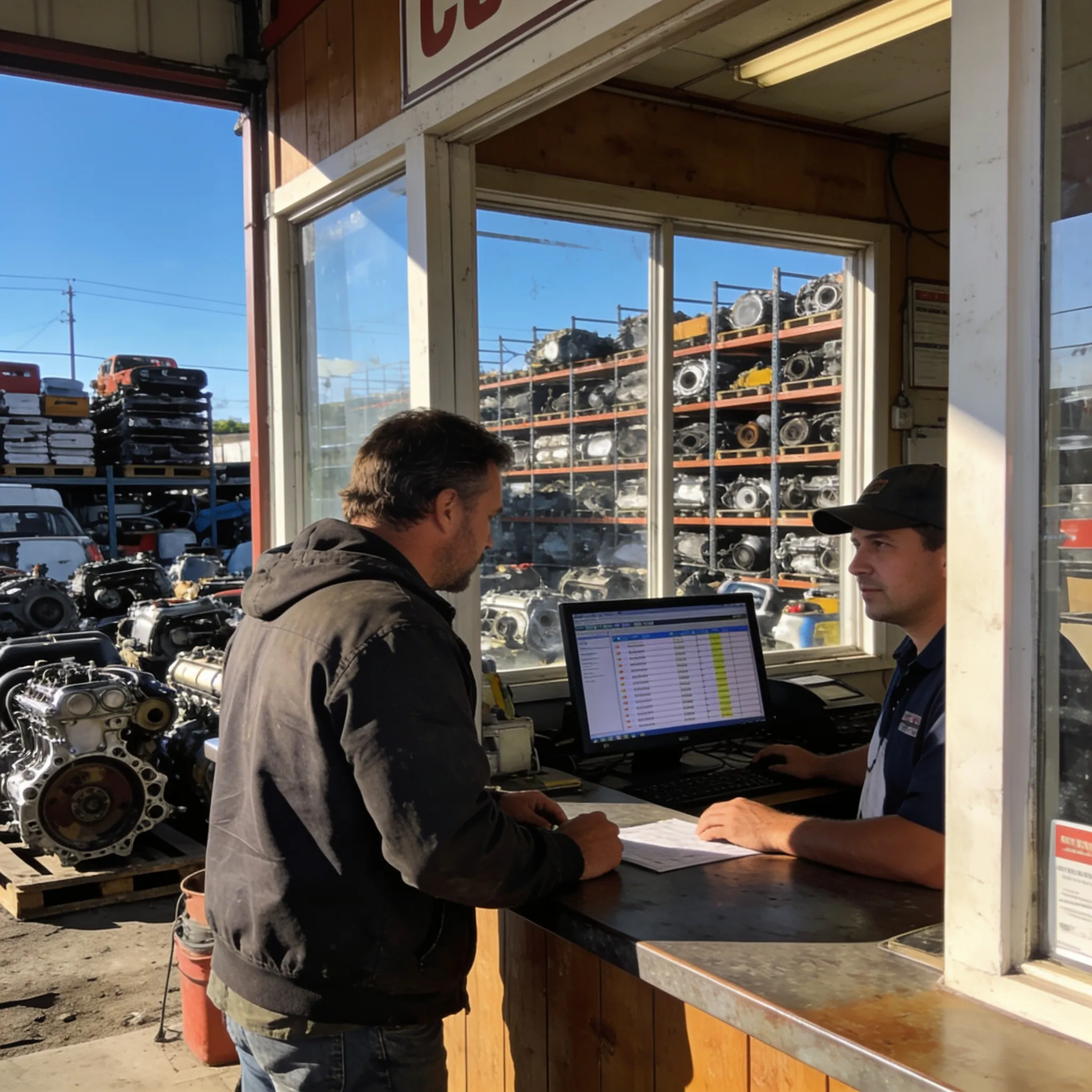
Full-service salvage yards typically offer 30 to 90-day warranties on transmissions, with some extending to 6 months or a year for an additional cost. Self-pull yards rarely warranty transmissions because you're removing the part yourself and the yard can't verify the condition. For a $1,400 part, the warranty matters.
Insist on a torque converter
Many salvage transmissions ship without the torque converter attached. If the converter doesn't come with the unit, you'll need one separately at roughly $275 median. Some shops will reuse your old converter if it's in good condition, but installing a worn converter in a fresh transmission risks a repeat failure.
Compare pricing across yards
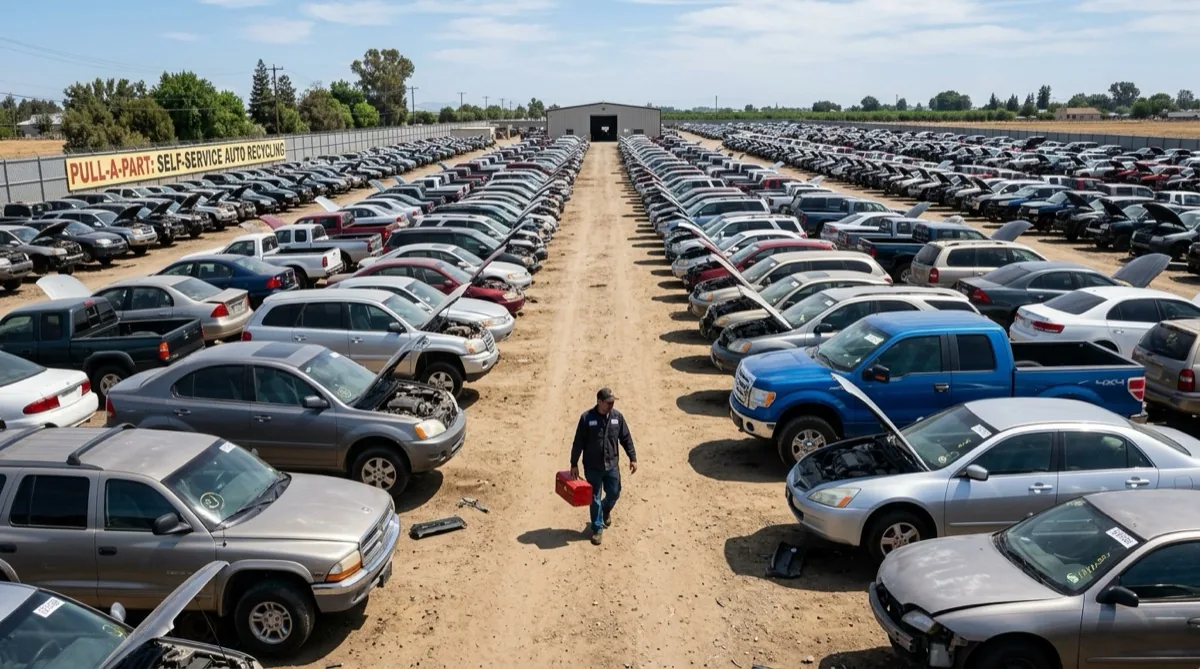
Our junkyard transmission pricing guide covers what to expect at self-pull versus full-service yards, and our used transmissions near me guide walks through how to find inventory in your area. Self-pull yards charge 30 to 50 percent less, but pulling a transmission yourself requires a transmission jack, an engine hoist, and a full day of work.
For a detailed breakdown, see our junkyard parts pricing guide.