Axle Shaft price snapshot
- Low
- $75
- Average
- $144
- High
- $380
Part price guide
Saurabh Kumar
Co-Founder & CTO, Part Price Guide
Built the pricing pipeline that collects and normalizes used OEM part listings from salvage yards and online marketplaces across the US.
Ambika Sharma
Co-Founder & COO, Part Price Guide
12 years of project management and technical operations experience. Reviews price guides for sample size, fitment accuracy, and data freshness.
Part overview
Across 179 vehicle models, the typical used axle shaft lists for $135, with model-level medians ranging from $75 to $380. Based on 452,904 priced salvage yard listings tracked by PartPriceGuide.
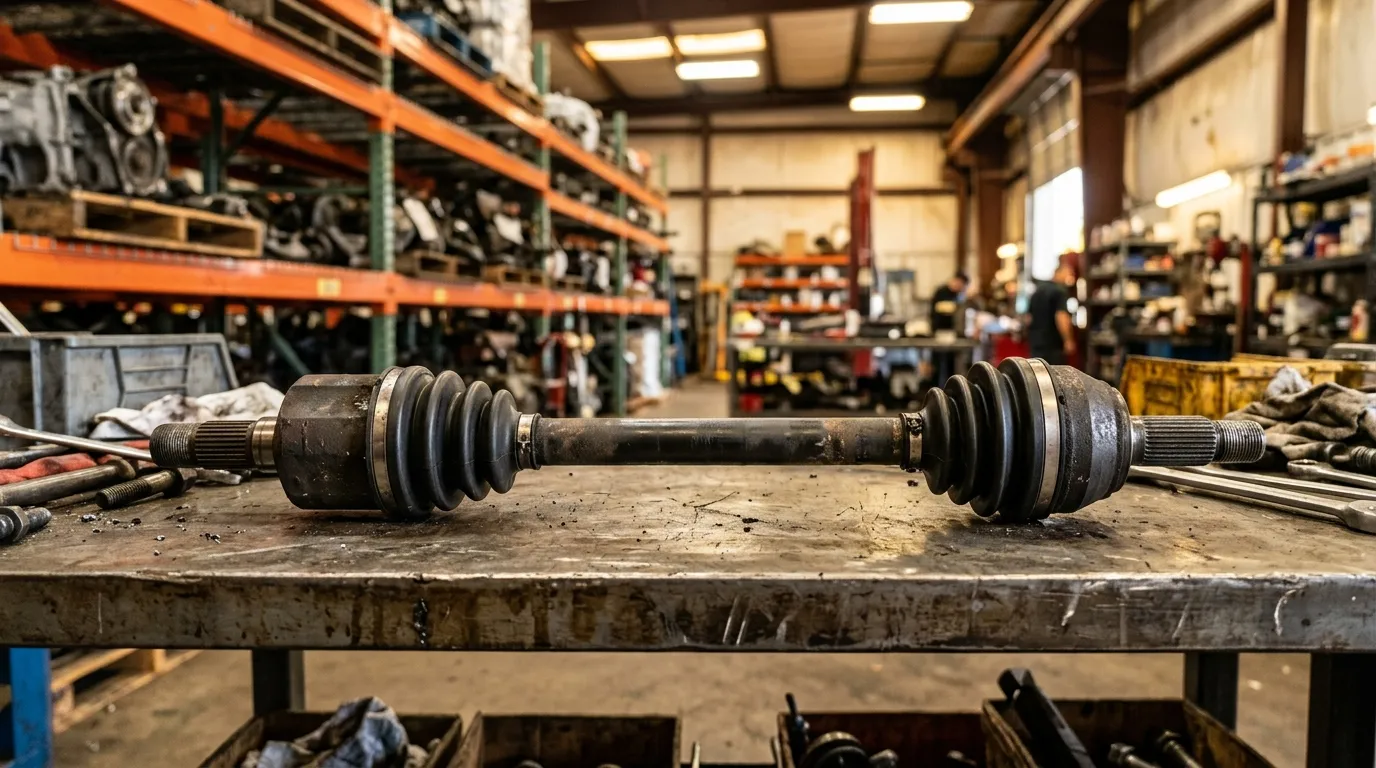
The axle shaft transfers rotational power from the differential or transmission to the drive wheels while accommodating suspension movement.
Replaced when torn rubber boots leak grease, leading to loud clicking noises while turning or vibration during acceleration.
A used axle shaft costs $75 to $380, with a median asking price of $135. Based on price data across 179 vehicle-specific guides. Prices exclude shipping, core charges, and installation.
Condition comparison
| Grade | Price range | Relative range | Listings |
|---|---|---|---|
| Grade AClean / low wear | $75–$400 | 179 | |
| Grade BStandard used | $45–$416 | 177 | |
| Grade CVisible wear | $35–$200 | 130 | |
| Grade XUngraded | $45–$430 | 179 |
Median by grade
Median asking price by seller-reported condition grade · $75–$380 overall range
Vehicle-specific reference
179 of 184 guides currently priced
Price data updating
Price data updating
Price data updating
Price data updating
Price data updating
Compare by vehicle
Keep comparing
Common questions
Across 179 vehicle-specific guides with current pricing, used axle shaft guide medians run from $75 to $380, with a typical median of $135. Condition grade, mileage, and fitment move the price within that range.
Usually, yes. Buying a used axle shaft from a salvage yard or auto recycler typically costs a fraction of the new axle shaft replacement cost at a dealership. Compare the grade-level medians above against any replacement quote you've received, and remember our figures exclude shipping and installation labor.
Salvage yards, junkyards, pick-and-pull lots, and online used parts marketplaces all sell used axle shafts. Our index tracks asking prices nationally, so you can benchmark a local quote against the market range before you buy.
Expect to pay toward the upper half of the $75–$380 range for a grade-A axle shaft with low mileage. Check the grade table above for the current grade-level medians, and confirm whether shipping and any core charge are included in the quote.
They can be — condition grade is the key. Grade A parts come off low-mileage vehicles with little to no damage, grade B is average, and grade C or ungraded parts are the gamble. Buy grade A or B from a yard that offers a return window or warranty, and confirm the mileage of the donor vehicle before paying. The grade-level medians above show what each tier should cost.
Yes. A cv axle is another name for a axle shaft. Other common names include cv shaft, drive axle, half shaft, axle assembly. The prices on this page apply regardless of what it's called in your region or by your mechanic.
The CV (constant velocity) joints sit at each end of the axle shaft and are what actually fails most often — a torn CV joint boot lets grease out and dirt in, leading to the telltale clicking sound in turns. On many vehicles you can buy and press in just the outer CV joint separately, but the inner joint is frequently only sold as part of the complete axle shaft, and salvage yards almost always sell the whole shaft with both joints intact. Unless you or your shop is set up to press joints, a complete used axle shaft is the simpler route.
Buying a used OEM CV axle shaft is a safe, economical choice that often provides stronger steel shafts and better joint machining than low-cost aftermarket replacements. Salvage units from low-mileage vehicles retain factory heat-treating and precise fitment. Inspecting the flexible rubber boots for damage before purchase ensures long-term operational safety.
Check rubber CV boots thoroughly for cracks, tears, grease leakage, or loose retention clamps. Flex the inner and outer joints by hand to verify that movement is smooth without excessive play, binding, or clunking noises. Confirm that ABS tone rings, hub splines, and differential retention clips are completely free of damage or rust pit corrosion.
Axle shaft lengths, inner differential spline counts, and outer wheel hub spline counts vary by transmission type, engine size, and trim options. Driver side and passenger side axles are often different lengths, making side selection critical. Cross-referencing part numbers or donor vehicle VIN details guarantees exact component length and spline match.
Failure symptoms include clicking or popping noises while making sharp turns, intense vibration through the floorboard during acceleration, and grease splatter inside the wheel well. A severely worn joint can snap under heavy load, leaving the vehicle stranded without power transmission to the wheels. Replacing a worn shaft restores smooth, quiet power delivery.
Replacing a CV axle shaft is a common DIY repair requiring standard sockets, a breaker bar, a torque wrench, and a pry bar. You must remove the wheel hub nut, unbolt lower ball joints or strut mounts, and pop the axle out of the transmission housing. Applying fresh axle grease and torquing the hub nut to factory specs ensures longevity.
Used OEM CV axles feature high-grade steel shafts engineered specifically for your vehicle's flex angles, eliminating vibration issues common with aftermarket units. Cheap new aftermarket axles often use inferior rubber boots that crack quickly and lightweight joints prone to premature wear. Sourcing a clean salvage original provides superior durability at a comparable price.