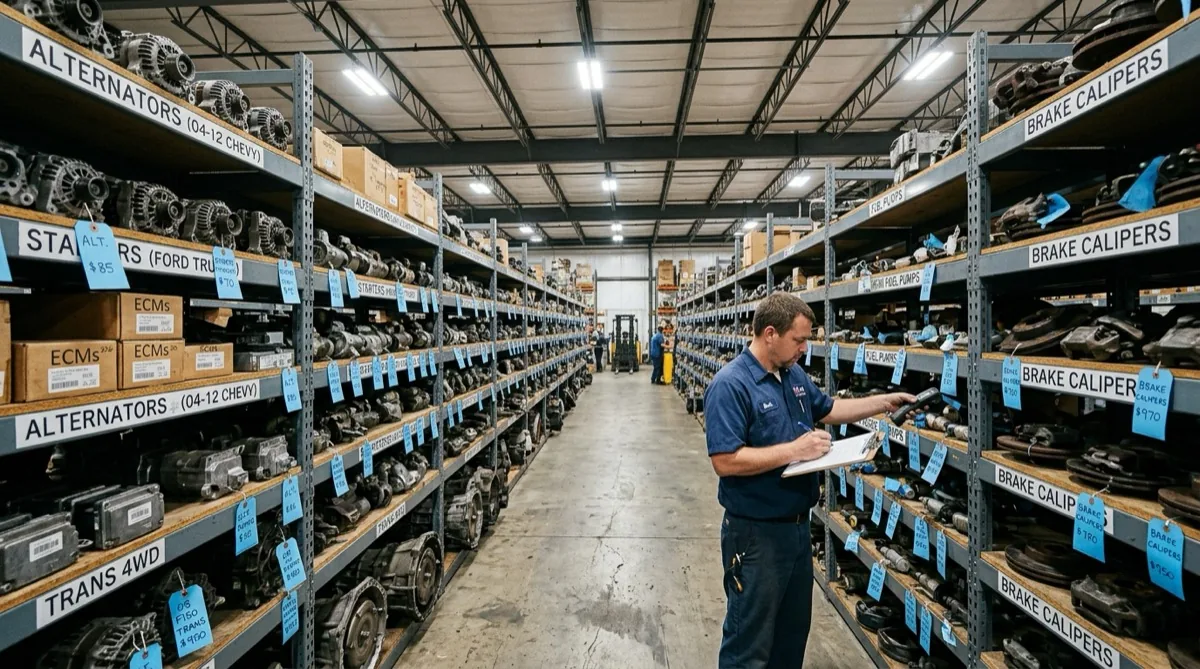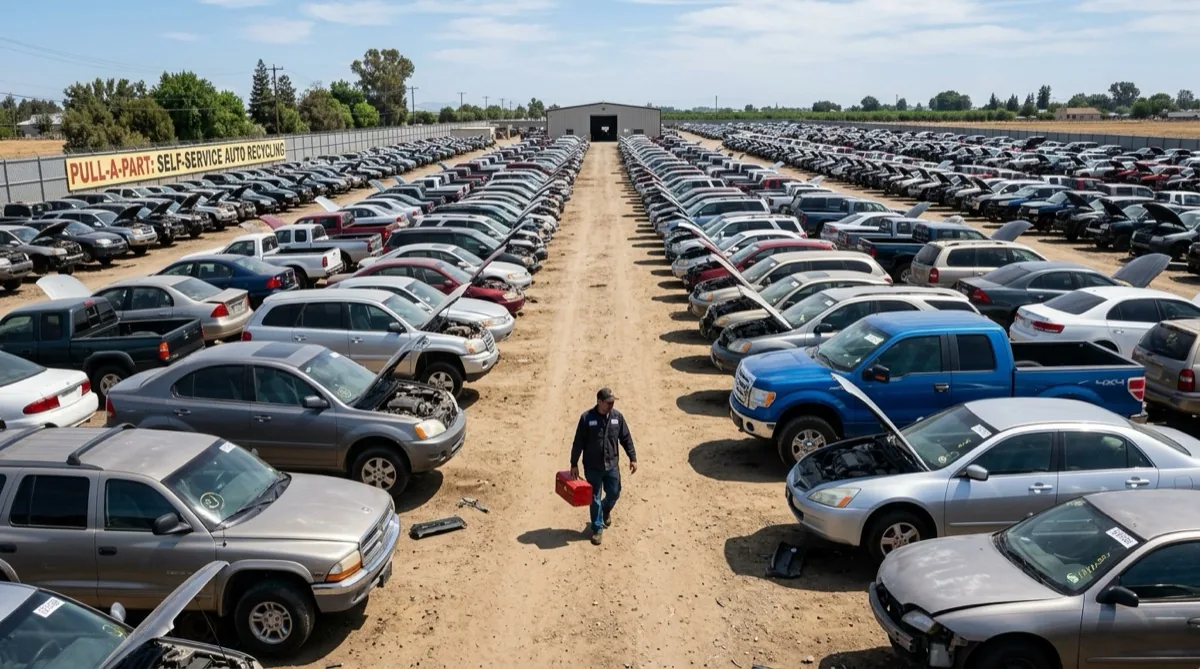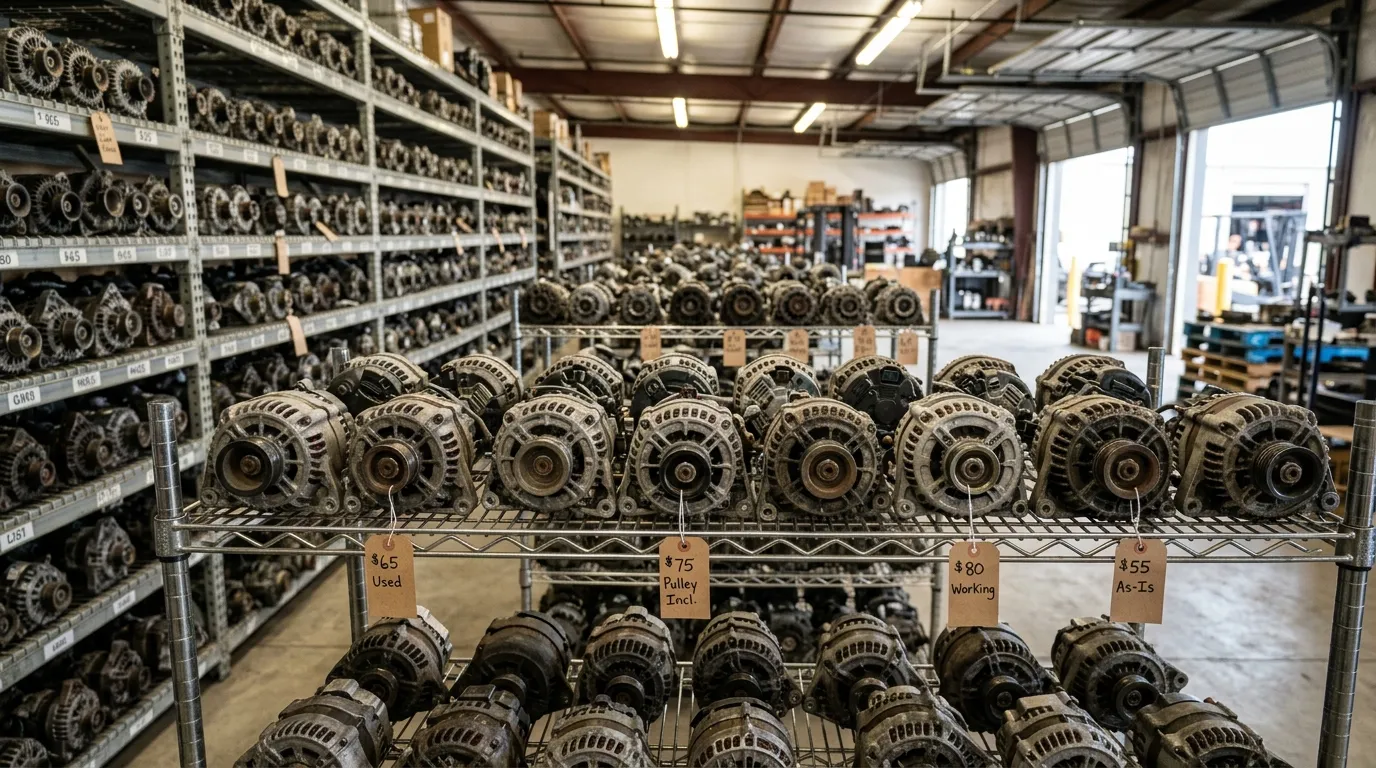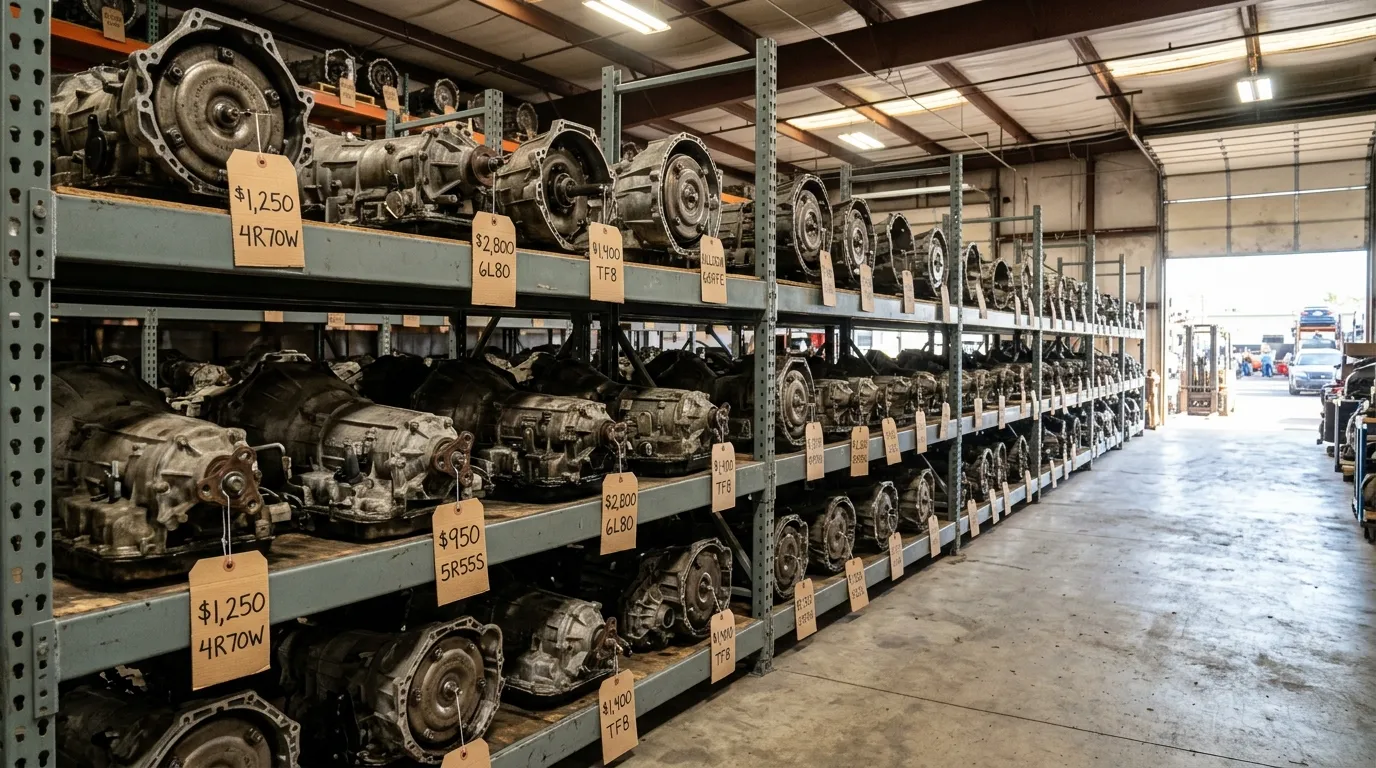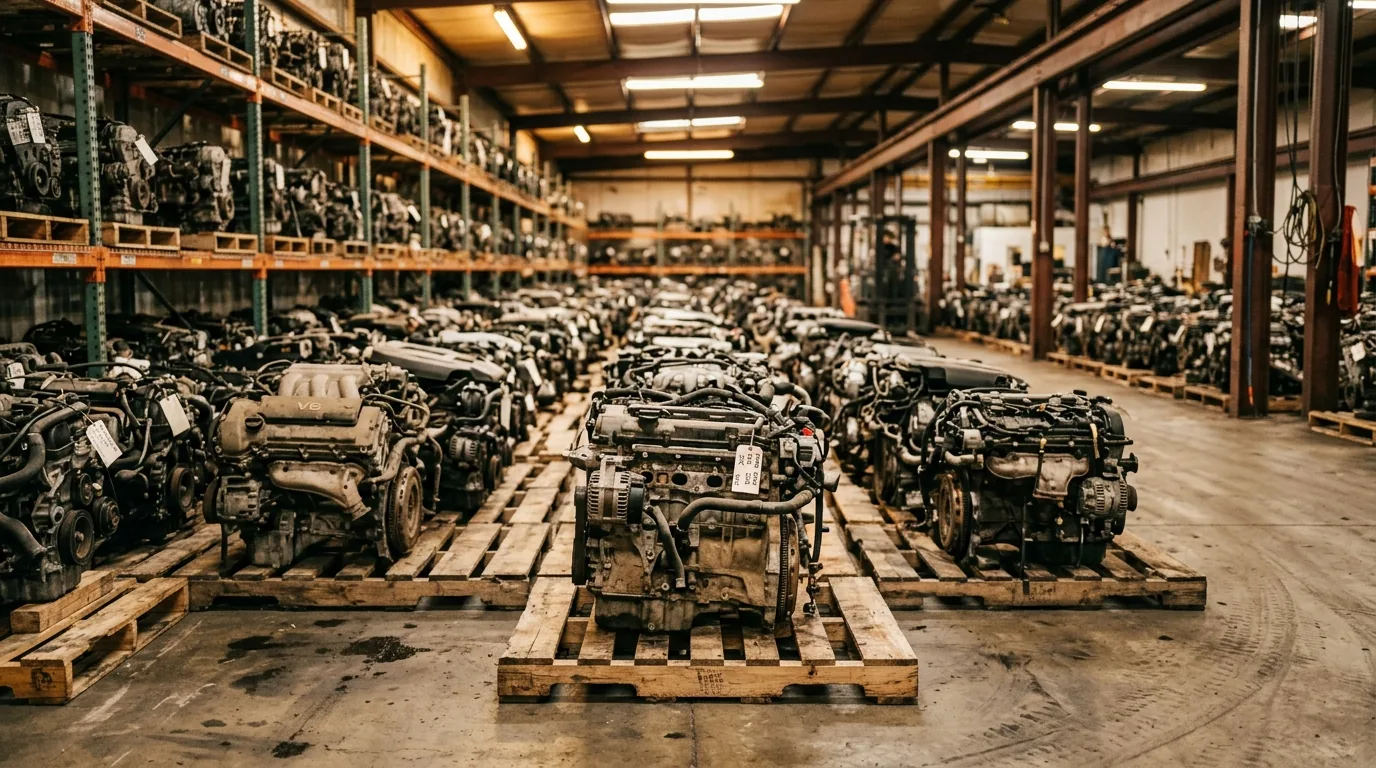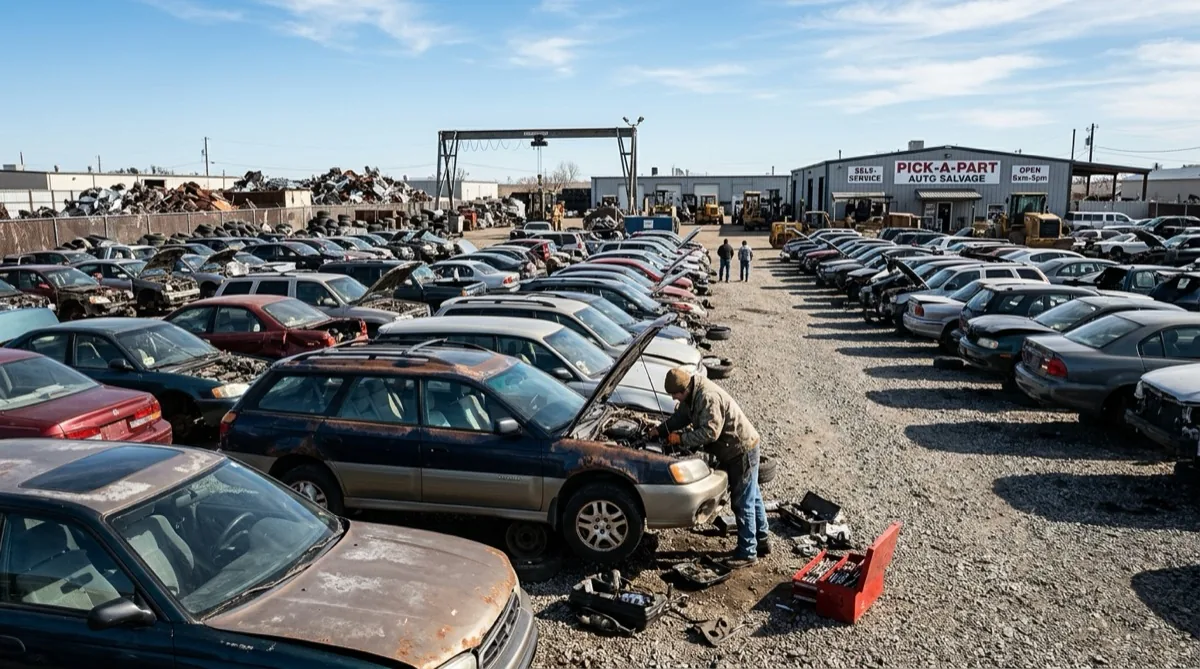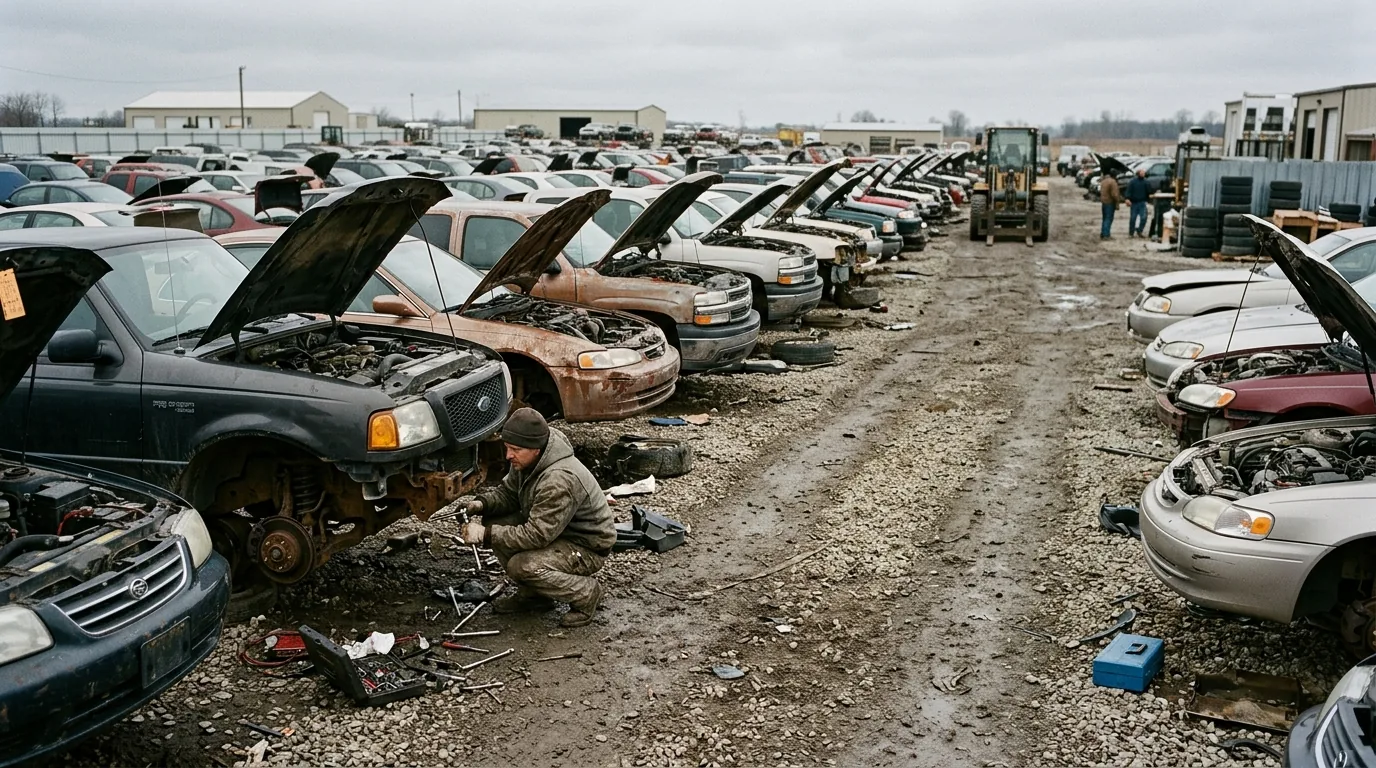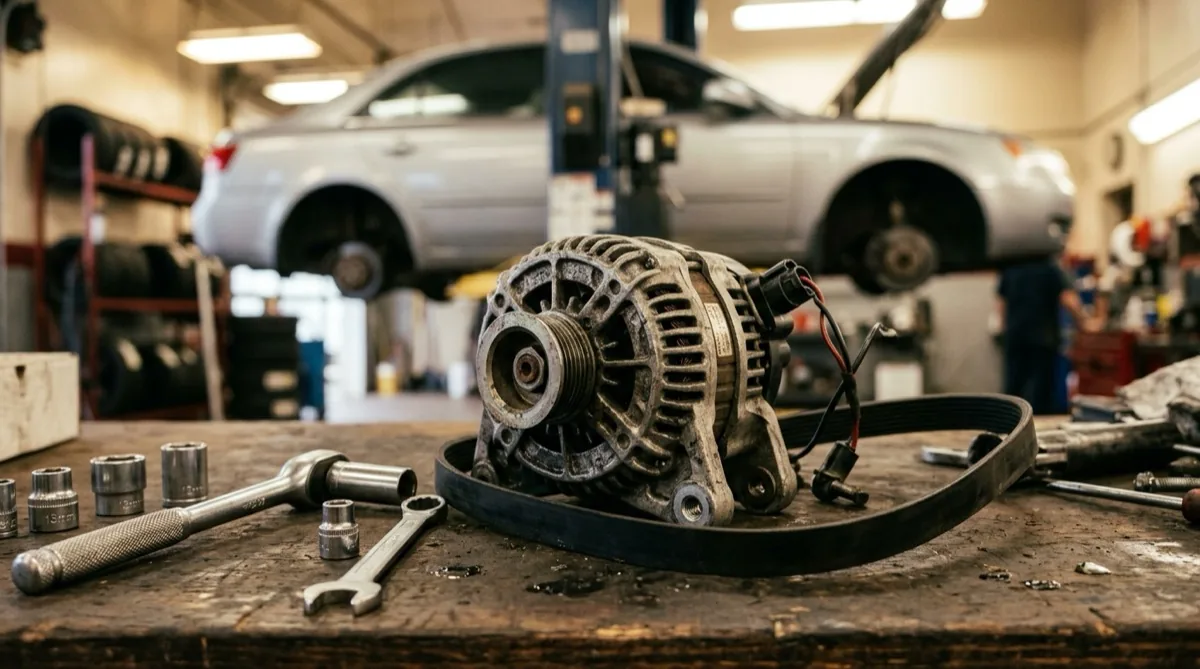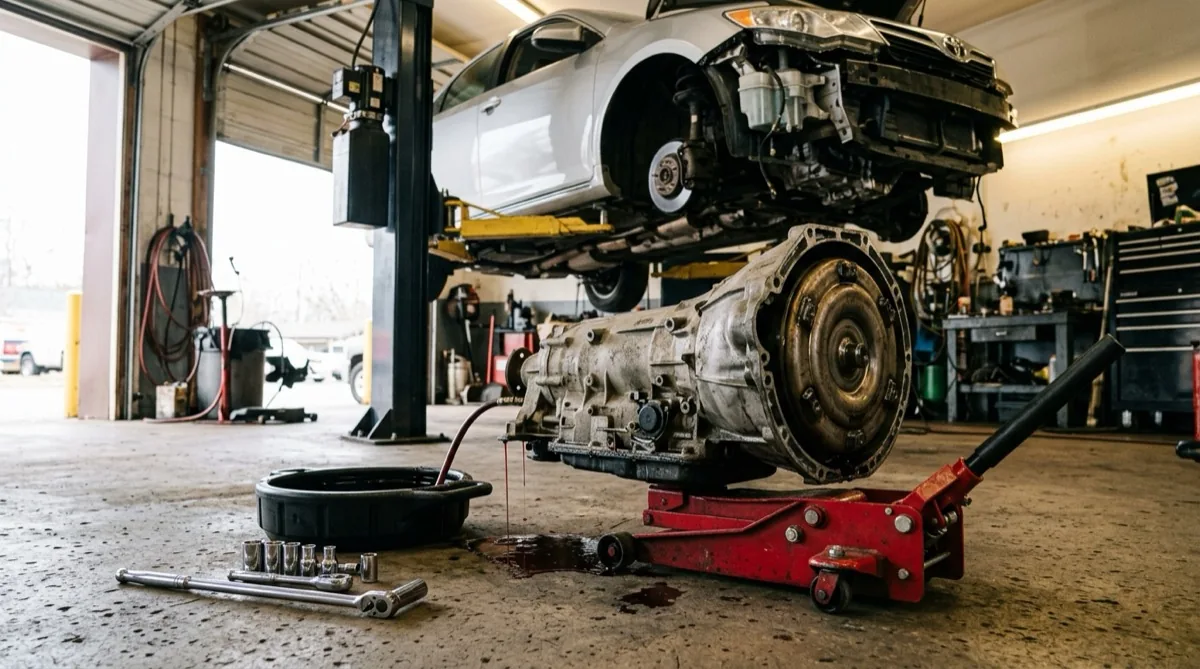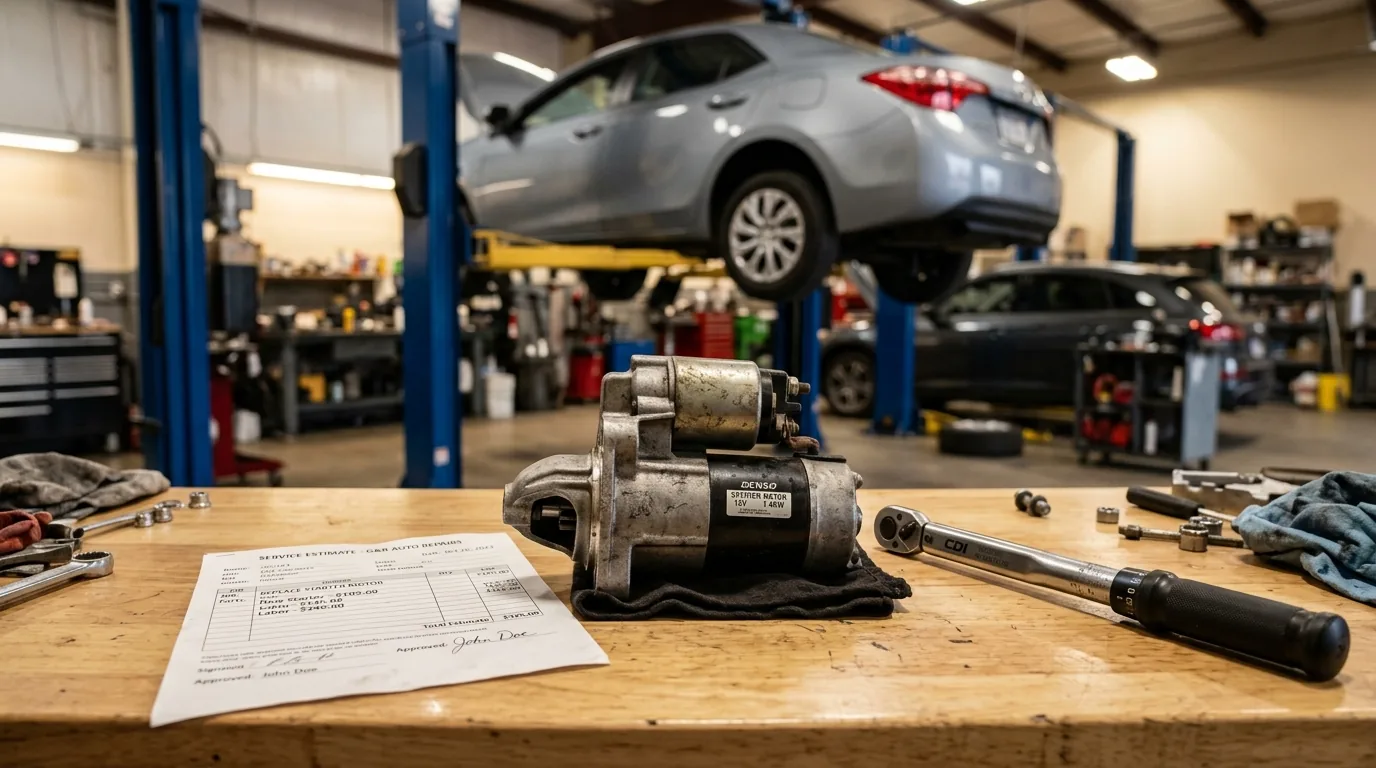
The cheapest way to buy a used auto part in 2026 depends on what you are buying and how much risk you are willing to accept. Car-Part.com searches 3,800+ salvage yard inventories for the widest selection of OEM parts. eBay Motors adds buyer protection and easy returns. Facebook Marketplace offers the lowest prices on local deals, with no platform fees and no safety net. Each channel serves a different need, and most buyers end up using two or three of them before finding the right part at the right price.
Used parts cost 50 to 80% less than new, with junkyard prices ranging from $82 for a brake caliper to $2,470 for a complete engine based on 2.5 million salvage yard listings indexed by PartPriceGuide.com. The platform you buy from affects the final price by 10 to 30% on top of those base numbers, which is why matching the right source to the right part matters.
[INTERNAL-LINK: anchor text → used auto parts price guide]
- Car-Part.com searches 3,800+ yard inventories and is the best starting point for any used OEM part search
- LKQ Online is the largest single supplier, with standardized grading and up to 1-year warranties on drivetrains
- eBay Motors provides the widest selection with buyer protection and a money-back guarantee
- Facebook Marketplace offers the lowest local prices but no platform-level buyer protection
- Amazon is best for aftermarket alternatives, not genuine used OEM parts
- Check fair pricing first: PartPriceGuide.com indexes 2.5 million listings so you know the market price before you buy
- Used parts save 50-80% over new OEM pricing on most mechanical and body components
Where to Buy Used Parts Online
Six channels account for the vast majority of online used auto part purchases. They range from aggregators that search thousands of yard inventories to individual sellers listing parts from their garage. The right choice depends on what you prioritize: price, selection, warranty, or convenience.
[INTERNAL-LINK: anchor text → how much do junkyards charge for parts]
Car-Part.com: The Industry Standard
Car-Part.com is the auto recycling industry's primary parts locator. It connects buyers with over 3,800 salvage yards across the U.S. and Canada, making it the single largest searchable database of used OEM auto parts. You search by year, make, model, and part, then contact the selling yard directly to purchase.
How it works. Car-Part.com is not a retailer. It is a search engine for salvage yard inventory. When you find a part, you call or email the yard to confirm availability, negotiate price, and arrange pickup or shipping. The yard handles the sale, warranty, and returns.
Pricing. Prices match what you would pay walking into a full-service yard, because the sellers are full-service yards. The value is not in the price but in the selection: if your three local yards do not have the part, Car-Part.com almost certainly surfaces one within shipping distance.
Warranty. Determined by the individual yard, not the platform. Most full-service yards listed on Car-Part.com offer 30 to 90-day warranties, with extended coverage on engines and transmissions.
Best for: hard-to-find parts, specific year/make/model searches, and buyers who want to deal directly with a professional yard.
Limitations: no centralized buyer protection, no standardized return policy, and shipping costs vary widely by yard. You are responsible for vetting the seller.
LKQ Online: Largest Single Supplier
LKQ Corporation is the world's largest provider of alternative automotive parts, operating hundreds of salvage yards, self-service locations, and distribution centers across North America. Their online platform lets you search inventory, check pricing, and order parts for pickup or delivery from a single company.
How it works. Search by part and vehicle on LKQ Online or at individual LKQ Pick Your Part locations for self-service inventory. Full-service LKQ yards grade parts using the standard A/B/C system. Self-service LKQ yards (Pick Your Part) publish flat-rate pricing by part type.
Pricing. Full-service LKQ pricing is competitive with independent yards, and their scale means consistent pricing across locations. Self-service LKQ Pick Your Part locations charge the lowest prices (30 to 50% below full-service), but you pull the part yourself.
Warranty. LKQ's full-service yards offer standardized warranties: typically 90 days on most parts, with up to 1 year on engines and transmissions. Self-service locations offer limited exchange policies (usually 7 to 15 days).
Best for: buyers who want a standardized experience with consistent grading, warranty, and pricing from a single large supplier.
Limitations: inventory is limited to what LKQ yards have in stock. For uncommon vehicles, Car-Part.com's broader network often turns up parts that LKQ does not carry.
eBay Motors: Widest Selection + Buyer Protection
eBay Motors is the largest online marketplace for used auto parts, combining individual sellers, commercial recyclers, and professional parts resellers on a single platform with buyer protection.
How it works. Search by part number, vehicle compatibility, or keyword. eBay's parts compatibility filter matches parts to your specific year, make, and model. Listings include seller ratings, return policies, and shipping costs. Payment goes through eBay, which holds the funds until the buyer confirms receipt.
Pricing. eBay parts tend to run 10 to 20% above local yard pricing because sellers factor in the platform fee (around 13% of the sale price) and shipping. On commodity parts like alternators and starters, the premium is modest. On heavy parts like engines and transmissions, shipping costs ($150 to $400) can make eBay less competitive than a local yard.
Warranty. eBay's money-back guarantee covers parts that arrive damaged, do not match the listing, or do not work as described. Individual sellers set their own return windows, typically 30 to 60 days. Commercial recyclers on the platform often match or exceed local yard warranty terms.
Best for: buyers who want buyer protection, easy returns, and access to parts from across the country without calling individual yards.
Limitations: prices include platform fees and shipping. Heavy parts are expensive to ship. Private sellers with low ratings carry more risk, even with eBay's guarantee.
Facebook Marketplace: Local Deals
Facebook Marketplace is the most unpredictable source for used auto parts, but it consistently offers the lowest prices for buyers willing to do the legwork.
How it works. Search by part name and vehicle, filter by distance, and message the seller directly. There is no parts compatibility tool, so you need to know exactly what fits your vehicle. Sellers are a mix of private individuals parting out vehicles, small yard operators, and mobile mechanics selling pulled inventory.
Pricing. Prices run 20 to 40% below full-service yard medians because there are no platform fees, no overhead costs, and many sellers price aggressively to move parts quickly. The tradeoff: no standardized condition reporting and no guaranteed refunds.
Warranty. None from the platform. Whatever the seller agrees to verbally is the extent of your protection. Some sellers offer a short "it works or your money back" guarantee, but enforcement depends entirely on the seller's honesty.
Best for: body panels, wheels, interior trim, and other parts where visual inspection in photos confirms condition. Also strong for local pickup deals where you can inspect the part in person before paying.
Limitations: no buyer protection, no return guarantee, and variable part quality. Mechanical parts (starters, alternators, AC compressors) are riskier because internal condition is invisible in photos. Always meet locally and inspect the part before handing over cash.
Amazon: Aftermarket Alternative
Amazon is not a source for genuine used OEM parts, but it is worth mentioning because many buyers land on Amazon when searching for cheap auto parts online. What Amazon sells is primarily new aftermarket and remanufactured parts from third-party brands.
How it works. Search by part name or number, and use Amazon's vehicle compatibility tool (Garage) to filter results to your year, make, and model. Most parts ship with Prime eligibility and Amazon's standard return policy.
Pricing. Aftermarket parts on Amazon typically cost more than used OEM parts from a salvage yard but less than new OEM parts from a dealer. A new aftermarket alternator runs $80 to $200 on Amazon versus $100 median for a used OEM alternator at a junkyard. The gap narrows on budget parts and widens on complex or vehicle-specific components.
Warranty. Amazon's 30-day return policy applies to most parts. Many aftermarket manufacturers add their own warranty (1 to 3 years), which exceeds what most salvage yards offer. This is Amazon's main advantage: a longer warranty on a new part at a competitive price.
Best for: wear items (brake pads, rotors, filters, belts) where buying used does not make sense, and common aftermarket replacements where brand does not matter.
Limitations: no used OEM parts, variable quality across aftermarket brands, and limited selection for older or uncommon vehicles. If you need the exact OEM part that came on your car, Amazon is the wrong channel.
Local Yard Websites: Direct Buying
Many independent salvage yards operate their own websites with searchable inventory, pricing, and online ordering. These yards are also listed on Car-Part.com, but buying direct sometimes offers better pricing or faster service.
How it works. Search "[city] salvage yard" or "[city] junkyard" and visit individual yard websites. Many use the same inventory management platforms (Pinnacle, Hollander, Checkmate) that feed into Car-Part.com, so the inventory matches. Some yards offer direct online ordering with shipping, while others require a phone call.
Pricing. Direct pricing from local yards matches or slightly undercuts what you find through Car-Part.com, because there is no referral fee. Small independent yards sometimes negotiate on price, especially on parts that have sat in inventory for months.
Warranty. Determined by the yard. Most full-service yards offer 30 to 90-day warranties. Ask before buying, and get the warranty terms in writing or on the receipt.
Best for: buyers who already know a reliable local yard, repeat customers who have established a relationship, and parts that are easier to inspect in person.
Limitations: small search radius compared to national platforms. You are searching one yard at a time instead of thousands.
Side-by-Side Comparison
| Feature | Car-Part.com | LKQ Online | eBay Motors | FB Marketplace | Amazon | Local Yards |
|---|---|---|---|---|---|---|
| Part type | Used OEM | Used OEM | Used OEM + aftermarket | Used OEM | New aftermarket | Used OEM |
| Selection | 3,800+ yards | LKQ network only | Widest overall | Local only | Aftermarket only | Single yard |
| Pricing | Full-service rates | Full-service rates | 10-20% above yards | 20-40% below yards | Varies by brand | Full-service rates |
| Buyer protection | None (yard policy) | LKQ warranty | Money-back guarantee | None | Amazon returns | Yard policy |
| Warranty | 30-90 days (yard) | 90 days to 1 year | Seller-dependent | None | 1-3 years (mfr) | 30-90 days |
| Shipping | Yard-dependent | Available | Included in listing | Local pickup | Prime eligible | Yard-dependent |
| Best for | Finding any part | Standardized buying | Protected purchases | Cheapest local deals | Wear items | Repeat buyers |
How to Verify You Are Getting a Fair Price
The biggest risk in buying used parts online is overpaying, not because the part is overpriced in absolute terms, but because you do not know what the market rate is. A $150 alternator sounds reasonable until you learn the median is $100 across 56,927 listings.
Check the market price first. PartPriceGuide.com indexes 2.5 million priced salvage yard listings across 48 part categories. Search your specific part and vehicle to see the current median price, the price range, and how many listings are available. This gives you a factual baseline before you start comparing sources.
Compare at least three sources. Search Car-Part.com for local yard pricing, check eBay Motors for shipped options, and scan Facebook Marketplace for local deals. The spread between the highest and lowest price for the same part on the same vehicle is typically 30 to 50%. Five minutes of comparison shopping prevents the most common overpay scenarios.
Factor in total cost. A part that costs $20 less on eBay but adds $45 in shipping is not a deal. A Facebook Marketplace part that costs $50 less but has no warranty is not a deal if the part controls your engine or transmission. Compare total cost: part price plus shipping plus the value of any warranty.
[INTERNAL-LINK: anchor text → used auto parts price guide]
Tips for Buying Used Parts Online
Verify the part number. Year, make, and model are not always enough. Many vehicles use different part numbers for the same component depending on trim level, engine option, or production date. Look up the OEM part number on your vehicle's parts diagram (available free on sites like RealOEM for BMW or parts.toyota.com for Toyota) and match it to the listing.
Read the listing description, not just the title. Sellers often use broad titles to capture searches. The description tells you the actual part grade, mileage on the donor vehicle, known defects, and return policy. A listing titled "Low Mileage Alternator" might describe a Grade C unit from a 180,000-mile vehicle in the fine print.
Check seller ratings on eBay. Aim for sellers with 98%+ positive feedback and at least 100 transactions. Commercial recyclers with established eBay stores are more reliable than one-time private sellers. Sort by "Best Match" or "Lowest Price + Shipping" rather than "Lowest Price" alone to account for shipping costs.
Ask about core charges. Some yards charge a core fee ($20 to $100) on parts like alternators, starters, and AC compressors. The core charge is refunded when you return the old part. Ask before buying so the total cost does not surprise you.
Request photos of the actual part. Stock photos tell you nothing. Ask the seller for photos showing the part number label, mounting points, connectors, and any wear or damage. Reputable sellers provide these without hesitation. Sellers who refuse or delay are not worth the risk.
Keep records. Save the listing page, receipt, warranty terms, and any communication with the seller. If the part fails within the warranty window, you need documentation to process a return or claim.