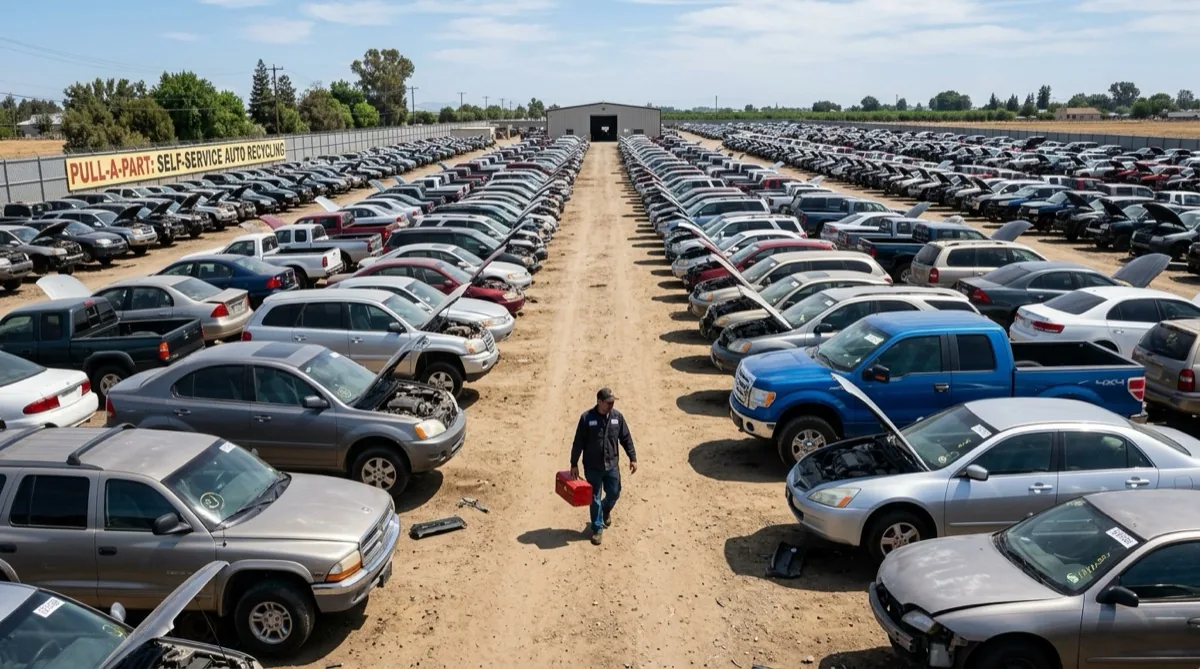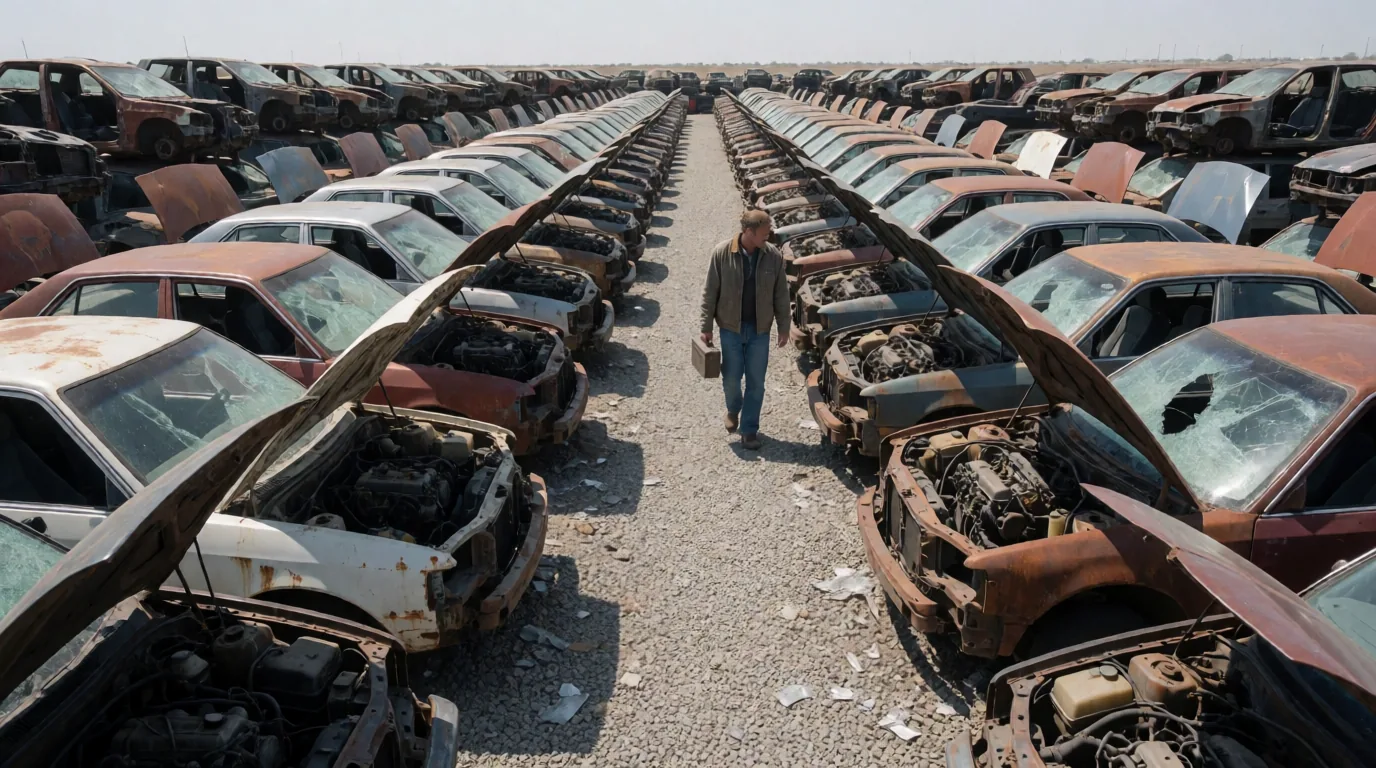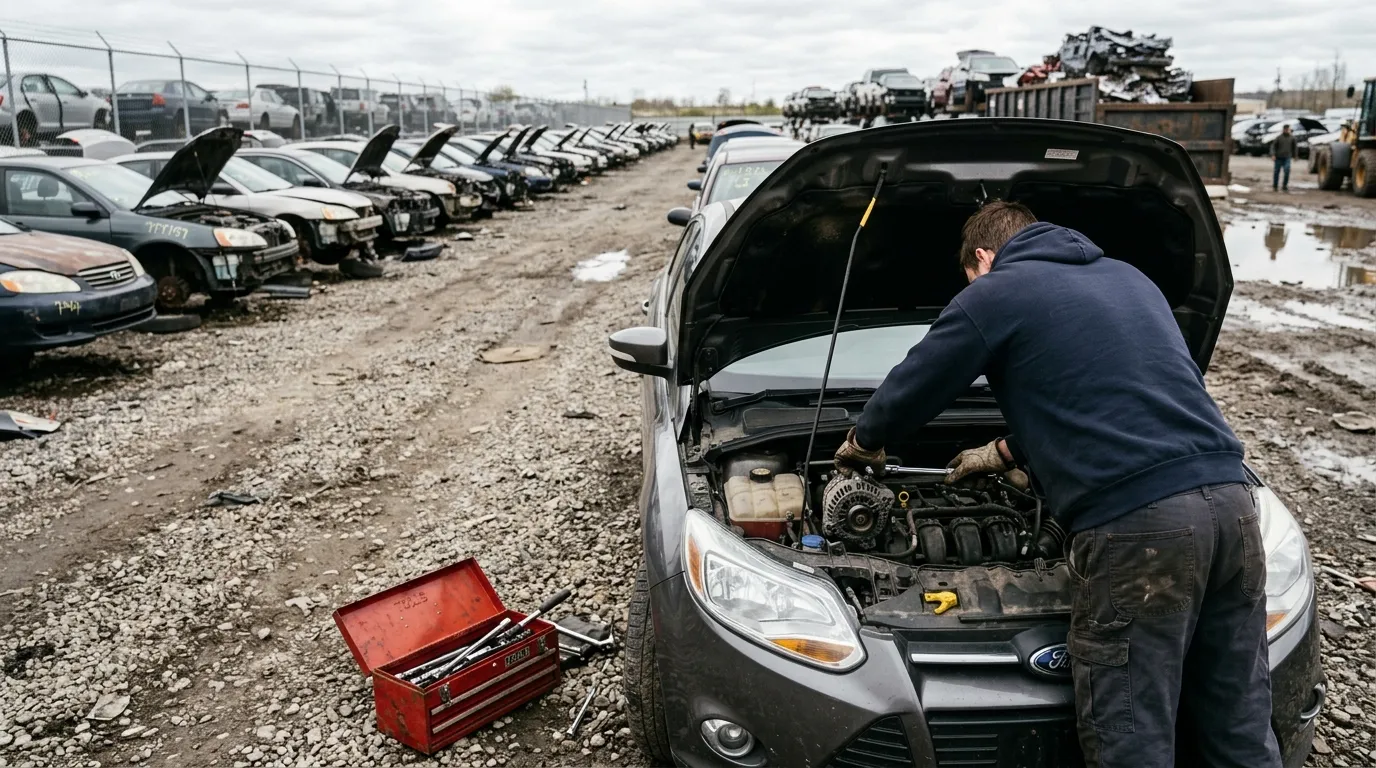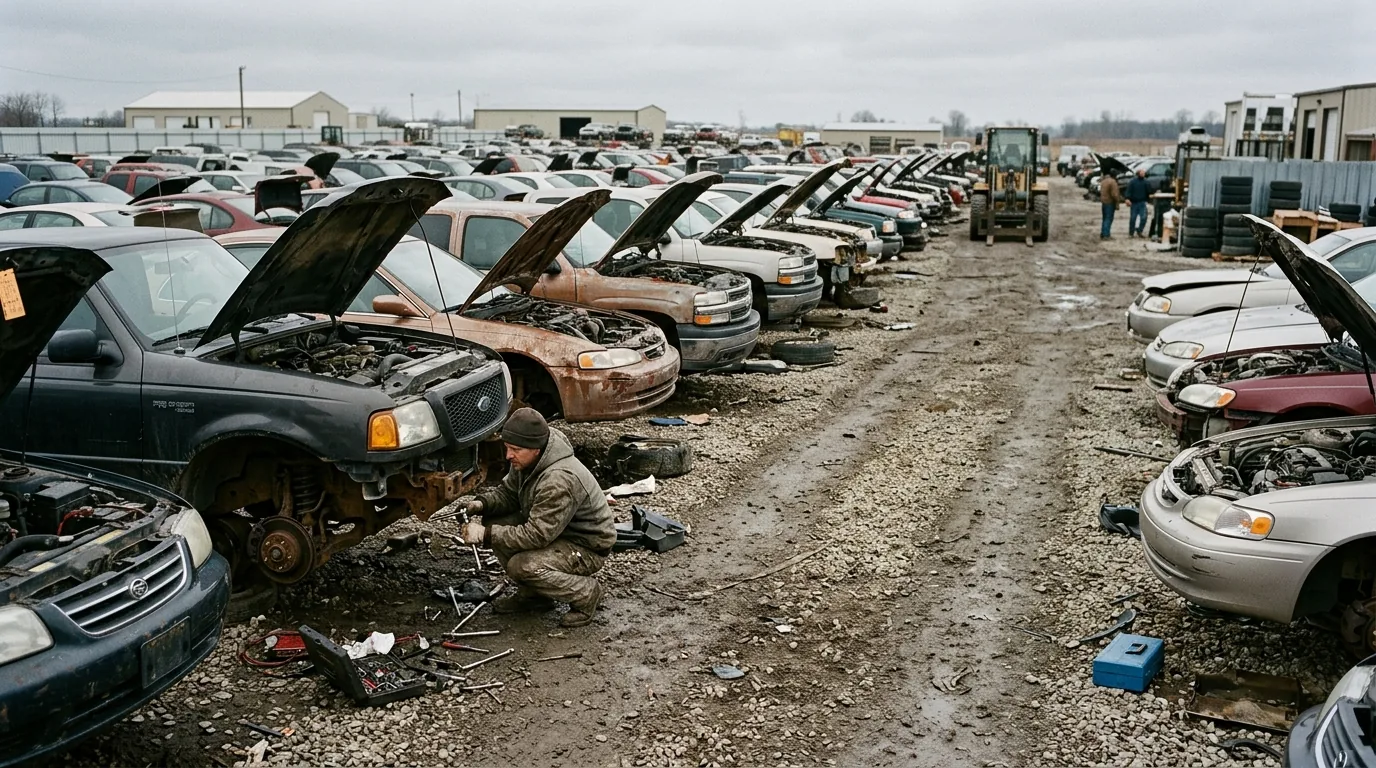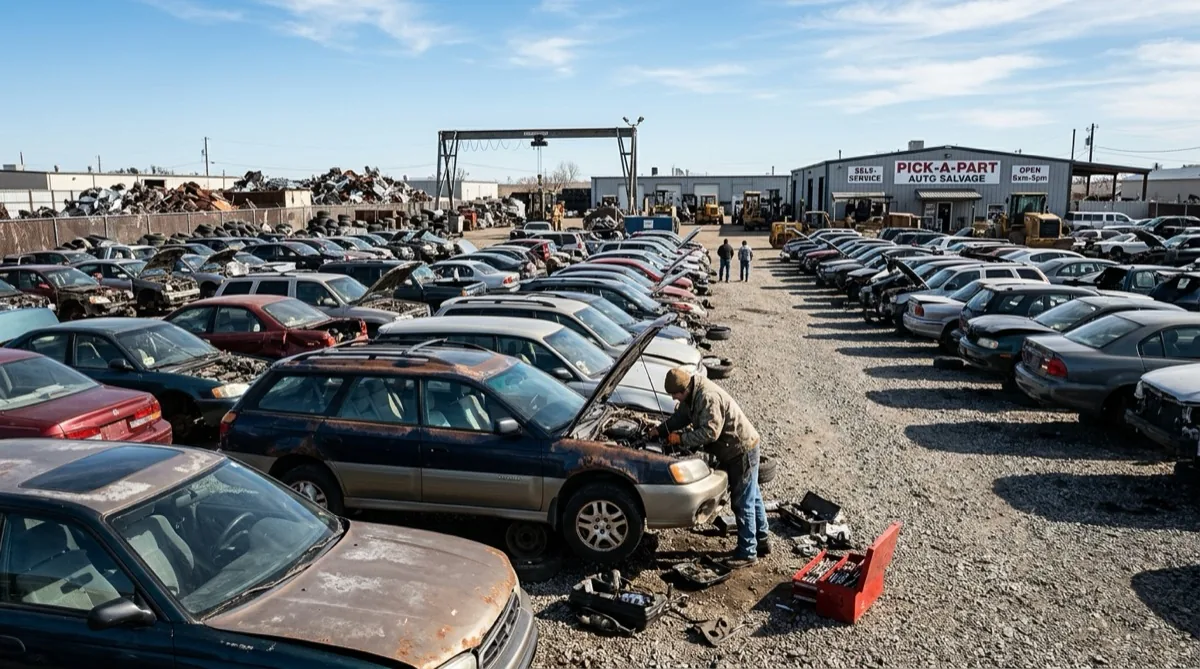
Self-service junkyards like Pull-A-Part and LKQ Pick Your Part charge 30 to 60% less than full-service salvage yards for the same used OEM part. The tradeoff is straightforward: you bring your own tools, locate the donor vehicle in the lot, and remove the part yourself. No staff pulls it for you, no one inspects or grades it, and warranty coverage is minimal.
Whether that tradeoff works depends on the part. Pulling an alternator or side mirror takes 20 minutes with a socket set and saves $30 to $50. Pulling an engine requires a hoist, a full day, and a level of risk that wipes out the price advantage. This guide compares pricing across 12 common parts, identifies which components are worth self-pulling and which are not, and covers the tools you need for a productive yard visit. All pricing comes from PartPriceGuide.com's index of 2.5 million salvage yard listings.
For a full breakdown of what yards charge across all categories, see our complete junkyard pricing guide.
- Self-pull yards charge 30 to 60% less than full-service yards, with the biggest savings on bolt-on parts
- Best self-pull parts: alternators ($50-$70), starters ($45-$65), mirrors ($110-$155), headlights ($310-$435), and wheels ($80-$120)
- Always go full-service for engines, transmissions, transfer cases, and heater cores where a warranty protects against repeat labor costs
- Full-service yards grade parts A/B/C and include 30 to 90-day warranties; self-pull yards offer limited or no coverage
- A basic tool kit ($50 to $100) pays for itself on your first self-pull yard visit
- Dataset: 2.5 million priced salvage yard listings, August 2026
Self-Pull vs Full-Service at a Glance
The U.S. salvage market runs on two distinct business models. Your choice between them determines the price, the experience, and the risk.
| Factor | Self-Pull Yard | Full-Service Yard |
|---|---|---|
| Price | 30-60% below full-service | Full market rate |
| Part removal | You do it yourself | Yard staff handles it |
| Warranty | Limited exchange, 7-15 days typical | 30-90 days standard; 6-12 months on engines/transmissions |
| Part grading | None; you assess condition | A/B/C grades by mileage and condition |
| Testing | None before sale | Bench-tested or inspected |
| Entry fee | $2-$5 per visit | None |
| Tool requirement | Bring your own complete set | None |
| Inventory search | Walk the lot; some chains have online inventory | Searchable database; many list on Car-Part.com |
| Part availability | Changes daily as vehicles arrive and get crushed | Cataloged and shelved; can ship parts |
| Time investment | 1-3 hours including walking the lot | 15-30 minutes at the counter |
| Best for | Budget repairs, bolt-on components | High-value parts, warranty-sensitive repairs |
How Self-Pull Yards Work
Self-pull yards set a flat price per part type regardless of make or model. A starter costs the same whether it comes from a 2010 Honda Civic or a 2019 Ford F-150. You pay a small entry fee ($2 to $5), walk the rows of donor vehicles, find one that matches your needs, and remove the part with your own tools. Major chains include Pull-A-Part (about 25 locations in the Southeast and Midwest), LKQ Pick Your Part (over 70 locations nationwide), and regional operators like U-Pull-It and Pull-N-Save.
Most publish their inventory online, so you can confirm a matching donor vehicle is in the lot before making the drive. Inventory turns over weekly as new vehicles arrive and older ones get crushed, so check within a day or two of your planned visit.
How Full-Service Yards Work
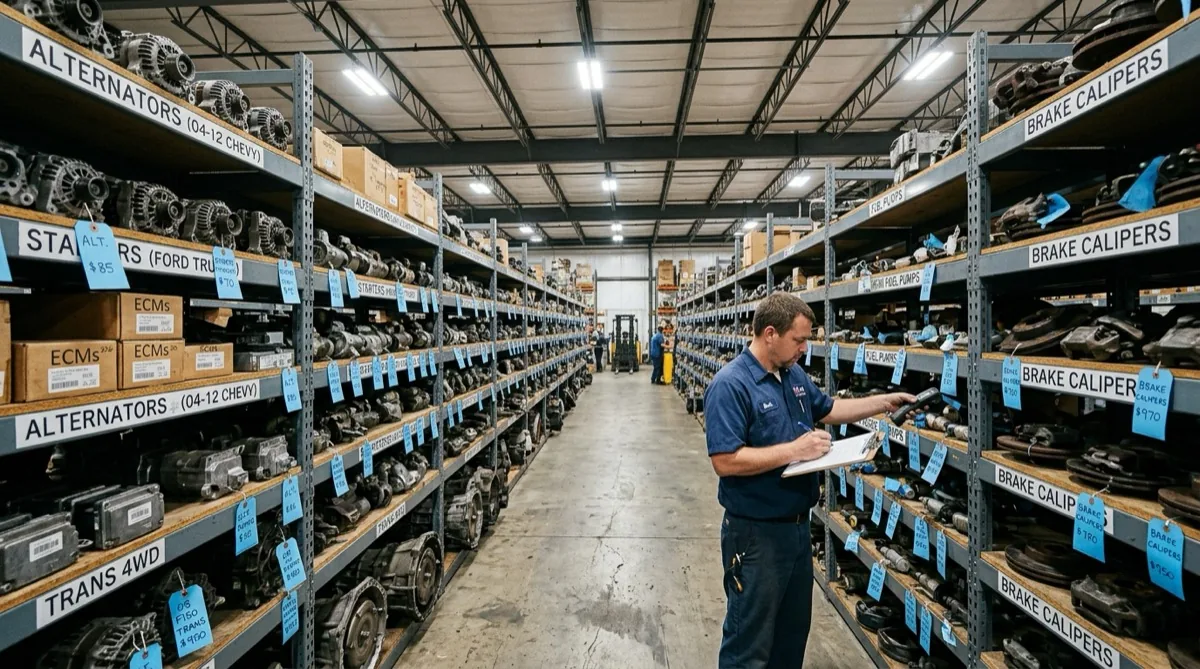
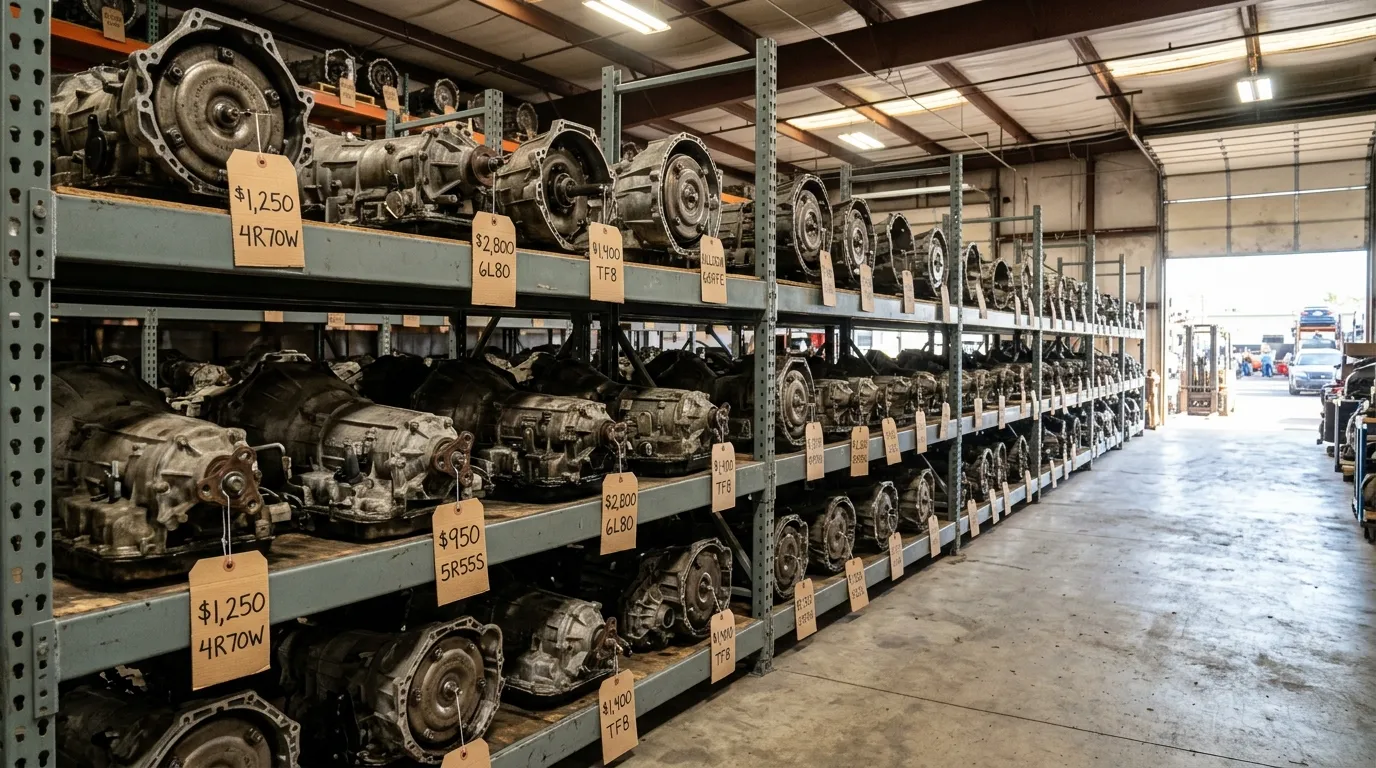
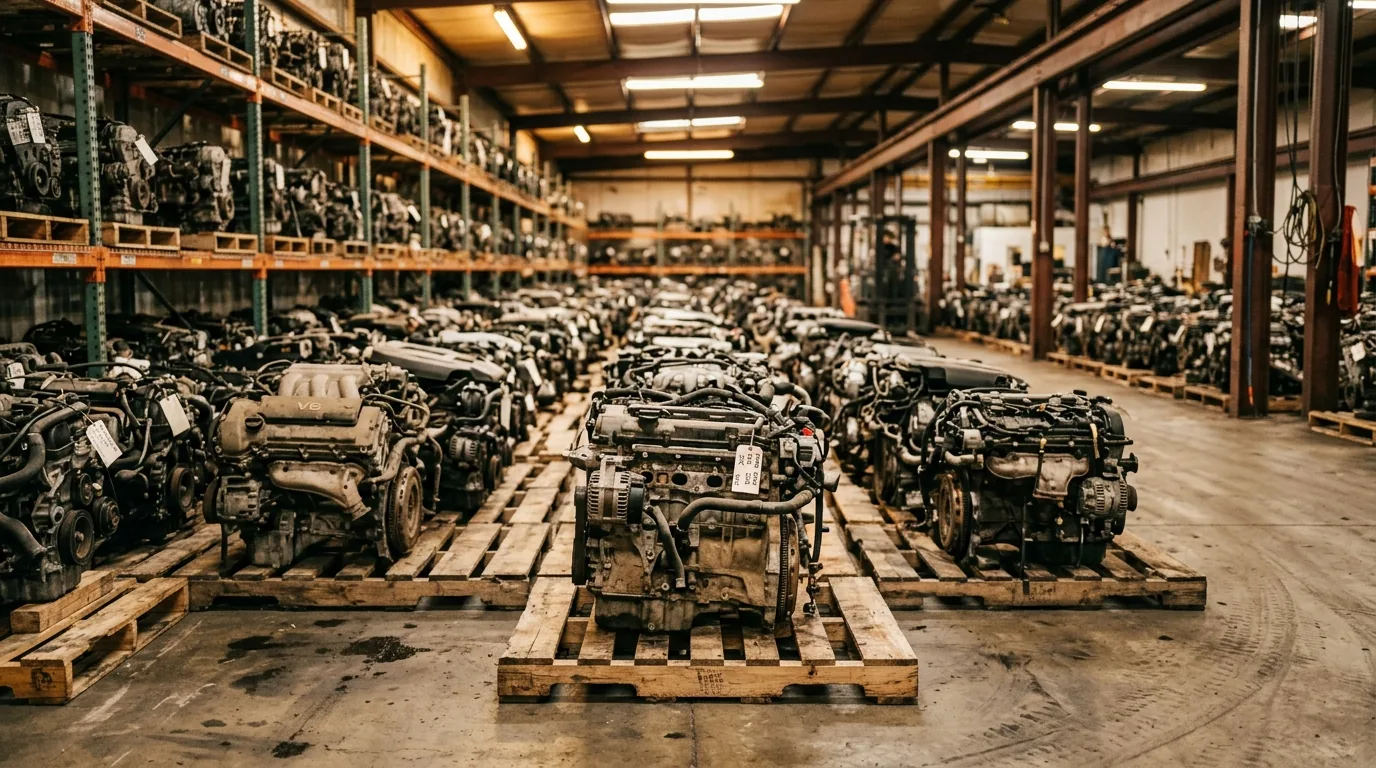
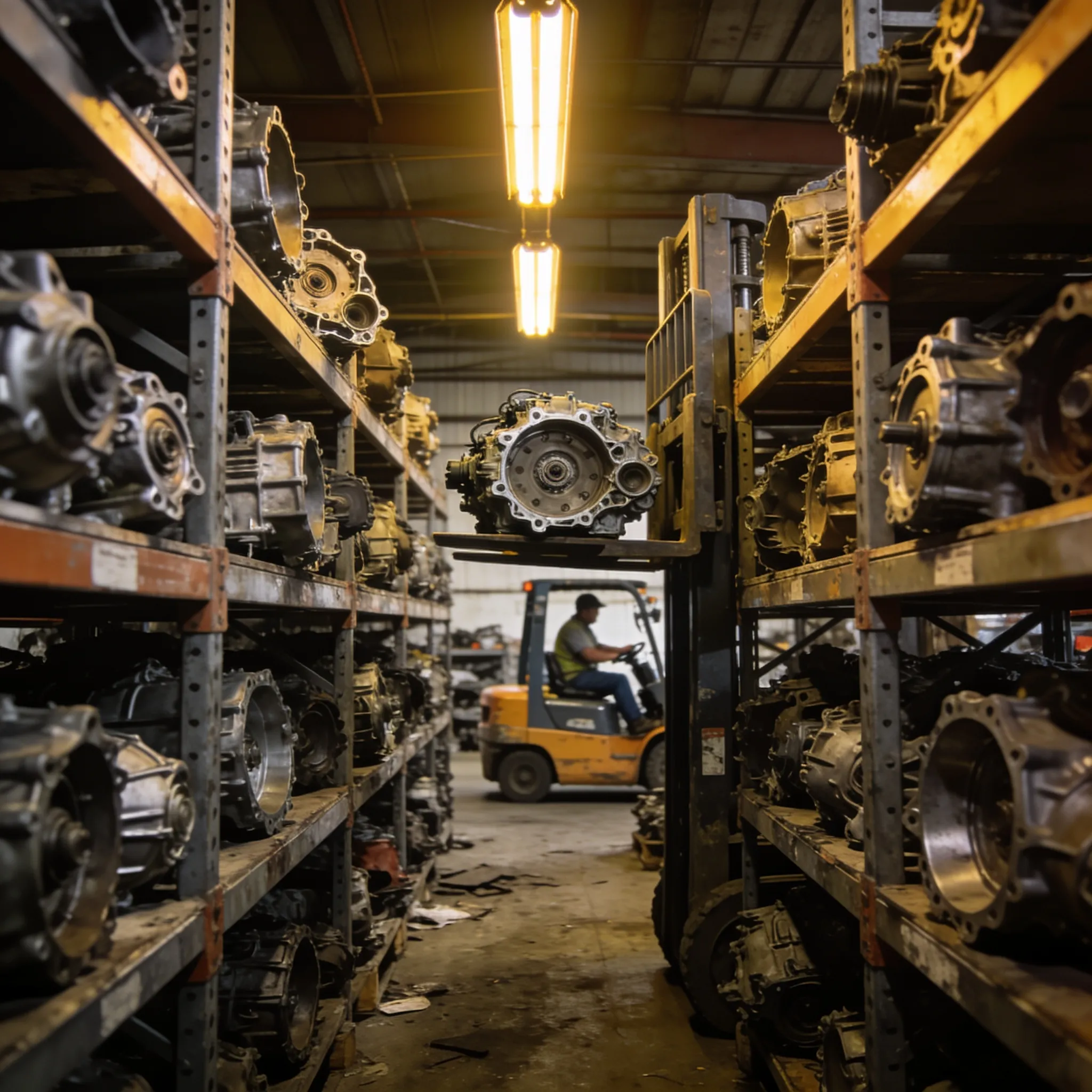
Full-service salvage yards dismantle vehicles, catalog every part in a searchable inventory, and store them on shelves or in warehouses. When you buy, a yard technician retrieves the part. You receive a graded unit with a printed warranty.
Full-service yards use the A/B/C grading system from the Automotive Recyclers Association. Grade A parts come from vehicles under 60,000 miles and command the highest prices. Grade B (under 200,000 miles) is the sweet spot for most buyers, priced 15 to 30% below Grade A. Grade C (over 200,000 miles) runs 30 to 50% below Grade A and works for older vehicles where function matters more than longevity.
Many full-service yards list inventory on Car-Part.com, which searches over 200,000 yard inventories nationwide. This makes full-service the better option when your local self-pull yard does not have the specific part you need.
[INTERNAL-LINK: "used auto parts price guide" -> /blog/price-analysis/used-auto-parts-price-guide]
Price Comparison for 12 Common Parts
The price gap between yard types is real and consistent. Full-service prices below are medians from our index of 2.5 million salvage yard listings. Self-pull estimates come from published price lists at Pull-A-Part, LKQ Pick Your Part, and U-Pull-It locations.
| Part | Full-Service Median | Self-Pull Range | You Save | Removal Difficulty |
|---|---|---|---|---|
| Starter | $91 | $45-$65 | 29-51% | Easy to Moderate |
| Alternator | $100 | $50-$70 | 30-50% | Easy |
| Brake Caliper | $82 | $40-$58 | 29-51% | Easy |
| Side Mirror | $220 | $110-$155 | 30-50% | Easy |
| Headlight Assembly | $620 | $310-$435 | 30-50% | Easy |
| Wheels (each) | $200 | $80-$120 | 40-60% | Easy |
| Strut | $138 | $55-$85 | 38-60% | Moderate |
| Radiator | $178 | $90-$125 | 30-49% | Moderate |
| AC Compressor | $153 | $75-$110 | 28-51% | Moderate |
| Control Arm | $125 | $50-$75 | 40-60% | Moderate |
| Engine | $2,470 | Not available | N/A | Not recommended |
| Transmission | $1,400 | Not available | N/A | Not recommended |
The savings percentage is largest on budget-tier parts, but the absolute dollar savings grow with part value. Pulling your own headlight assembly saves $185 to $310 per unit. On a vehicle needing both headlights replaced, that is $370 to $620 back in your pocket for roughly 30 minutes of work per side. A set of four self-pulled wheels saves $320 to $480 over full-service pricing.
Engines and transmissions are marked "not available" at self-pull yards because removing them requires specialized equipment and several hours of labor. Most self-service yards do not permit these removals.
For our detailed analysis of pricing across all part categories, see the used auto parts price guide.
What Tools to Bring to a Self-Pull Yard
Arriving without the right tools wastes your entry fee and your afternoon. Most self-service yards rent basic tools at the gate, but the selection is limited and rental fees eat into your savings. A personal kit costs $50 to $100 at a discount tool store and pays for itself on your first visit.
Essential Tools (Bring Every Visit)
| Tool | What It Covers | Approximate Cost |
|---|---|---|
| Socket set (10mm-19mm, 3/8" drive) | Most bolts on imports and domestics | $20-$35 |
| Ratchet with 3" and 6" extensions | Pairs with socket set for tight spaces | Included with set |
| Breaker bar | Seized and over-torqued bolts | $10-$15 |
| Combination wrenches (10mm-17mm) | Spaces where a socket will not fit | $10-$20 |
| Pliers (needle-nose and standard) | Hose clamps, clips, wiring | $8-$12 |
| Screwdrivers (flathead and Phillips) | Trim panels, electrical connectors | $5-$8 |
| Penetrating oil (PB Blaster or similar) | Rusted fasteners; spray 10 min before removal | $5-$8 |
| Rubber mallet | Freeing stuck components | $5-$8 |
| Work gloves and safety glasses | Required at most yards | $8-$15 |
| Flashlight or headlamp | Engine bays and underbody work | $10-$15 |
Specialty Tools (Bring as Needed)
- Drain pan: for radiators, AC compressors, and any fluid-containing part
- Wire cutters and electrical tape: for wiring harness clips and zip ties
- Trim removal tools (plastic set, $5 to $10): interior panels and body clips without breakage
- Torx bit set ($8 to $12): many European and newer domestic vehicles use Torx fasteners
- Spring compressor: for strut assemblies
- Magnetic parts tray ($5 to $8): keeps bolts from disappearing into the engine bay
- Zip-lock bags and a marker ($2): label hardware by location for easier reinstallation
Tool Rules to Know
Most self-service yards prohibit torches, cutting tools (reciprocating saws, grinders), and full-size air compressors. Some ban battery-powered impact wrenches. Check the yard's posted rules at the entrance before unpacking your tools. Pull-A-Part and LKQ Pick Your Part both publish tool policies on their websites.
Carry your tools in a five-gallon bucket or small rolling cart rather than a traditional toolbox. You may walk 200 yards or more to reach the right donor vehicle, and a compact setup saves energy.
Parts Worth Pulling Yourself
The ideal self-pull part meets three criteria: it unbolts with basic hand tools, it is easy to visually inspect for condition, and the savings justify the time.
Alternators and Starters
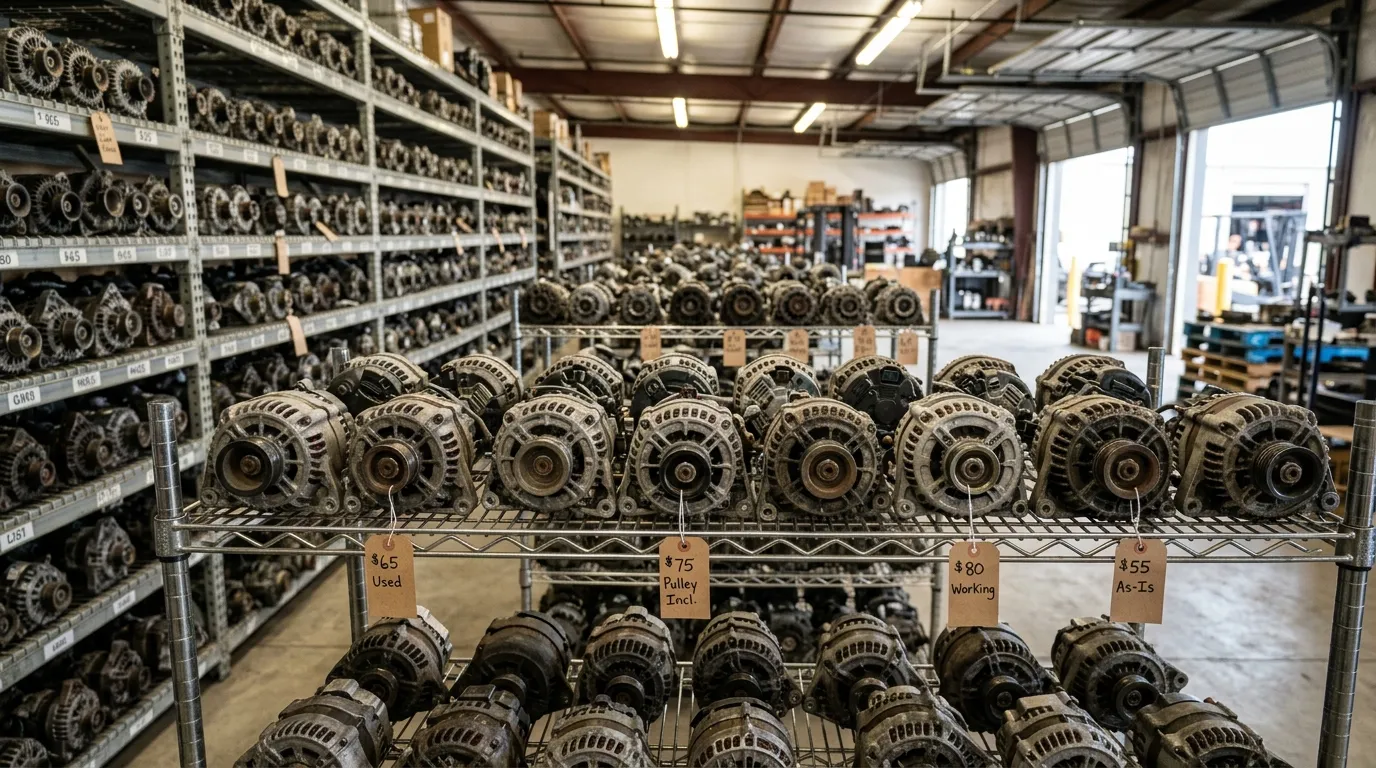
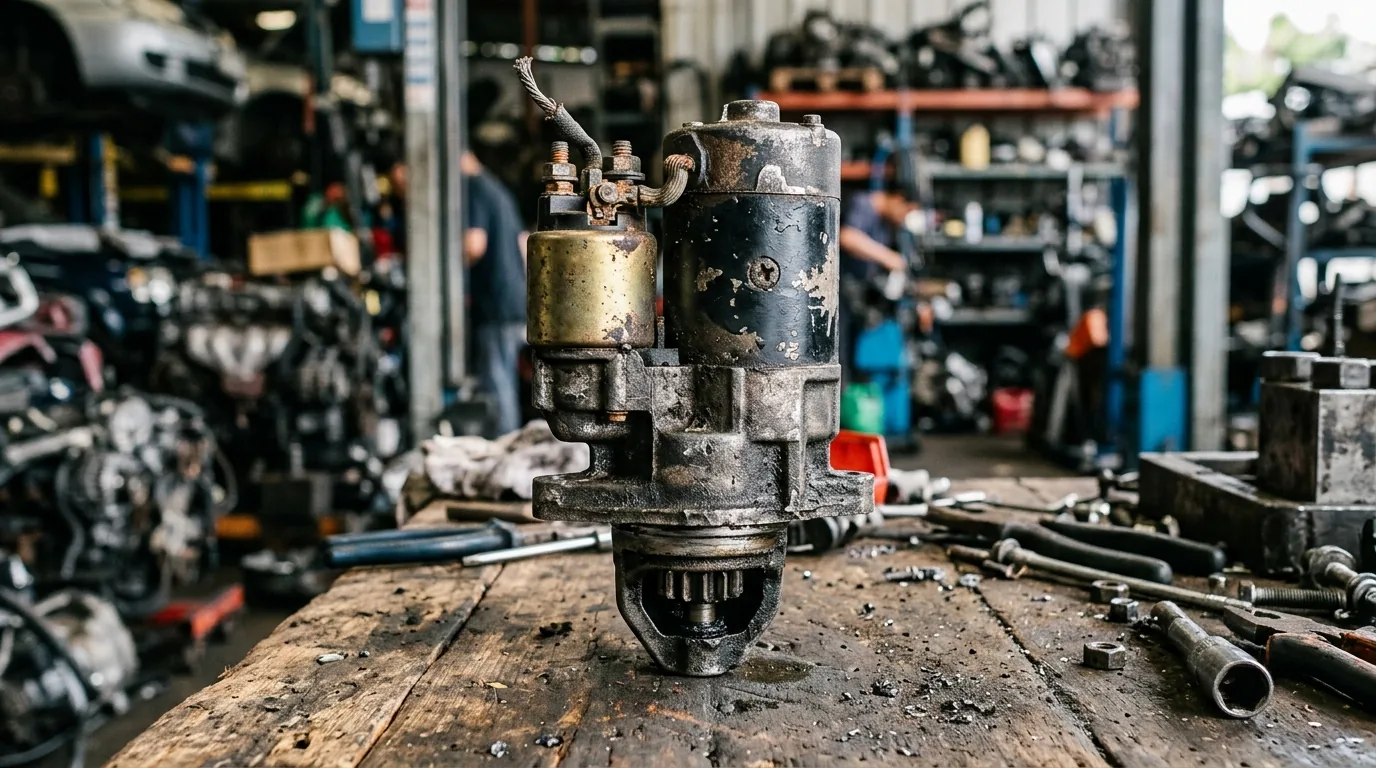
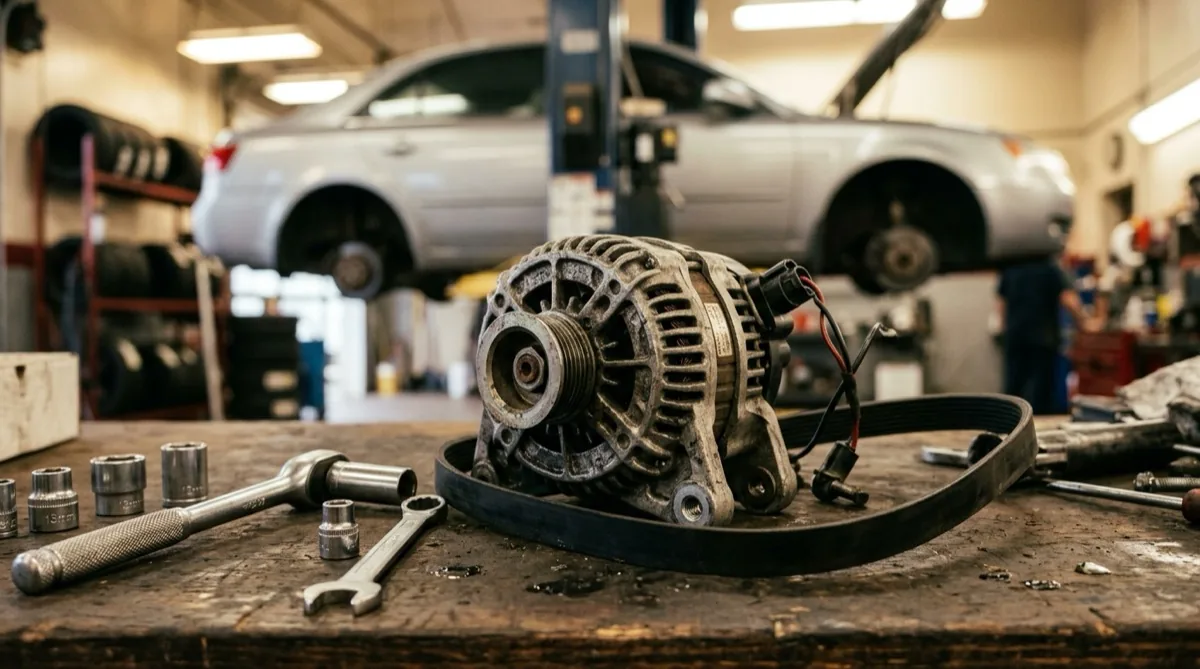
These are the highest-value self-pull parts in the yard. Both bolt to the engine block or a bracket with two to three bolts and one or two wiring connectors. An alternator takes 15 to 30 minutes to remove and saves $30 to $50 over full-service. A starter is similar, though location varies: on most four-cylinder engines it sits accessibly on the bell housing, while some V6 and V8 configurations tuck it under the intake manifold.
After pulling either part, take it to an auto parts store for a free bench test before installing it. This five-minute step confirms the part works and costs nothing.
Side Mirrors
Side mirrors are held by three bolts behind the door panel trim and one wiring connector (on powered mirrors). Removal takes 10 to 15 minutes. At $110 to $155 self-pull versus $220 full-service, this is one of the easiest and most rewarding pulls you can make. Bonus: finding the right donor vehicle means the mirror may already match your paint color.
Headlight and Tail Light Assemblies
Headlight assemblies unbolt with two to four fasteners accessible from the engine bay. Before removing, inspect the lens for cracks, internal moisture, and intact mounting tabs. A fogged housing indicates a broken seal that will cloud up after installation.
At $310 to $435 self-pull versus $620 full-service, headlights deliver the largest absolute dollar savings among easy-pull parts.
Wheels
Wheels are the simplest pull in any yard: five lug nuts and a jack. Most self-service yards have vehicles already raised or provide jacks at the gate. At $80 to $120 per wheel versus $200 full-service, a set of four saves $320 to $480. Inspect tread depth and sidewall condition before pulling if the tires are included.
Brake Calipers
Brake calipers require removing the wheel and two caliper bracket bolts. The job takes 15 to 20 minutes per caliper. At $40 to $58 self-pull versus $82 full-service, the per-unit savings are modest, but replacing both front calipers saves $48 to $84 total.
Body Panels and Bumper Covers
Front bumper covers remove with a combination of bolts, clips, and push pins. At $100 to $170 self-pull versus $250 full-service, a matching-color bumper from the right donor vehicle can eliminate a $300 to $500 paint job entirely. Fenders, hoods, and trunk lids follow the same logic: OEM fit, potential color match, and substantial savings.
Parts to Buy Full-Service
Some parts are poor self-pull candidates because removal requires specialized equipment, the failure cost without a warranty is too high, or both.
Engines
A used engine costs $2,470 median. Removing one from a donor vehicle requires disconnecting dozens of connections and using an engine hoist. Most self-service yards do not permit engine pulls. Even where allowed, the real risk is financial: engine installation labor runs $1,000 to $3,000. If the unit fails within a few months and you have no warranty, you pay that labor bill again. Full-service yards test engines and include 6 to 12-month warranties for exactly this reason.
Transmissions
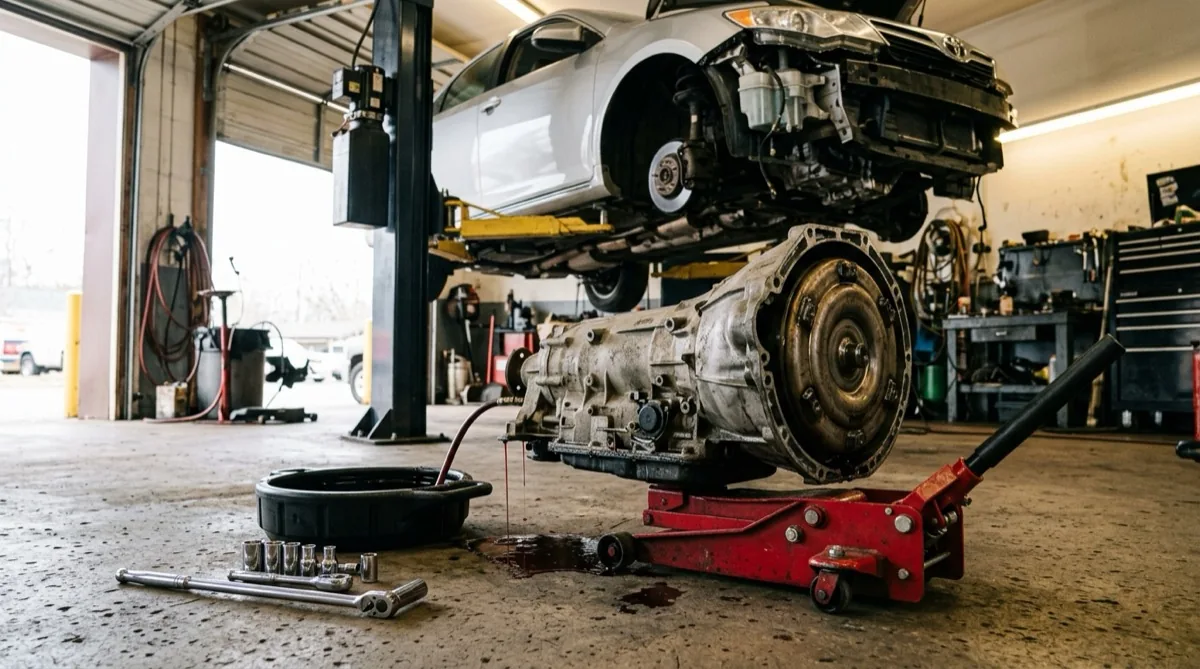
Used transmissions run $1,400 median with similar removal complexity and failure cost. A transmission jack is required, and the job takes several hours even for an experienced technician. Full-service yards with 6 to 12-month drivetrain warranties are the standard buying channel.
Transfer Cases
Transfer cases ($308 median) sit between the transmission and drive shafts on four-wheel-drive and all-wheel-drive vehicles. Removal requires dropping the drive shafts, disconnecting linkage, and supporting the transmission with a jack. Buy full-service and get the warranty.
Heater Cores
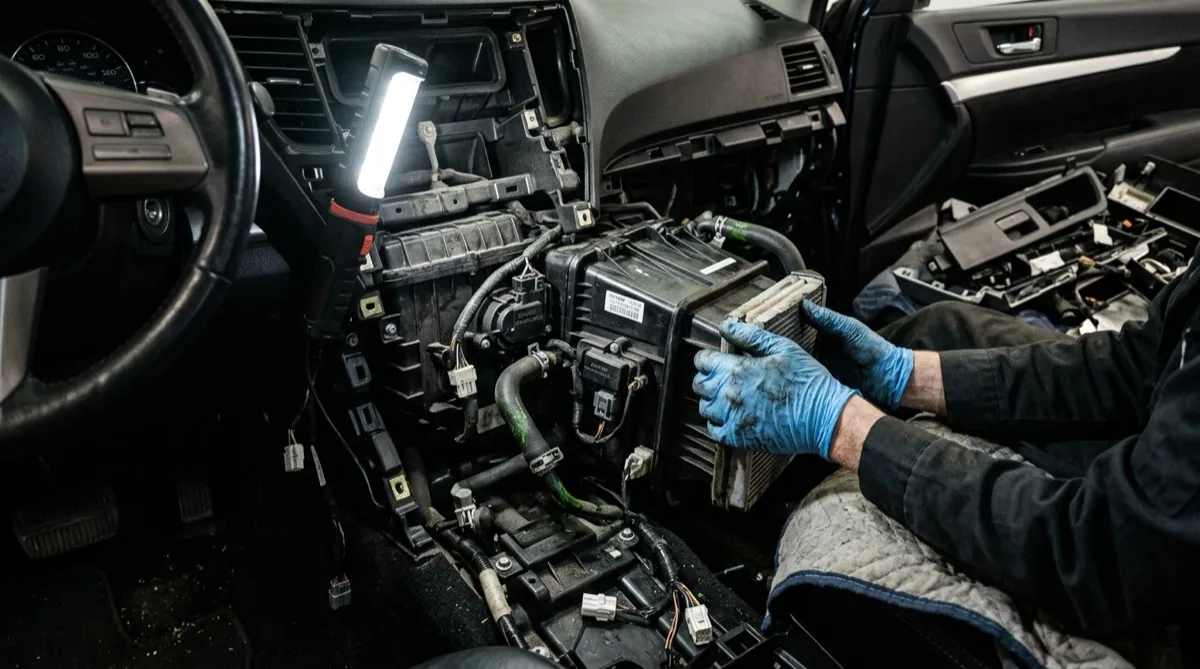
A heater core costs only $116 median, but accessing it requires extensive dashboard disassembly on the donor vehicle, the same reason heater core replacement labor runs $876 to $1,285 at a shop. Spending hours dismantling a dashboard in a junkyard to save $40 to $60 is a poor return on time.
Engine Computers and Transmission Modules
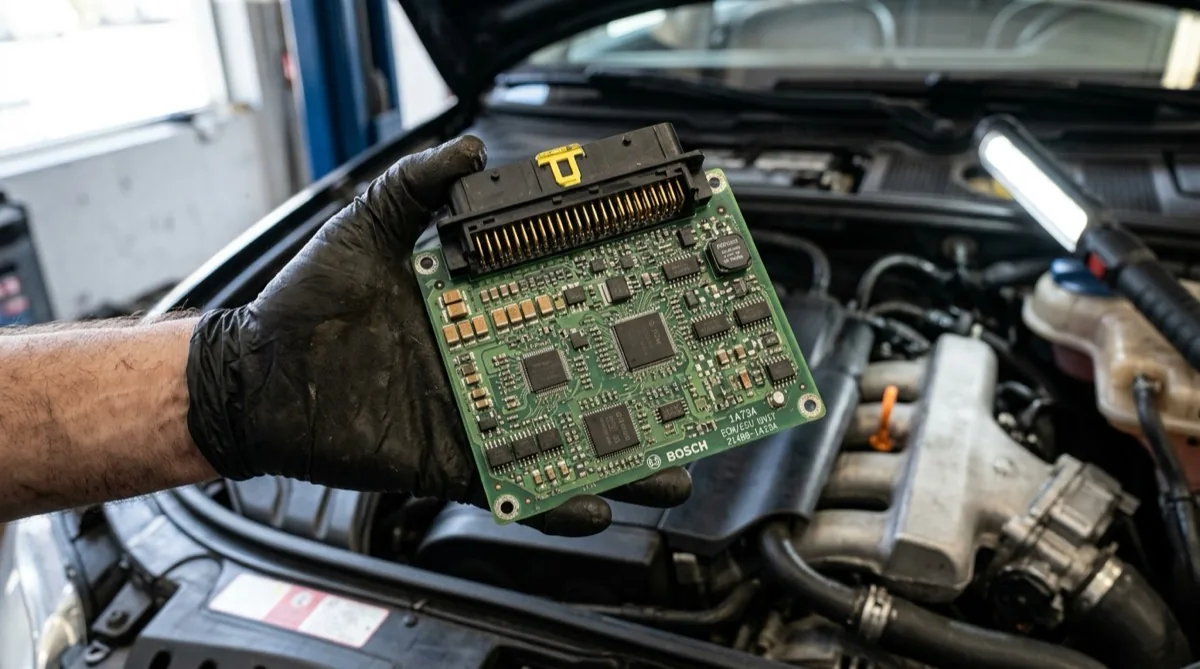
Used engine computers often need $150 to $300 in dealer programming to work in a different vehicle. That narrows the price gap between a used unit and a pre-programmed remanufactured option. Full-service yards may offer plug-and-play units that save the programming fee. Check compatibility before buying used at any yard type.
How to Find Junkyards Near You
Self-Pull Yard Locators
The fastest way to find a self-service yard is through the chain websites. Each includes a location finder and searchable inventory.
- Pull-A-Part: pullapart.com covers about 25 locations in the Southeast and Midwest
- LKQ Pick Your Part: lkqpickyourpart.com covers 70+ locations nationwide
- Row52: row52.com aggregates inventory from independent self-service yards across the U.S.
Search by year, make, and model to confirm a matching donor vehicle is in the lot before visiting. Inventory changes daily, so check the morning of your trip.
Full-Service Yard Locators
- Car-Part.com: car-part.com searches over 200,000 yard inventories across the U.S. and Canada. This is the industry standard for locating specific parts at full-service yards.
- PartPriceGuide.com: Use our price comparison tool to check the current market price for any part by year, make, and model before contacting a yard. Knowing the median price helps you negotiate and avoid overpaying.
Google Maps Tips
Searching "pull a part near me" or "self service junkyard near me" on Google Maps surfaces both chain and independent yards. For full-service yards, search "auto salvage yard" or "used auto parts" rather than "junkyard," which tends to return scrap metal operations that do not sell individual parts.
Call ahead. Even with online inventory, calling the yard before you go confirms the vehicle is still on the lot and has the part you need. Vehicles get stripped fast at busy locations. Five minutes on the phone can save an hour of driving.
[INTERNAL-LINK: "price comparison tool" -> /]